

Professional Broadcast Audio Equipment: 2026 Guide
In a high-stakes live environment, a single millisecond of latency or a minor loudness violation isn't just a technical glitch; it's a direct threat to your professional credibility. You already know that while viewers might forgive a slight dip in video resolution, they'll never tolerate distorted, out-of-sync, or inconsistent sound. Reliability is everything. Transitioning to IP-based workflows and keeping up with the July 2026 ATSC A/85 revisions adds layers of complexity that can challenge even veteran engineers. Finding the right professional audio equipment for broadcast requires more than just purchasing high-end hardware; it demands a cohesive strategy for signal integrity and global compliance.
At United Broadcast & Media Solutions (UBMS), we understand that audio is the mission-critical heartbeat of any production. This 2026 guide will help you master the technical essentials of modern sound environments, from the intricacies of AoIP and SMPTE 2110 to the latest EBU R 128 standards. You'll learn how to build a world-class signal chain that eliminates latency and ensures 24/7 reliability. We'll explore the infrastructure needed to future-proof your facility, moving from broad categories of audio capture down to the specific technical details of software-defined workflows and Dante integration.
Key Takeaways
- Understand why professional audio equipment for broadcast is engineered specifically for mission-critical reliability, zero-latency performance, and strict international compliance.
- Identify the core hardware components, from specialized microphones to digital consoles, that form the foundation of a modern live production environment.
- Learn how to leverage Audio-over-IP (AoIP) protocols like Dante and AES67 to create a scalable, future-proof infrastructure that reduces cabling complexity.
- Implement professional maintenance standards for signal integrity, focusing on electromagnetic shielding and environmental controls to ensure 24/7 uptime.
- Discover the benefits of specialized system integration to ensure your audio workflow is seamlessly unified with your broader broadcast ecosystem.
Defining the Standards of Professional Broadcast Audio
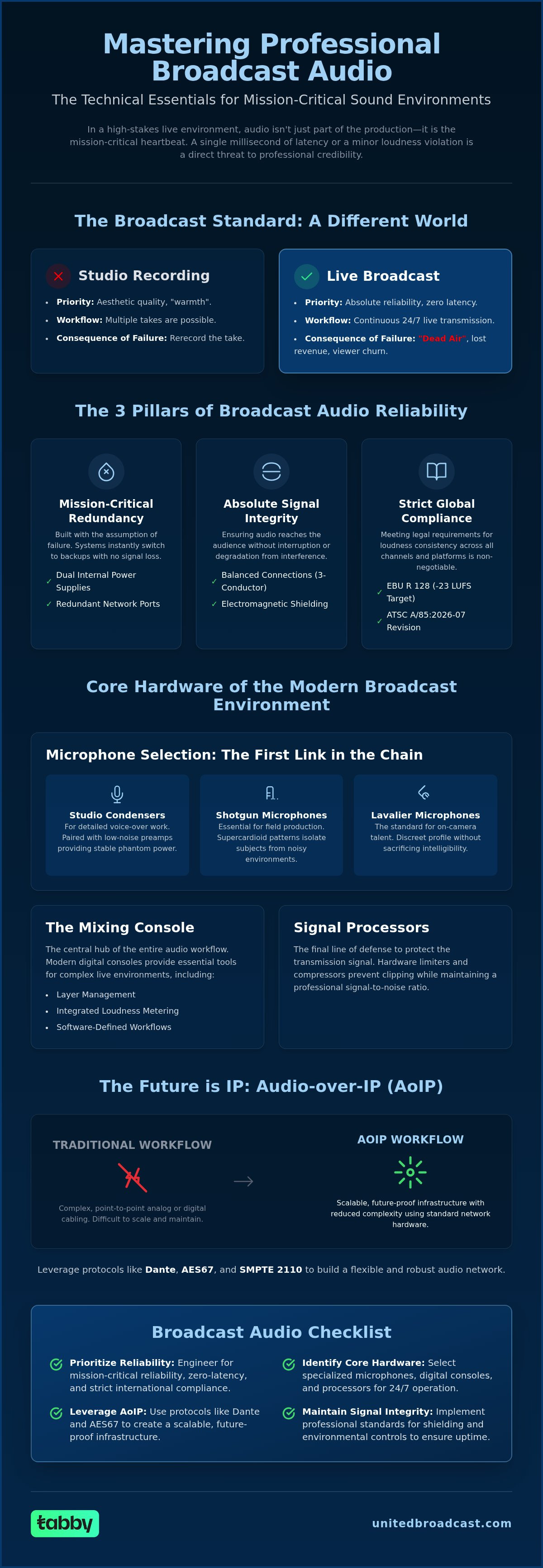
Professional broadcast audio isn't just about capturing sound; it's about the absolute guarantee that the audio reaches the audience without interruption or degradation. While high-end recording studios might prioritize the aesthetic "warmth" of a preamp, professional audio equipment for broadcast is judged by its reliability, latency, and strict adherence to international standards. It's a specialized ecosystem of hardware and software designed to handle the rigors of continuous live transmission. Adhering to Professional audio standards ensures that signals remain clean, levels stay consistent, and the equipment survives the demanding environment of a master control room or a remote production truck.
The primary differentiator for broadcast is the consequence of failure. In a studio, you can simply record another take. In live broadcast, "dead air" results in immediate lost revenue and viewer churn. This reality dictates every choice in the signal chain, from the microphone at the start to the encoder at the end. Every component must be engineered to provide predictable, transparent results 24/7.
Mission-Critical Reliability and Redundancy
Broadcast-grade gear is built with the assumption that components will eventually fail. To counter this, professional devices often feature dual internal power supplies and redundant network ports. If one power source drops or a network switch fails, the system switches to the backup instantly without an audible pop or signal loss. Standardizing on balanced connections is another essential practice. By using three-conductor cables, engineers cancel out electromagnetic interference, which is vital in dense equipment racks where power cables and signal lines run in close proximity.
Compliance and Quality Control
Consistency across channels and platforms is a legal requirement in many regions. The EBU R 128 standard, which targets -23 LUFS, and the updated ATSC A/85:2026-07 practice for digital television ensure that viewers don't have to reach for their volume controls during a program. Meeting these targets requires real-time loudness metering integrated directly into the console or signal path. Hardware limiters and compressors act as the final line of defense, protecting the transmission signal from clipping while maintaining a professional signal-to-noise ratio. These tools don't just improve sound; they ensure the facility remains compliant with international broadcasting regulations.
Essential Audio Components for Modern Broadcast Environments
Selecting the right professional audio equipment for broadcast is the foundation of any reliable media facility. This hardware must be engineered for continuous, long-term operation while maintaining technical transparency. From the microphone at the start of the chain to the mixing surface at the center, each component plays a specific role in ensuring the signal remains clean and the workflow remains efficient. In a modern environment, these components don't just exist in isolation; they must interact seamlessly within a larger system integration.
Microphones serve as the primary point of entry. For studio environments, large diaphragm condensers provide the necessary detail for voice-over work. In contrast, shotgun microphones are essential for field production where off-axis rejection is critical. Lavalier microphones remain the standard for on-camera talent, offering a discreet profile without sacrificing intelligibility in a live television setting.
Microphone Selection for Studio and Field
Choosing the right polar pattern is the first step in managing a noisy broadcast environment. Supercardioid and hypercardioid patterns help isolate the subject, which is vital in open-plan newsrooms or busy outdoor locations. Additionally, broadcast preamps must provide stable, low-noise phantom power to high-sensitivity condensers. When deploying wireless systems, managing frequency coordination is a technical necessity to avoid interference from local RF traffic. This is where professional-grade diversity receivers and high-tier wireless components become indispensable for maintaining signal integrity.
The Broadcast Mixing Desk
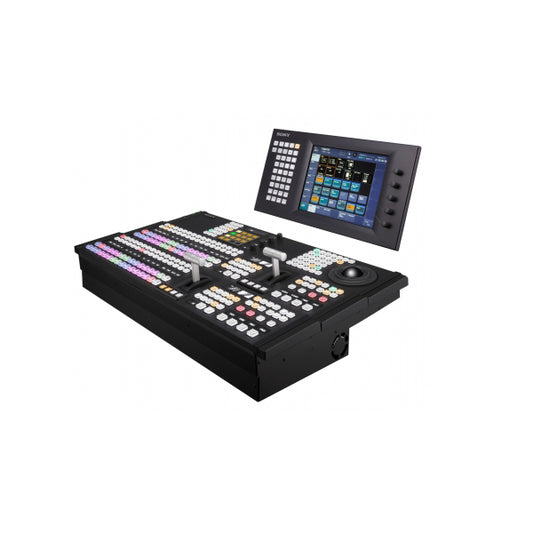
The mixing console is the central hub of the audio workflow. While analog desks are still valued for their simplicity in small setups, digital consoles offer the layer management needed for complex live production. A high fader count is useful, but the ability to quickly recall snapshots and manage hundreds of inputs via virtual layers is what defines a modern broadcast desk. These consoles are designed to handle the high-pressure demands of live transmission where speed and accuracy are paramount.
Crucially, broadcast-specific consoles include GPIO (General Purpose Input/Output) capabilities. These allow the desk to trigger "On Air" lights or initiate fader starts for automated playback systems. In high-pressure environments, tactile control remains superior to software-only interfaces. Physical faders and dedicated knobs allow operators to make split-second adjustments without looking away from the program monitors, ensuring a smoother production flow.
Monitoring and processing provide the final layer of quality control. Unlike consumer speakers designed to sound "pleasing," accurate broadcast monitors reveal every flaw in the signal. Hardware-based signal processors handle the heavy lifting of EQ, dynamics, and delay compensation, ensuring the audio is polished before it reaches the encoder. If you're looking to upgrade your facility, you can consult with our technical team to find the right configuration for your specific broadcast needs.
Transitioning to Audio-over-IP (AoIP) and Digital Workflows
While physical components define the quality of capture, the method of transport determines the flexibility and efficiency of your entire facility. The industry has moved decisively away from traditional point-to-point analog wiring toward Audio-over-IP (AoIP). This technology allows you to move hundreds of channels of uncompressed, low-latency audio across standard IT networks. By treating audio as data packets, broadcasters can route any input to any output with a simple software patch, eliminating the need for massive copper cable runs and complex physical patch bays.
Integrating professional audio equipment for broadcast into an IP backbone requires a solid understanding of networking fundamentals. Unlike standard office data, broadcast audio is time-critical. If packets arrive out of order or with inconsistent timing, the result is audible jitter or signal dropouts. Successful implementation relies on Precision Time Protocol (PTP) to ensure every device on the network stays perfectly synchronized to a master clock.
Dante, Ravenna, and AES67 Explained
Choosing the right protocol depends on your existing infrastructure and production requirements. Dante is currently the most widely adopted commercial solution, featuring in over 3,500 products from more than 500 manufacturers as of 2026. It is favored for its "plug-and-play" simplicity and robust management software. Ravenna, conversely, is an open-source alternative often found in high-end European broadcast environments and SMPTE 2110 deployments due to its flexibility and support for higher sample rates.
Interoperability is no longer the hurdle it once was. AES67 serves as the industry's essential interoperability standard for 2026, allowing different AoIP protocols to exchange audio streams across a unified network. To maintain this stability, you must use managed switches. These allow for Quality of Service (QoS) settings, which prioritize audio traffic over less critical data, ensuring your signal remains uninterrupted even during peak network loads.
Scalability and Future-Proofing
The greatest advantage of an IP-based workflow is its inherent scalability. In a traditional setup, adding four new microphones might require hours of pulling new cables through walls. In an AoIP environment, you simply connect the new equipment to the nearest network switch. This agility is the backbone of modern Remote Production (REMI), where audio from a live event can be sent back to a central studio hundreds of kilometers away with negligible latency.
Transitioning doesn't mean discarding your existing hardware. High-quality analog microphones and legacy consoles can be integrated into a digital backbone using I/O stages or "breakout boxes." These devices act as the bridge, converting analog signals into IP packets at the source. This hybrid approach allows you to modernize your infrastructure incrementally while maintaining the value of your previous investments in high-tier audio gear.
Best Practices for Audio Signal Integrity and Maintenance
Maintaining the integrity of a signal path requires more than just high-quality cables. It demands a rigorous approach to environmental control and routine technical oversight. In complex studio racks, cable management is a primary defense against electromagnetic interference. Using properly shielded, balanced lines helps prevent the hum and buzz that can ruin a transmission. Organizing these cables to separate high-voltage power lines from low-level audio signals is a basic but critical step for any facility. When professional audio equipment for broadcast is installed correctly, the noise floor remains low, ensuring that the final output is as transparent as possible.
Protecting Sensitive Audio Electronics
Broadcasters in regional climates face specific challenges regarding heat and dust. High-density audio servers and power amplifiers generate significant thermal energy. Without proper rack ventilation and climate-controlled equipment rooms, these components can suffer from premature failure or thermal throttling. Implementing a structured airflow system ensures that heat is efficiently removed from the rack, protecting the internal circuitry of your processors.
Power stability is equally important. Using professional power conditioners protects your investment from voltage spikes and line noise. Additionally, dust is a constant threat to mechanical components. Establishing cleaning protocols for faders and connectors prevents the buildup of debris that causes scratchy audio or intermittent connections. Regular maintenance in these areas is what separates a reliable 24/7 operation from one prone to unexpected downtime.
Calibration and Testing
Even the most expensive hardware cannot perform optimally in a poorly treated acoustic environment. Acoustic treatment is essential to ensure that what the engineer hears in the monitoring room is an accurate representation of the signal. Without bass traps and diffusion, standing waves and reflections can lead to poor mixing decisions that don't translate well to the audience's home environment.
Regular calibration ensures the entire audio chain remains aligned. Using reference signals to check levels from the microphone preamp through to the final transmitter stage guarantees consistency across the program. This level of technical discipline is standard across all high-end media services. For example, maintaining precision in audio follows the same rigorous logic as the standards outlined in our Cinema Lens Repair guide, where optical maintenance is treated with the same level of professional care. Developing a comprehensive maintenance schedule is the only way to safeguard your infrastructure against the long-term effects of environmental stress and hardware wear.
Implementing Professional Audio Solutions with UBMS
Selecting the right hardware is only half the challenge. The true complexity lies in ensuring diverse components function as a unified, reliable system. Since 1997, UBMS has operated as a veteran provider of broadcast solutions, bridging the gap between high-end equipment sales and complex technical implementation. We don't simply act as a vendor; we serve as a dedicated technical partner. Our approach to professional audio equipment for broadcast focuses on creating a cohesive ecosystem where signal integrity, user workflow, and long-term reliability are prioritized. By providing access to global brands and the latest 2026 audio technology, we ensure your facility remains competitive and compliant with international standards.
System Integration Expertise
Modern broadcast environments require a deep understanding of how audio interacts with video, lighting, and networking infrastructure. Our team handles the design and deployment of sophisticated audio-visual systems, ensuring that every fader start and GPIO trigger works exactly as intended. This expertise is particularly vital when managing the narrow tolerances and space constraints of mobile production. We handle the intricacies of OB Van System Integration, where audio must be perfectly synchronized with multi-camera feeds in a high-pressure, live environment. Beyond the initial setup, we provide comprehensive training for your staff. This ensures your operators are comfortable managing new digital consoles and navigating the transition to IP-based workflows without hesitation.
After-Sales Support and Service
The high stakes of live transmission mean that equipment downtime is not an option. Our commitment to your facility extends far beyond the point of purchase. We maintain a dedicated service center in the UAE, staffed by expert technicians who understand the specific needs of professional media gear. This local support provides peace of mind that a standard international warranty cannot match. Whether you need routine calibration or an urgent repair, having a regional hub for technical assistance ensures the longevity of your investment.
Maintaining a 24/7 broadcast operation requires a proactive approach to hardware health. We offer consultation services for facilities looking to upgrade legacy analog studios to modern digital standards. Our specialists can help you audit your current signal chain and identify the most efficient path toward a future-proof infrastructure. To begin optimizing your facility, contact our specialists to design your next Broadcast Studio Setup.
Future-Proofing Your Broadcast Audio Infrastructure
Achieving excellence in modern production requires a strategic shift from isolated hardware to integrated, network-aware ecosystems. Adopting interoperable standards like AES67 and ensuring strict loudness compliance isn't just a technical preference; it's a fundamental requirement for 24/7 reliability. While high-quality professional audio equipment for broadcast provides the necessary foundation, the true value lies in expert system integration and a proactive maintenance strategy that accounts for regional environmental challenges.
As an authorized distributor for leading global brands, United Broadcast & Media Solutions (UBMS) has provided expert system integration since 1997. Our in-house technical service center ensures your infrastructure remains operational and calibrated long after the initial installation. We focus on building long-term partnerships that prioritize technical precision and logistical excellence, ensuring your studio is prepared for the demands of 2026 and beyond.
Your audience expects crystal-clear sound every time you go on air. We're here to help you deliver that experience with total precision and professional confidence.
Frequently Asked Questions
What is the difference between pro-audio and broadcast audio equipment?
Broadcast audio equipment is distinguished by its mission-critical redundancy and adherence to strict transmission standards. While standard professional audio gear focuses on acoustic character, broadcast systems prioritize 24/7 uptime through dual power supplies and balanced signal paths. These systems are specifically designed to meet regulatory loudness targets and integrate seamlessly with video automation, ensuring that the audio remains synchronized and stable during live transmissions.
Do I need a digital mixing console for a small broadcast studio?
A digital mixing console is highly recommended even for small facilities due to its superior routing flexibility and preset recall capabilities. Digital surfaces allow operators to switch between different show configurations instantly, which is essential for multi-program studios. Most modern digital desks also support AoIP protocols, making it easier to scale your professional audio equipment for broadcast as your production requirements grow over time.
Is Dante compatible with AES67 in a broadcast environment?
Dante is fully compatible with AES67 when configured in its dedicated interoperability mode. While Dante is a proprietary protocol, it uses AES67 as a common bridge to communicate with other AoIP standards like Ravenna. This allows engineers to build a diverse network using hardware from different manufacturers while maintaining high-quality, uncompressed audio transport across a unified IT backbone.
How can I reduce latency in my live broadcast audio feed?
You can reduce latency by utilizing high-speed AoIP networks and hardware-based signal processing instead of software-only solutions. Ensuring your network uses Precision Time Protocol (PTP) for clocking is vital for keeping all devices in perfect sync. Additionally, minimizing the number of analog-to-digital and digital-to-analog conversion stages in your signal chain will significantly lower the total delay in your live feed.
What are the essential microphones for a television news studio?
A television news studio requires a combination of lavalier, shotgun, and large-diaphragm condenser microphones. Lavaliers are the primary choice for on-air talent due to their discreet profile. Shotgun microphones are often used as overhead backups or for capturing localized room sound. For pre-recorded segments and news promos, a large-diaphragm condenser in a treated voice-over booth provides the necessary vocal authority.
Why is loudness compliance important for modern broadcasters?
Loudness compliance is essential to prevent sudden volume jumps that frustrate viewers and to meet legal broadcasting regulations. Standards like the July 2026 update to ATSC A/85 and EBU R 128 mandate specific targets, such as -23 or -24 LUFS. Failing to comply can result in regulatory fines and a poor user experience, particularly when switching between program content and advertisements.
Can I use standard IT switches for my Audio-over-IP network?
Standard unmanaged IT switches are unsuitable for broadcast because they cannot prioritize time-sensitive audio packets. You must use managed switches that support Quality of Service (QoS) and IGMP snooping to prevent network congestion. These features ensure that your professional audio equipment for broadcast receives the necessary bandwidth and timing priority to maintain a stable, glitch-free signal across the entire facility.
How often should broadcast audio equipment be serviced?
You should schedule a comprehensive technical service for your equipment at least once every twelve months. In environments with high dust or heat, bi-annual maintenance is preferable to ensure cooling fans and faders remain functional. Regular audits of your signal path and periodic recalibration of your monitoring systems help identify potential component failures before they cause unexpected downtime during a live broadcast.


