

Broadcast Studio Design in the UAE: The 2026 Professional Integration Guide
Your studio's layout might look impressive on an architectural floor plan, but if the underlying signal architecture isn't built for 2026 standards, it's already obsolete before the first "on-air" light flickers. In the fast-evolving media hubs of Dubai and Abu Dhabi, you're likely feeling the pressure to choose between 4K and 8K while grappling with the technical complexities of IP-based latency and hardware compatibility. It's a common struggle to find a reliable national system integrator who can bridge the gap between high-end equipment and seamless workflow execution.
This guide provides a definitive roadmap to mastering broadcast studio design UAE requirements. You'll discover how to integrate a future-proof, world-class environment using the latest 4K, IP, and lighting technologies available across the Emirates. We'll explore the transition from traditional SDI to NDI and ST 2110 workflows, ensuring your infrastructure remains relevant as the MENA media market scales toward its projected AED 66 billion valuation by 2028. We'll also detail the essential components for a turn-key solution that meets national standards, moving from professional camera synergy to sophisticated, heat-resistant lighting control.
Key Takeaways
- Understand the strategic transition from traditional SDI to modern IP-based and NDI workflows to ensure your facility remains future-proof against technological obsolescence.
- Learn how to achieve technical synergy by selecting the right combination of broadcast cameras, cinema lenses, and professional lighting equipment for high-tier production.
- Discover the phased approach to broadcast studio design UAE specialists use to move from initial needs assessment to a fully commissioned, turn-key environment.
- Explore the critical role of professional system integration in solving signal latency issues and ensuring your infrastructure meets national broadcast standards.
- Gain insights into optimizing control room efficiency through advanced signal management and the strategic implementation of video switchers and routers.
What Defines Modern Broadcast Studio Design in the UAE?
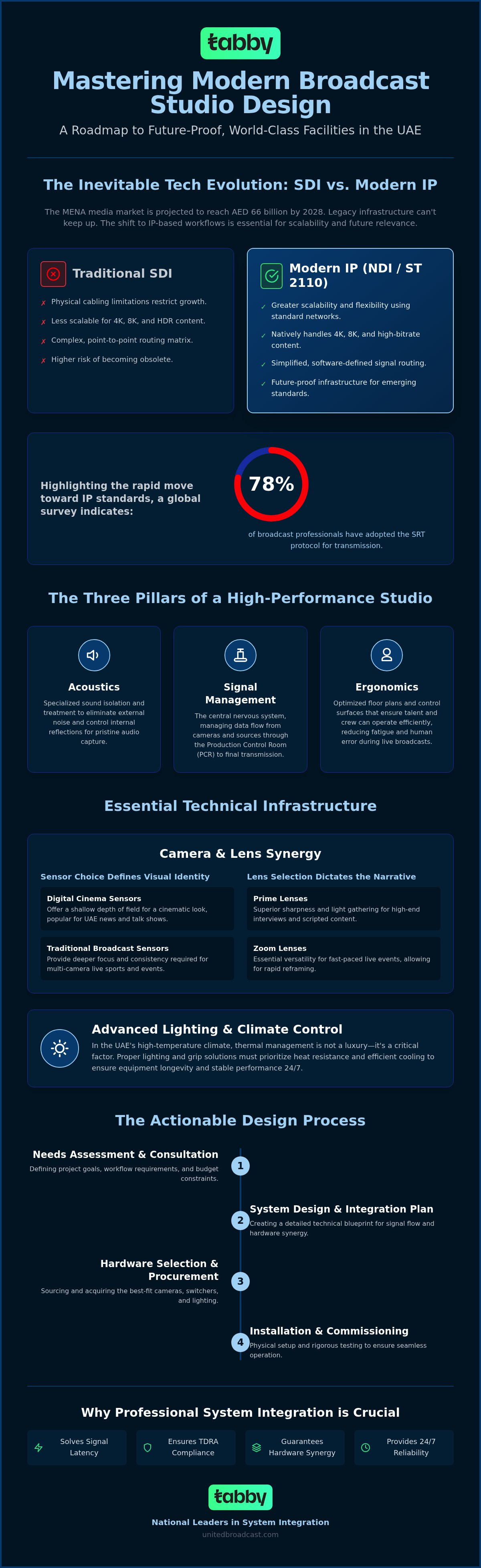
Modern modern broadcast studio design in the UAE has evolved from simple production spaces into complex, interconnected ecosystems. In a market where the media and entertainment sector is projected to hit AED 66 billion by 2028, the technical requirements have shifted toward higher resolution and lower latency. This evolution is defined by the transition from traditional Serial Digital Interface (SDI) architecture to IP-based workflows like SMPTE ST 2110 and NDI. These technologies allow for greater scalability, enabling facilities to handle 4K and 8K content without the physical limitations of legacy cabling. A global survey in 2026 indicates that 78% of broadcast professionals have already adopted the SRT protocol for transmission, highlighting the rapid move toward IP standards.
The Core Components of a Professional Studio
A high-performance studio relies on three pillars: acoustics, signal management, and ergonomics. Acoustic treatment goes beyond simple foam; it requires specialized sound isolation to prevent external noise from entering the sensitive environment of the recording floor. Within the Production Control Room (PCR), signal routing serves as the central nervous system, managing the flow of data from broadcast studio design UAE projects to the final transmission point. Finally, an ergonomic layout ensures that both talent and technical crews can operate efficiently during high-pressure live broadcasts, reducing fatigue and minimizing human error. You'll find that an optimized floor plan directly impacts the speed of your daily operations.
National Standards and Technical Compliance
Operating a broadcast facility in the Emirates requires strict adherence to regional regulations. The Telecommunications and Digital Government Regulatory Authority (TDRA) manages frequency allocations, making it vital to select professional lighting equipment and wireless systems that don't interfere with national signals. Reliability is equally important, as most broadcasters require 24/7 uptime. This demand makes hardware durability a priority, especially given the regional climate's impact on cooling and power stability. System integration serves as the critical bridge between hardware components and a unified production workflow. By choosing a partner who understands these standards, you ensure that your professional video cameras and routing gear work in perfect harmony with UAE-specific broadcast protocols.
Technical Infrastructure: Cameras, Lighting, and Signal Routing
The success of any broadcast studio design UAE project hinges on the synergy between the camera chain and the lighting environment. It's no longer just about capturing an image; it's about the technical precision required for high-dynamic-range (HDR) and 4K delivery. Professional broadcast monitors play a vital role here, ensuring color-accurate production that meets the strict standards of regional networks. Without high-performance monitoring, even the most expensive camera sensors can't guarantee a consistent visual output across different transmission platforms. This hardware layer serves as the foundation for every frame that reaches the viewer's screen.
Camera Selection and Lens Synergy
Choosing between traditional broadcast sensors and digital cinema sensors is a strategic decision that defines the visual identity of your content. Large-format sensors are increasingly popular for UAE news and talk shows because they offer a shallow depth of field that mimics a cinematic look. Integrating professional video cameras into a multi-cam environment requires careful matching of color science and genlock synchronization. While zoom lenses offer the versatility needed for fast-paced live events, prime lenses provide superior sharpness and storytelling depth for scripted or high-end interview segments. Selecting the right glass is just as important as the body it sits on, as the lens dictates the light's path before it ever hits the sensor.
Advanced Lighting and Grip Solutions
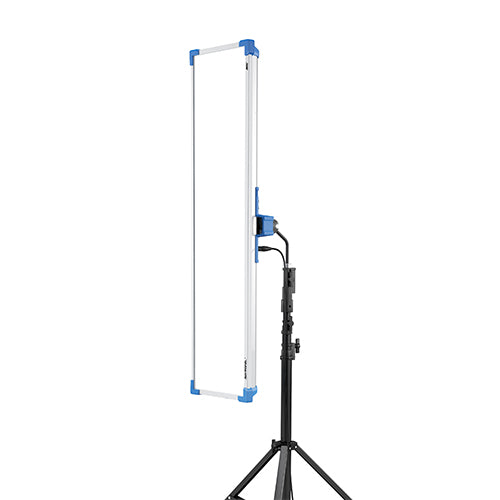
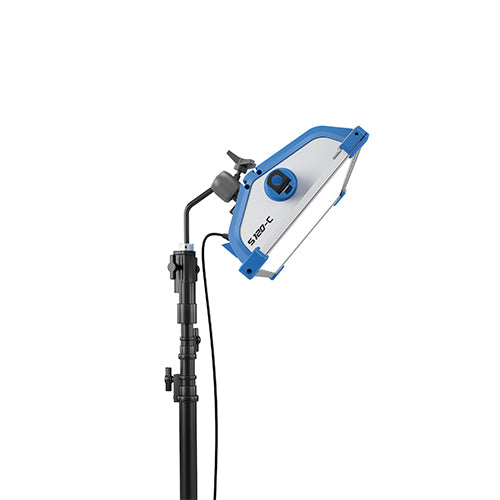
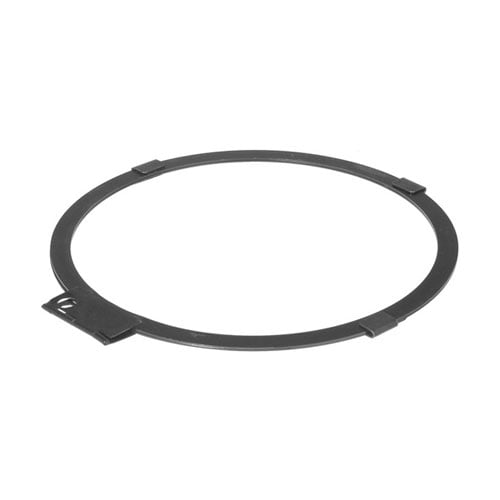
In the UAE's high-temperature climate, thermal management is a critical factor in studio longevity. Modern ARRI lighting solutions utilize LED technology to significantly reduce heat output compared to traditional tungsten fixtures. This shift not only lowers cooling costs but also allows for precise color temperature control without the need for physical gels. Building a versatile lighting grid involves more than just fixtures; it requires robust grip equipment, including camera pedestals and lighting modifiers, to create a dynamic and safe production space. As the region continues to see investment from United Broadcast: National Leaders in the economic sector, the demand for these energy-efficient, high-output environments is growing. High-quality grip gear ensures that your lighting remains stable and your camera movements remain fluid, which is essential for maintaining professional production values during 24/7 operations.
Achieving this level of technical harmony requires more than just purchasing hardware. It involves a deep understanding of how signal routing and equipment compatibility affect the final broadcast. If you're looking to refine your facility's infrastructure, you can consult with our integration specialists to ensure every component works in perfect unison.
Analyzing Workflow Efficiency: Control Rooms and Signal Management
The efficiency of a broadcast studio design UAE facility is ultimately determined by the architecture of its Production Control Room (PCR). While previous sections focused on capturing the image, the control room is where those signals are processed, switched, and monitored for transmission. Traditional SDI setups offer point-to-point reliability, but they lack the scalability required for modern multi-platform delivery. In contrast, IP-based routing provides unparalleled flexibility. By utilizing a network-centric approach, a single fiber optic cable can carry hundreds of high-resolution signals, significantly reducing the physical cabling mass and cooling requirements within the rack room.
The Production Control Room (PCR) Backbone
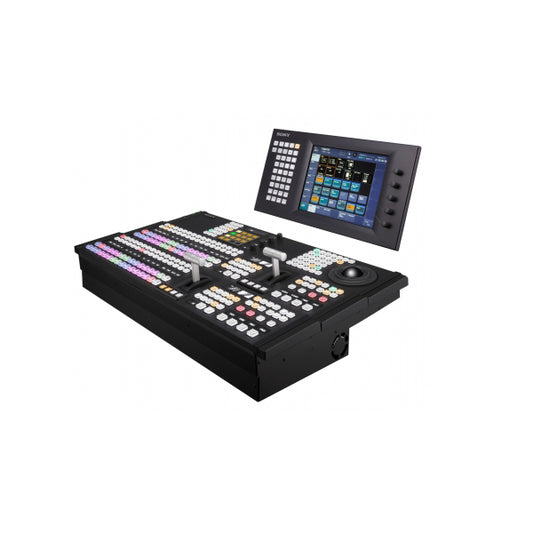
High-bitrate 4K production demands video switchers with massive processing power and low-latency performance. Selecting the right broadcast studio gear UAE is essential for maintaining 99.9% uptime during live national transmissions. High-density broadcast routers act as the traffic controllers for the facility, ensuring that every camera feed, graphics channel, and playback source reaches its destination without signal degradation. Modern switchers now integrate multi-viewer outputs and internal clip players, which streamlines the workflow by reducing the need for external peripheral devices. This consolidated approach allows a smaller technical crew to manage more complex productions effectively.
Audio and Communication Infrastructure
Audio integration has moved beyond analog patches to sophisticated networking protocols like Dante and AES67. These IP-based standards allow for low-latency monitoring and seamless integration with video workflows across the entire studio complex. Ensuring clear communication is equally critical for a successful broadcast. Multi-channel studio intercoms provide the necessary link between directors, floor managers, and technical operators, allowing for instantaneous coordination during high-pressure live segments. These systems must be robust enough to handle the RF-heavy environments common in UAE media cities without interference. Redundant signal paths are mandatory in live broadcast environments to prevent a single hardware failure from taking the entire production off the air.
Managing these complex signal paths requires a deep understanding of both hardware limits and software orchestration. When the routing architecture is designed correctly, it allows the creative team to focus on storytelling rather than technical troubleshooting. This level of integration ensures that your facility can scale from a simple talk show to a massive multi-camera event without requiring a complete hardware overhaul.
The Actionable Design Process: From Consultation to Commissioning
A successful broadcast studio design UAE project requires a methodical, multi-phase approach to transform a conceptual vision into a functional media environment. This process moves beyond simply purchasing hardware; it involves a deep technical analysis of how every component interacts within the unique environmental conditions of the Middle East. From the initial feasibility study to the final signal validation, each step is designed to mitigate risk and ensure that the facility meets international standards for uptime and quality. A structured workflow prevents the common pitfalls of equipment incompatibility and signal latency that often plague less organized builds.
Consultation and System Architecture
The first phase centers on a comprehensive needs assessment to define your specific production goals. Whether the facility is intended for 24/7 live news, corporate streaming, or high-end virtual production, the architecture must be tailored to the expected output. During this stage, engineers create detailed CAD layouts that map out equipment placement, rack room cooling requirements, and complex signal flows. This planning phase is also the time to select specialized accessories that enhance flexibility, such as the ARRI Omnibar for versatile production kits. Defining these technical requirements early ensures that the procurement phase aligns perfectly with the intended workflow.
Installation and Technical Commissioning
Once the design is finalized and equipment is procured, the focus shifts to on-site integration. This phase demands extreme precision, particularly regarding high-end cabling and server room setup. In the UAE's climate, managing the thermal load of high-density racks is critical for hardware longevity. After the physical installation, the commissioning process begins, which includes:
- Final Testing: Rigorous signal validation to ensure every path is clean and redundant systems are functional.
- Staff Training: Hands-on sessions for technical teams to master new switchers, camera control units (CCUs), and IP routing software.
- Workflow Optimization: Fine-tuning the production chain to reduce operational friction and improve the speed of content delivery.
The lifecycle of a professional studio doesn't end at the launch. Ongoing technical support and regular equipment calibration are essential to maintain peak performance. Addressing the maintenance lifecycle ensures that sensors remain color-accurate and mechanical components like pedestals continue to operate smoothly. This long-term commitment to technical excellence is what separates a world-class broadcast facility from a temporary setup. It's about building an infrastructure that can evolve as production demands increase over the coming years.
United Broadcast: National Leaders in System Integration
Selecting a partner for broadcast studio design UAE projects requires more than just a vendor; it demands a technical ally with a deep-rooted history in the region's media landscape. Founded in 1997, United Broadcast & Media Solutions (UBMS) has spent over 25 years acting as a trusted advisor to national broadcasters and private production houses alike. We provide a comprehensive, one-stop solution that bridges the gap between high-end hardware procurement and complex system architecture. By managing every stage of the integration lifecycle, from initial consultation to final commissioning, we ensure that your facility operates with the precision and reliability required for high-stakes media delivery.
Expertise and Brand Partnerships
Our role as an authorized distributor for global leaders like Sony and ARRI allows us to offer more than just equipment; we provide a direct line to manufacturer-backed expertise and warranty support. We leverage deep technical knowledge of Sony Alpha cameras and lenses to design specialized setups that meet modern aesthetic and functional demands. Choosing a national partner is essential for maintaining equipment longevity, as we understand the specific challenges of the UAE environment, including power stability and thermal management. This local expertise ensures that your camera chains and lighting grids are optimized for peak performance from day one.
Post-Installation Support and Maintenance
The technical integrity of a studio doesn't end once the cables are laid. Regular broadcast equipment maintenance is vital to prevent unexpected downtime and ensure signal consistency over years of operation. Our dedicated national service center provides rapid response times for repairs and calibrations, keeping your sensors color-accurate and your mechanical systems fluid. We understand that in live broadcast, even a few minutes of downtime is unacceptable. Our service-oriented approach focuses on long-term stability, offering the logistical excellence needed to support 24/7 production environments across the Emirates.
Whether you're building a new facility from the ground up or upgrading an existing control room to IP-based standards, our team possesses the technical infrastructure to support your vision. We prioritize long-term partnerships over one-off transactions, ensuring your studio remains at the forefront of global media standards.
Building the Future of Emirati Media
Designing a world-class facility requires a strategic shift from legacy hardware to flexible, IP-based signal management. This guide has outlined how the synergy between high-end camera chains, energy-efficient lighting, and robust control room architecture creates a production environment that is both powerful and future-proof. Success in broadcast studio design UAE projects depends on a methodical phased approach, moving from technical feasibility to expert commissioning. By prioritizing infrastructure that meets national standards, you ensure your studio can scale with the region's rapidly growing media sector.
As an official Sony and ARRI distributor with over 25 years of industry leadership, United Broadcast & Media Solutions provides the technical infrastructure and logistical excellence your project demands. Our dedicated national service center ensures your investment remains protected through expert maintenance and rapid repair support. We possess the regional expertise to bridge the gap between complex hardware and seamless workflow execution. We're ready to help you navigate the complexities of 4K and 8K integration.
We look forward to helping you realize your vision for a cutting-edge broadcast environment that stands the test of time.
Frequently Asked Questions
How long does a typical broadcast studio design and integration project take in the UAE?
A standard project typically spans three to six months from the initial consultation to the final commissioning. Smaller corporate streaming setups can be completed in approximately eight to ten weeks; however, national-scale facilities require more time for technical feasibility studies and equipment procurement. The timeline is often dictated by the lead times of specialized hardware and the complexity of the civil works required for acoustic isolation.
What is the difference between SDI and IP-based studio workflows?
Traditional SDI architecture relies on point-to-point coaxial cabling with fixed bandwidth, whereas IP-based workflows utilize high-speed network infrastructure for bidirectional data flow. IP standards like ST 2110 allow for massive scalability and the ability to share resources across multiple rooms via a single fiber connection. This shift is a core component of modern broadcast studio design UAE strategies to ensure long-term facility flexibility.
Can you integrate 4K cameras into an existing HD studio infrastructure?
Yes, you can integrate 4K cameras by down-converting the output signal to 3G-SDI or HD-SDI at the camera control unit or switcher input. This approach allows you to invest in superior sensors today while continuing to use your current HD routing and monitoring hardware. It's a cost-effective way to phase in high-resolution gear without requiring an immediate, total overhaul of your signal backbone.
What are the essential lighting requirements for a modern virtual production studio?
Virtual production demands flicker-free LED fixtures with high TLCI ratings to ensure color accuracy against LED volumes or green screens. You must synchronize the lighting refresh rate with the camera shutter to avoid banding. Soft, uniform illumination is critical to minimize shadows and spill, which can interfere with the real-time keying or rendering processes used in XR and AR environments.
Does UBMS provide training for studio staff after the integration is complete?
UBMS includes comprehensive technical training for your engineering and production teams as a vital part of the commissioning phase. We ensure your staff is proficient in operating new switchers, camera control units, and IP routing software before the facility goes live. This hands-on guidance reduces operational friction and empowers your team to manage complex live broadcasts with confidence from day one.
What maintenance is required for professional broadcast cameras and lenses?
Professional cameras require regular sensor cleaning and back-focus calibration to maintain image integrity. Lenses need periodic optical alignment and lubrication of the zoom and focus mechanics to ensure smooth operation. Given the regional climate, dust management is a priority for any broadcast studio design UAE project. Our national service center provides these specialized repairs to prevent unexpected hardware failure during critical productions.
How do I ensure my studio design is future-proof for 8K broadcast?
Future-proofing for 8K requires a foundation of high-bandwidth fiber optic cabling capable of supporting 100GbE speeds or higher. You should prioritize an IP-based routing architecture that adheres to SMPTE ST 2110 standards, as this allows for modular software and hardware upgrades. By building a network-centric facility now, you can scale your resolution capabilities without the need to replace your entire physical cable infrastructure later.
Is it better to use prime or zoom lenses for a fixed-studio environment?
Zoom lenses are the standard choice for live studio environments because they provide the operational speed needed to change framing during a broadcast. While prime lenses offer superior sharpness and wider apertures, they lack the versatility required for fast-paced multi-cam shows. Most professional facilities utilize high-performance zoom lenses to maintain a consistent look while giving directors the flexibility to adjust shots instantaneously.


