

Building a Modern Broadcast Hub: The 2026 Checklist for TV Studio Equipment in Dubai
A world-class broadcast facility is no longer defined by the quantity of its hardware, but by the seamless agility of its signal flow. Many professionals feel the pressure of high initial investments only to face the risk of technical obsolescence within a single production cycle. You likely realize that sourcing the right TV studio equipment in Dubai requires more than just comparing spec sheets; it requires a deep understanding of how disparate brands and protocols interact in a high-stakes environment.
This article provides a professional roadmap to selecting and integrating high-tier broadcast gear for national-scale media production. We will help you manage the complexity of modern signal routing and brand compatibility so you can build with confidence. You will find a comprehensive checklist of essential gear, including SMPTE-2110 native switchers and the latest system cameras, alongside a framework for long-term maintenance that protects your technical infrastructure. Whether you are upgrading an existing facility or designing a new hub, these insights ensure your studio remains at the forefront of the regional media landscape.
Key Takeaways
- Identify the specific sensor requirements and 4K/UHD 60p workflow standards necessary to meet national broadcast aesthetic benchmarks.
- Learn how to manage total wattage and studio heat while maintaining high-fidelity color accuracy with CRI and TLCI ratings above 95.
- Analyze the transition from traditional SDI to IP-based signal routing to ensure your infrastructure supports complex multi-viewer monitoring.
- Discover why professional system integration and calibration are essential when sourcing TV studio equipment in Dubai to ensure long-term gear synergy.
- Evaluate the requirements for digital audio mixing and wireless microphone counts to maintain clear communication across multi-segment productions.
Essential Video Acquisition: Professional Cameras and Optical Systems
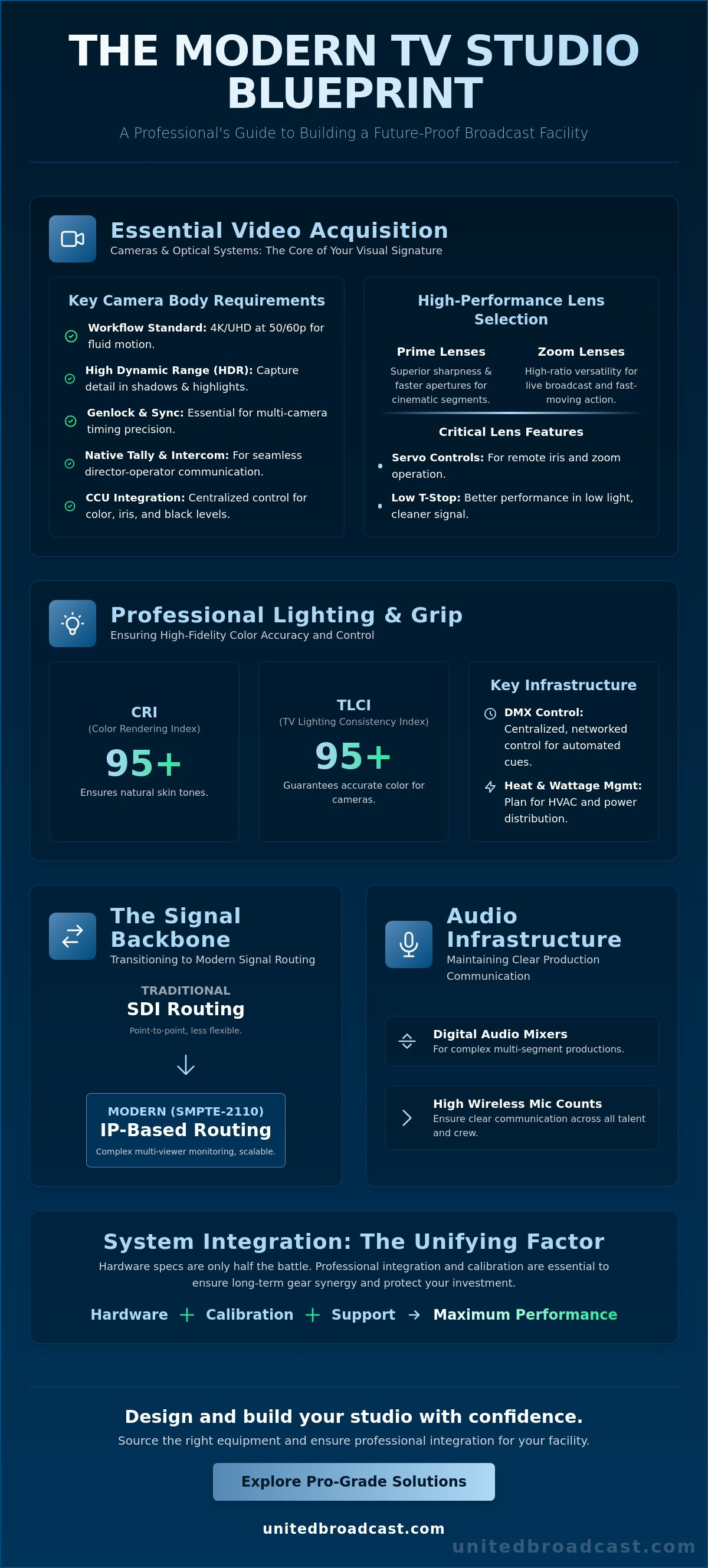
The choice of a camera sensor dictates the visual signature of your entire production. While Super 35mm sensors have long been the standard for broadcast due to their balance of depth-of-field and lens compatibility, many modern facilities in the UAE are transitioning to Full Frame systems to achieve a more cinematic aesthetic. This shift requires careful consideration of your workflow. For national-scale media, verifying support for 4K/UHD 50/60p is non-negotiable. These frame rates provide the fluid motion required for sports and live entertainment, ensuring your content meets global delivery requirements. Selecting the right TV studio equipment in Dubai means ensuring every acquisition tool can handle these high-bandwidth standards without compromising signal integrity.
Integrating these units into a larger technical ecosystem involves more than just mounting a body on a tripod. High-tier television studio components such as Camera Control Units (CCU) and dedicated studio viewfinders are essential for professional shading and precise focus. A robust CCU allows engineers to manage iris, black levels, and color matching from the control room, which is vital for maintaining a consistent look across multi-camera setups. Without these centralized controls, achieving a unified visual output across four or five cameras becomes nearly impossible during a live broadcast.
Selecting Professional Video Camera Bodies
When you evaluate professional video cameras, focus on the relationship between dynamic range and color science. High dynamic range (HDR) capabilities allow your studio to capture detail in both deep shadows and bright highlights, providing more flexibility during the grading process. You should also prioritize bodies that integrate tally and intercom signals natively. These features facilitate real-time communication between the director and the operator, which prevents errors during live transitions. Genlock provides the essential timing reference required to synchronize all video sources within a multi-camera environment. Choosing a body that supports these professional protocols ensures your facility operates with the precision expected of a national broadcaster.
High-Performance Cinema and Broadcast Lenses
Optical systems are typically divided between prime lenses for scripted, cinematic segments and high-ratio zoom lenses for live broadcast. Prime lenses offer superior sharpness and faster apertures, while zoom lenses provide the versatility needed to follow fast-moving action. For studio environments, you must verify the inclusion of servo controls. These electronic modules allow for remote iris and zoom operation from a tripod handle or a control desk, which is a standard requirement for professional operators. Additionally, assess the lens speed, often measured as a T-stop, to determine how well the glass performs in low-light conditions. Faster glass reduces the need for aggressive gain or ISO boosts, keeping your signal clean and noise-free. Versatile lens mounts are also a priority, as they allow you to adapt cinema glass or B4-mount broadcast zooms depending on the project's requirements.
Professional Lighting and Grip Infrastructure
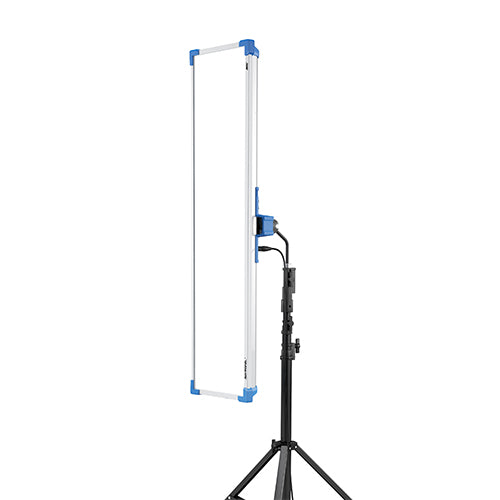
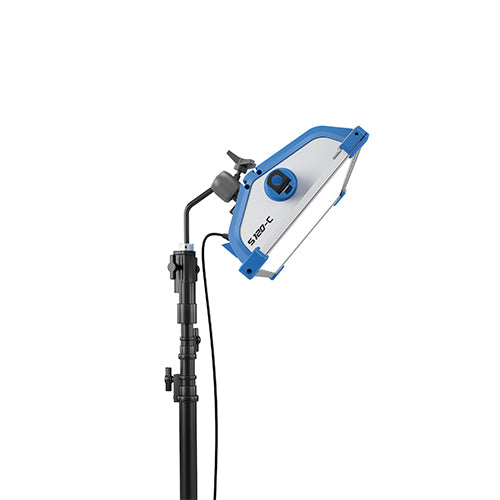
Designing a professional lighting grid requires a precise calculation of total wattage and heat dissipation. While LED technology has significantly reduced the thermal footprint compared to traditional tungsten fixtures, large-scale installations still generate heat that must be managed by the facility's HVAC systems. When selecting professional lighting equipment, you must prioritize units with Color Rendering Index (CRI) and Television Lighting Consistency Index (TLCI) ratings of 95 or higher. These metrics ensure that skin tones appear natural and that the camera sensors discussed in the previous section interpret color accurately without heavy post-production correction.
Adherence to broadcast engineering standards ensures that your lighting infrastructure integrates seamlessly with your video signal chain. Centralized DMX control systems are now the industry standard, allowing for automated lighting cues and remote dimming from the production control room. This level of control is essential for modern TV studio equipment in Dubai, where fast-paced productions require rapid set changes and complex lighting states. Implementing a networked DMX solution allows technicians to manage entire universes of lights from a single console, providing the precision needed for high-stakes broadcasting.
Advanced LED Studio Lighting Solutions
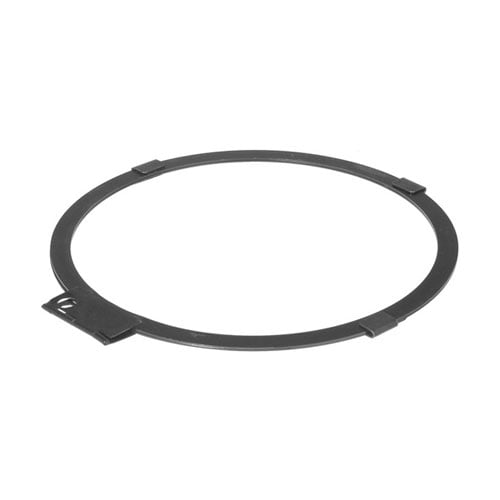
Explore ARRI lighting for the gold standard in color consistency and build quality. In a typical three-point lighting setup, you should balance soft-light panels for wrap-around illumination with focused Fresnel fixtures for backlight and modeling. Soft panels provide a diffused source that minimizes harsh shadows, while Fresnels offer a controllable beam for highlighting specific set elements. Bi-color and RGBWW systems provide the creative flexibility to shift color temperatures or introduce saturated hues without the need for physical gels. This versatility is vital for studios that host multiple programs with distinct visual identities on a single set.
Studio Grip and Support Systems
Stability is as critical as illumination in a professional environment. Heavy-duty pedestals and tripods must support the full weight of camera builds, including teleprompters and large studio viewfinders. Safety remains the highest priority for overhead rigs. Every fixture must be secured with safety cables and professional mounting hardware to prevent accidents. Specialized solutions like the ARRI Omnibar Production Kit offer versatile rigging options for complex studio layouts, ensuring that your TV studio equipment in Dubai is both secure and mobile. If you need assistance designing a custom grid that meets international safety codes, you can consult with our technical specialists to ensure your setup is fully optimized.
The Signal Backbone: Switchers, Routers, and Monitoring
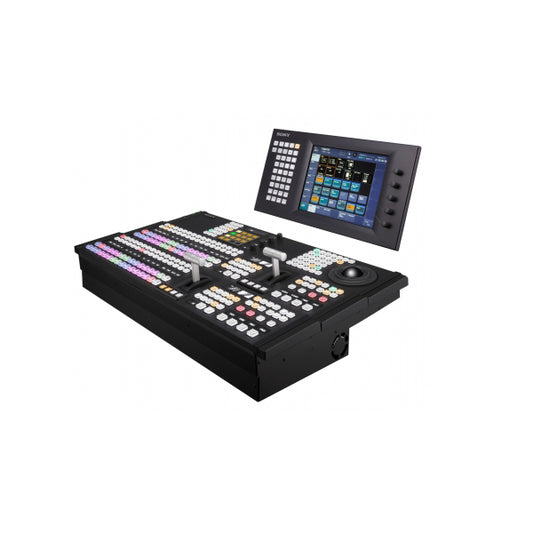
A robust signal backbone is the defining characteristic of a professional facility. While the cameras and lights provide the raw data, it's the switching and routing infrastructure that transforms these elements into a cohesive broadcast. When auditing TV studio equipment in Dubai, you must first analyze the balance between physical inputs, such as 12G-SDI and HDMI, and virtual inputs like NDI or IP-based streams. Hardware-based switching remains the gold standard for live reliability because it offers dedicated processing and near-zero latency; something software-only solutions often struggle to match during high-pressure national broadcasts.
Broadcast routers act as the traffic controllers for your signal paths, allowing you to send any source to any destination without re-patching cables. Multi-viewer outputs are equally critical, as they enable the production team to monitor all 4K/UHD sources simultaneously on a single large-format display. When planning your infrastructure, consult these Audio studio design recommendations to ensure your signal backbone effectively manages embedded audio and synchronization between video and sound departments. This integrated approach prevents the technical bottlenecks that often occur when signal management is treated as an afterthought.
Video Switchers and Production Routers
Modern production demands multiple layers of graphics, keys, and transitions. You should evaluate switchers based on their Mix/Effects (M/E) capabilities, as more M/E banks allow for greater layering complexity without exhausting your resources. As of June 2026, the transition to ST 2110 IP-based workflows has become a primary focus for national hubs. Native IP switchers, such as the latest SMPTE-2110 models, eliminate the need for costly converters and simplify the scaling of your facility. Ensure your production router has sufficient crosspoint capacity to handle your current camera count while leaving room for future expansion as your production needs grow.
Broadcast Grade Monitoring Systems
Precision monitoring is the only way to verify that your signal meets international delivery standards. You'll need reference monitors that feature 10-bit color depth to accurately assess the color science of your professional video cameras. These monitors must include built-in technical scopes, such as waveforms and vectorscopes, to monitor luminance and chrominance levels in real time. In a modern set, HDR (High Dynamic Range) monitoring is no longer optional. It's the only way to ensure that the high-contrast lighting and rich colors captured on set are being accurately represented in the final broadcast signal.
Audio Infrastructure and Production Communication
A broadcast's success often hinges on audio clarity just as much as visual fidelity. Selecting the right TV studio equipment in Dubai involves a meticulous audit of your audio signal chain to ensure every word reaches the audience without interference. You must first determine the precise count for wireless lavalier microphones needed for on-air talent versus shotgun microphones for capturing panel segments or ambient set sound. Managing these numerous inputs requires digital audio mixers that feature Dante or MADI integration. These digital protocols allow for high-channel counts over a single network cable, which significantly reduces the complexity of signal flow and minimizes the risk of compatibility issues between different hardware brands.
Communication between the control room and the studio floor is the invisible thread that holds a production together. Talent requires Interruptible Foldback (IFB) systems to receive real-time cues and instructions from the director without those cues being heard by the audience. For the technical crew, the clarity and reliability of wireless intercom systems are paramount. These systems must offer enough range and frequency agility to operate in the dense electromagnetic environments typical of modern media hubs. If you're designing a new facility, you can request an audio infrastructure audit to ensure your signal paths are fully optimized for live broadcast.
Studio Audio Monitoring and Mixing
Professional audio monitors are required for critical listening within the control room to identify subtle interference or phasing issues before they go to air. Low-latency processing is vital for live broadcast audio feeds to ensure that the sound remains perfectly synced with the 4K/UHD video signals processed by your switcher. Acoustic treatment within the studio space also plays a fundamental role; without proper sound absorption and diffusion, even the most expensive microphones will struggle to deliver broadcast-quality audio. Your mixing console should be the central hub for these signals, providing enough headroom and processing power to handle complex live mixes.
Intercom and Tally Integration
Effective production requires a seamless connection between the director and the technical crew. Verify that your tally lights are perfectly synchronized across all professional video cameras and the production switcher to ensure talent always knows which camera is active. Multi-channel intercom systems are necessary to separate director, audio, and lighting communications, preventing a cluttered headset feed that can lead to confusion. Wireless intercom reliability is critical in high-RF environments because signal drops can lead to missed cues and production delays. Integrating these communication tools correctly is a foundational step in deploying high-tier TV studio equipment in Dubai.
System Integration and Technical Support Services
A broadcast hub is only as reliable as its weakest connection. While the previous sections detailed the selection of high-tier cameras, lighting, and audio networks, the final phase of building a facility involves weaving these disparate technologies into a single, functional unit. Professional system integration is the specialized discipline that ensures your TV studio equipment in Dubai operates with the synergy required for national-scale production. This isn't merely about plugging in cables; it's about managing complex signal paths and ensuring that the metadata and control protocols of different brands interact without conflict.
Professional calibration services for cameras and monitors are equally essential for maintaining visual integrity. Even the highest-tier 10-bit reference monitors require regular adjustment to ensure they represent color and luminance accurately across the entire studio. Calibration ensures that a specific color profile on one camera matches perfectly with another, providing the visual consistency that audiences expect from a professional broadcaster. Without this level of technical precision, the investment in premium optics and sensors can be undermined by mismatched outputs during a live mix.
Professional System Integration
Specialized integration ensures that your broadcast studio gear UAE setup works flawlessly from the moment of activation. A turn-key solution provides a structured roadmap from the initial architectural design to the final implementation, allowing your production team to focus on content rather than technical troubleshooting. Experts in this field manage the complex cabling and signal distribution required for modern ST 2110 IP-based workflows, ensuring that your infrastructure remains both scalable and redundant as your production needs evolve.
Maintenance and After-Sales Support
Maintaining the integrity of your broadcast assets requires a structured preventative maintenance schedule. Regular firmware updates are essential for unlocking new features and maintaining compatibility as global standards shift. You should utilize a local service center for precision tasks such as camera sensor cleaning and optical recalibration. These services are vital for protecting your investment and ensuring long-term equipment performance. For deeper insights into managing your hardware lifecycle, refer to our Ultimate Guide to Professional Video Cameras. Having a dependable partner capable of handling high-end repairs under warranty minimizes downtime and provides the logistical security necessary for high-stakes media environments.
The goal of a modern broadcast facility is to create an environment where technology serves the story without interruption. By prioritizing system integration and local technical support, you ensure that your TV studio equipment in Dubai remains a stable foundation for years to come. This commitment to technical excellence transforms a collection of gear into a world-class media hub ready for the demands of 2026 and beyond.
Beyond the technical infrastructure, maintaining a high standard for your production often involves managing the comfort of your VIP guests and talent; to ensure they receive a world-class experience from arrival to departure, check out Red Carpet Limousine LLC for luxury chauffeur services in the UAE.
Future-Proofing Your Broadcast Infrastructure
A broadcast's success hinges on the technical synergy between its acquisition and routing layers. By following this checklist, you ensure that your facility is equipped with the high-bandwidth capabilities and the robust signal flow required for national-scale media. Investing in a future-ready technical environment prevents the costly risk of technical obsolescence as delivery standards continue to evolve toward an IP-centric future.
United Broadcast & Media Solutions (UBMS) has been a pillar of the regional industry since 1997, offering nearly 30 years of specialized expertise. As an authorized distributor for world-leading brands like ARRI, Sony, and Cooke, we provide direct access to the world's most advanced imaging and lighting systems. Our dedicated local service center ensures that your TV studio equipment in Dubai remains in peak condition, backed by authorized technical support and precision repair services.
Consult with our System Integration Experts for your Studio Build to ensure your technical infrastructure is fully optimized for 2026 and beyond. Your path to a world-class production facility starts with a partner who understands the complexities of professional broadcast.
Frequently Asked Questions
What are the core components of a professional TV studio equipment list?
A professional list includes high-resolution system cameras, cinema-grade lenses, and a robust lighting grid with CRI ratings above 95. The infrastructure also requires production switchers, signal routers, and digital audio mixers with Dante integration. These components must be supported by a centralized communication system, including intercoms and IFB, to ensure the production crew and talent remain synchronized during live broadcasts.
How do I choose between SDI and NDI for my studio infrastructure?
The choice depends on your requirement for reliability versus flexibility. SDI offers uncompressed, low-latency baseband video that remains the industry standard for high-stakes environments. NDI provides a cost-effective, network-based solution for IP video routing over existing IT infrastructure. When sourcing TV studio equipment in Dubai, many national hubs are now opting for SMPTE ST 2110 IP standards to achieve the highest level of professional scalability.
Is 4K resolution necessary for national broadcast standards in 2026?
Yes, 4K/UHD at 50/60p has become the benchmark for national-scale media production. This resolution ensures that content meets global delivery standards and remains relevant for future distribution cycles. Beyond just pixel count, the shift to 4K often involves adopting High Dynamic Range (HDR) workflows, which provide the superior contrast and color depth expected by modern audiences in the UAE and abroad.
How can I protect high-end studio gear from regional environmental factors like dust?
Protection begins with a climate-controlled environment featuring pressurized HVAC systems and HEPA filtration to minimize particulate ingress. You should implement a strict maintenance schedule that includes regular housing inspections and professional sensor cleaning. Utilizing a local service center for preventative maintenance ensures that your TV studio equipment in Dubai remains free from the abrasive effects of fine dust, which can otherwise degrade optical and mechanical components.
What is the role of a system integrator in a TV studio build?
A system integrator designs the technical architecture and manages the installation to ensure all disparate hardware and software work as a unified ecosystem. They handle the complexities of signal routing, brand compatibility, and metadata management. By providing a turn-key solution, an integrator minimizes the risk of technical bottlenecks and ensures that the facility is ready for immediate production upon handover.
Do I need a dedicated service center for professional equipment repairs?
Yes, authorized service centers are essential for maintaining equipment according to manufacturer specifications. These facilities have access to genuine parts and specialized diagnostic tools that generic repair shops lack. Using an authorized center for your broadcast assets ensures that repairs are covered under warranty and that sensitive components, such as camera sensors and high-speed lenses, are handled with the necessary precision.
Can I integrate cinema cameras into a live broadcast environment?
You can integrate cinema cameras into live workflows if they support essential broadcast protocols like genlock and have compatible Camera Control Units (CCU). This setup allows for the "cinematic look" characterized by shallow depth-of-field while maintaining the remote shading and iris control required by a broadcast engineer. Many modern studios now use a hybrid approach, mixing system cameras for news with cinema bodies for specialized segments.
How much space is required for a standard three-camera TV studio set?
A functional three-camera set typically requires a minimum of 100 to 150 square meters of floor space to operate effectively. This area must account for camera pedestal movement, talent sets, and the physical footprint of lighting stands or floor-mounted grip. You also need to consider the height of the ceiling, as a minimum of 4 to 5 meters is usually required to install a professional lighting grid and maintain proper heat dissipation.


