

The Definitive Guide to Digital Cinema Cameras in the UAE (2026)
The UAE movie and entertainment market is projected to reach over AED 2.9 billion by 2033, reflecting a massive shift toward high-tier local and international filmmaking. With nearly half of all regional productions now demanding 4K resolution as a baseline, the selection of digital cinema cameras UAE specialists use has become a strategic asset rather than a simple purchase. You know that a single technical failure in the heat of the desert can cost a production team thousands of dirhams in downtime and lost light.
At United Broadcast & Media Solutions (UBMS), we've created this guide to ensure you have the technical mastery required to manage complex sensor choices and high-end production standards. You'll discover how to select, maintain, and integrate the world’s most advanced imaging systems into a reliable workflow that withstands local environmental challenges. We will evaluate current cinema standards, environmental protection strategies, and the essential local support infrastructure needed to protect your multi-year equipment investment.
Key Takeaways
- Identify the core technical requirements for modern cinema standards, including high dynamic range and RAW recording capabilities.
- Compare the cinematic depth of Large Format sensors against the enduring industry versatility of Super 35 for narrative filmmaking.
- Evaluate the top-tier digital cinema cameras UAE professionals rely on, focusing on the color science of ARRI and the high-resolution workflows of Sony.
- Learn specific mitigation strategies to protect sensitive internal cooling systems and sensors from the UAE's extreme heat and fine desert sand.
- Understand how professional system integration and local service support protect the value of your high-end equipment investment.
Defining the Modern Digital Cinema Camera Standard
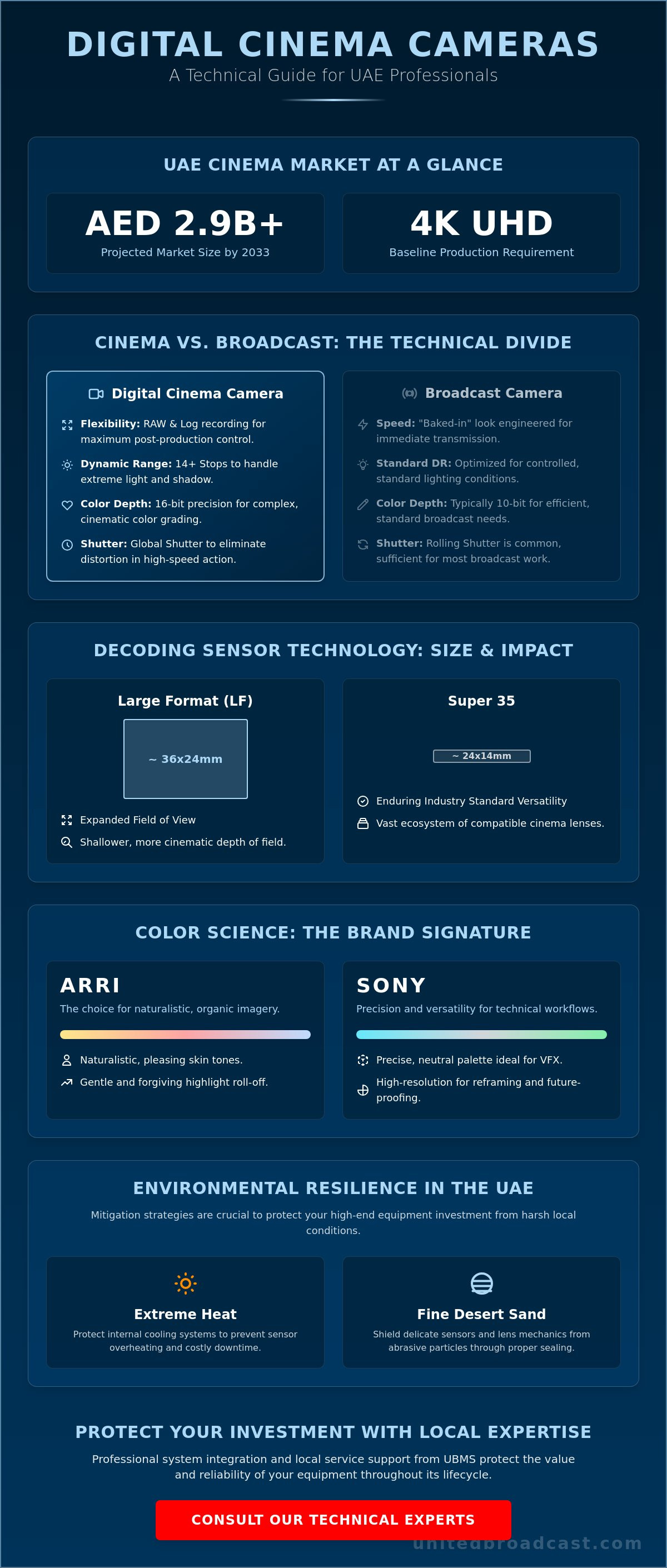
The distinction between a professional camcorder and a digital cinema camera lies in the intended output and creative control. While camcorders are engineered for speed and immediate broadcast, cinema systems focus on image latitude and post-production flexibility. The selection of digital cinema cameras UAE filmmakers choose often dictates the final visual quality of a project. High dynamic range (HDR) and the ability to record in uncompressed RAW formats are now non-negotiable for high-end national production standards. These cameras must provide at least 14 stops of dynamic range to handle the harsh, high-contrast lighting common in the region.
Acquisition standards have rapidly shifted. We've moved beyond standard HD into a landscape where 4K is the minimum requirement for streaming platforms and theatrical releases. Many local productions are now pushing into 6K and 12K to allow for reframing and future-proofing content. This evolution requires a camera body with a modular design and interchangeable mounts, typically PL or LPL, to accommodate professional cinema glass. For a broader Digital Cinematography Overview, one can see how these technical benchmarks have transitioned from early digital captures to the sophisticated sensors used in modern UAE studios.
Cinema vs. Broadcast: Understanding the Technical Gap
Broadcast cameras prioritize efficiency, often baking in a specific look for immediate transmission. In contrast, cinema systems utilize logarithmic gamma curves to preserve maximum detail in highlights and shadows. While 10-bit color depth is standard for broadcast, cinema acquisition often demands 16-bit depth for complex color grading. Global shutter technology is another critical factor; it eliminates the geometric distortion found in rolling shutters during high-speed action. The modularity of these systems allows for extensive cinematic rigging, including specialized power distribution and wireless monitoring kits.
The ROI of Digital Cinema Ownership
National production houses in the UAE are increasingly moving toward asset ownership for their core fleets. Owning a high-end system provides significant long-term cost benefits, particularly when production schedules span several months. Ownership allows a technical team to master a specific aesthetic signature through customized camera packages and consistent sensor calibration. Explore our range of professional video cameras to evaluate which systems offer the best technical longevity for your specific workflow. This strategic investment ensures that the necessary technical infrastructure is always available for immediate deployment, bypassing the logistical delays of external equipment sourcing. It's a move that prioritizes reliability and creative consistency across multiple project cycles.
Decoding Sensor Technology: Large Format and Super 35
Choosing between sensor formats is the most critical technical decision when investing in the digital cinema cameras UAE productions require for international-tier output. This choice dictates your lens ecosystem, your depth of field, and how the camera handles the region's extreme lighting contrasts. While resolution often dominates the conversation, the physical size of the sensor and its photosite architecture have a far greater impact on the final "texture" of the image. High-end sensors today focus on maximizing signal-to-noise ratios, ensuring that even in low-light scenarios or high-contrast desert exteriors, the shadows remain clean and the highlights retain detail.
Color science remains the silent differentiator between major manufacturers. ARRI is renowned for its naturalistic skin tone reproduction and gentle highlight roll-off, which many cinematographers find more "organic." Conversely, Sony’s VENICE and BURANO systems offer a precise, neutral palette that excels in VFX-heavy workflows. Understanding these nuances is essential for any technical operator or business decision-maker looking to maintain a competitive edge in the local market. If you need assistance matching a specific sensor to your production requirements, you can speak with our technical consultants for a detailed system analysis.
Large Format Sensor Advantages
Large Format (LF) sensors, which roughly match the dimensions of a full-frame 35mm stills camera, offer a significantly expanded field of view. This allows cinematographers to use longer focal lengths while maintaining a wide perspective, resulting in a shallower depth of field that separates subjects from the background with exceptional clarity. For high-end commercials, Large Format sensors provide a "larger than life" aesthetic that feels immediately premium and modern. These systems are fully compatible with the latest generation of full-frame cinema lenses, providing a future-proof investment for national production houses.
Super 35 and the Legacy of Film
Despite the rise of Large Format, Super 35 remains the enduring industry standard for narrative filmmaking. Its dimensions closely mirror the traditional 35mm motion picture film format, which many directors prefer for its familiar perspective and focus characteristics. One of the greatest advantages of Super 35 is the ability to leverage a vast library of vintage and modern PL-mount glass, much of which does not cover the larger LF image circle. For a deeper look at how these standards are evolving, read The Ultimate Guide to Professional Video Cameras in 2026. This format continues to offer a perfect balance between technical performance and logistical flexibility on set.
Choosing Your System: Comparing Top Digital Cinema Brands
Selecting the right platform is more than a technical preference; it's a commitment to a specific post-production pipeline and lens ecosystem. In the competitive market for digital cinema cameras UAE professionals operate in, the choice usually narrows down to four major players. Each offers distinct advantages for national production standards, ranging from color science to high-speed data management. Understanding how these systems handle regional lighting and workflow demands is essential for a sound equipment investment.
The ARRI Ecosystem: Alexa 35 and Mini LF
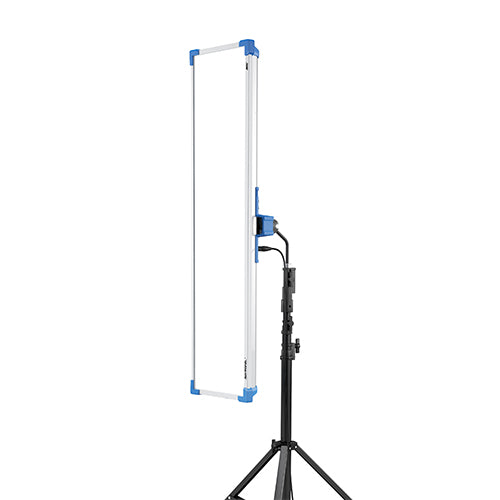
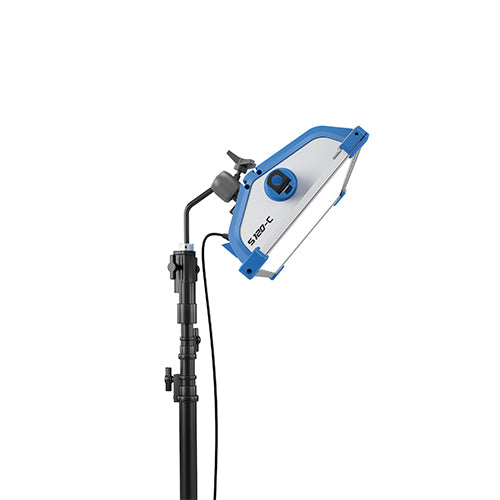
ARRI remains the undisputed gold standard for high-end narrative and commercial work. The Alexa 35 has introduced the REVEAL Color Science, providing an industry-leading 17 stops of dynamic range. This latitude is crucial when shooting in the high-contrast lighting environments of the Gulf. The Mini LF continues to be a favorite for its full-frame aesthetic and compact form factor. These cameras feature robust internal ND filters and ergonomics that prioritize the operator's efficiency on set. To complement these systems, professionals often pair them with high-end ARRI lighting solutions for cinema sets to maintain color consistency across the entire frame.
Sony VENICE: The Versatility Leader
Sony has captured a massive share of the modern 4K and 8K workflow market with the VENICE 2 and the FX series. The VENICE is particularly valued for its Dual Base ISO performance. This allows for incredibly clean images in low-light scenarios without sacrificing dynamic range. Its Rialto extension system allows the sensor block to be detached from the body. This enables specialized cinematography in tight spaces or on lightweight gimbals. Sony's ecosystem integrates seamlessly with their high-performance glass, providing a unified technical solution for fast-paced productions.
RED Digital Cinema offers unparalleled high-resolution flexibility. Their REDCODE RAW compression allows for manageable file sizes even when shooting at 8K or 12K resolutions. This makes them a preferred choice for productions that require heavy reframing or intensive visual effects. Meanwhile, Blackmagic Design provides a high-performance entry point into the cinema ecosystem. The URSA Cine 12K offers professional-grade features at a price point that makes high-end acquisition accessible to a wider range of local production houses. This variety ensures that every production, from boutique commercials to national features, can find a system that meets its technical and budgetary requirements.
Environmental Resilience: Protecting High-End Sensors in the UAE
The UAE's climate presents unique challenges for the operation of digital cinema cameras UAE professionals use on location. Ambient temperatures often exceed 45 degrees Celsius during summer months, creating an environment where high-end electronics can struggle. This environmental stress doesn't just risk hardware failure; it actively degrades image quality. Maintaining the integrity of a high-end sensor requires a proactive approach to thermal and particulate protection. Professionals must treat environmental management as a core part of their technical workflow rather than an afterthought.
Humidity and dust add further layers of complexity to regional shoots. A camera moving from a cold, climate-controlled studio into the humid air of a coastal Abu Dhabi location will immediately suffer from condensation. This moisture can form on internal glass elements or sensitive circuit boards, leading to short circuits or fungal growth over time. Consistent vigilance is the only way to protect a multi-year equipment investment from these invisible threats.
Heat Management and Thermal Throttling
Modern cinema cameras utilize sophisticated active cooling systems to dissipate heat from the sensor and image processor. However, in extreme desert conditions, these internal fans often reach their maximum capacity. We recommend using external cooling solutions and physical shade structures to shield the camera body from direct sunlight. Monitoring internal sensor temperatures via the camera's interface is essential to prevent thermal throttling, which can cause dropped frames or total system shutdowns. Increased sensor heat creates a direct surge in electronic noise that compromises shadow detail and color accuracy.
Dust and Humidity Protocols
Fine sand and dust are highly abrasive. They can easily penetrate non-sealed mounts or settle into cooling vents, causing mechanical wear or overheating. Implementing strict protocols on set is mandatory to avoid permanent sensor damage.
- Execute all lens changes inside a vehicle or under a dedicated sensor-protection bag.
- Inspect the rear element of lenses and the camera mount for microscopic debris before every attachment.
- Utilize air blowers specifically designed for optics rather than canned air, which can freeze or push dust deeper into the chamber.
- Store equipment in sealed, hard-shell cases with fresh silica desiccants to manage internal moisture levels.
Professional maintenance is the only reliable way to ensure your sensor remains free of microscopic contaminants that ruin high-resolution footage. If your equipment has been exposed to extreme desert conditions or high humidity, contact our technical service center for a professional inspection and sensor calibration. Regular servicing prevents minor environmental wear from turning into a catastrophic equipment failure during a production.
The UBMS Ecosystem: Technical Integration and Lifecycle Support
Investing in high-end imaging technology is a significant capital commitment that extends far beyond the initial purchase. For national production houses, the long-term value of the digital cinema cameras UAE professionals utilize is realized through successful technical integration rather than just the hardware specifications. A camera is a single component within a complex production architecture. If the data pipeline, monitoring systems, and lens control aren't synchronized, the efficiency of the entire set is compromised. United Broadcast & Media Solutions (UBMS) focuses on creating comprehensive ecosystems where every piece of gear works in harmony with your established workflow, ensuring that your investment delivers consistent results year after year.
The complexity of modern 4K and 8K acquisition requires a dedicated technical partner who understands the nuances of sensor calibration and signal flow. In the UAE, where production standards are rapidly evolving to meet global benchmarks, having a localized support structure is vital. This infrastructure provides the necessary security for businesses making multi-year equipment investments. We don't just provide the tools; we provide the technical foundation required to keep those tools operational in the most demanding environments.
Professional System Integration Services
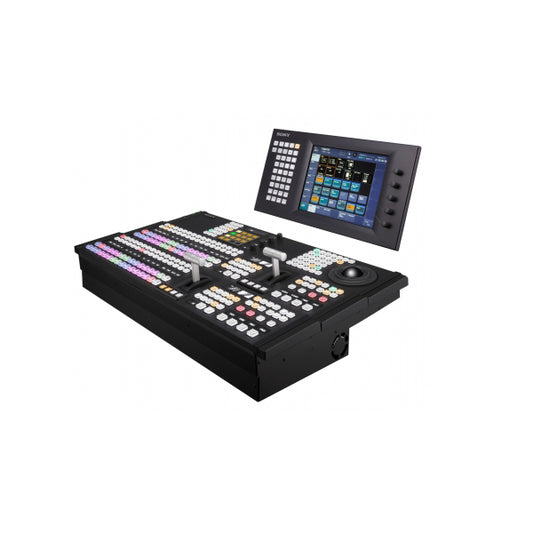
Modern production demands a seamless transition from the sensor to the edit suite. Our system integration services focus on designing workflows that prioritize metadata consistency and high-speed data offloading. This is particularly vital in multi-camera environments where timecode synchronization and color matching are critical for post-production efficiency. We also specialize in the technical architecture of hybrid environments, integrating cinema-grade sensors into live broadcast studio infrastructures. This allows for a premium cinematic aesthetic in live transmissions while maintaining the remote control and tally functions required for broadcast standards.
Expert Maintenance and Repair
The lifecycle of a professional camera system depends heavily on the quality of its after-sales support and the expertise of the technicians handling it. Our dedicated service center provides factory-certified technicians who use only genuine parts for repairs and precision sensor calibrations. We don't just address hardware failures; we provide preventative maintenance schedules that identify potential issues before they cause costly downtime on a national shoot. This includes managing critical firmware updates that unlock new sensor capabilities and performing precision flange back adjustments to ensure your lenses hit their focus marks perfectly every time. Contact our technical experts for a custom equipment consultation to learn how we can support your production's long-term technical infrastructure and protect your equipment fleet.
Securing the Future of UAE Cinema Production
Selecting the right hardware is only the first step in building a sustainable production workflow. As the region's film industry continues its rapid expansion, mastering the technical nuances of digital cinema cameras UAE filmmakers utilize is essential for maintaining global standards. Protecting your investment requires more than just careful handling; it demands the rigorous environmental protocols and the deep understanding of sensor physics discussed in this guide to ensure consistent output in the Gulf's demanding climate.
United Broadcast & Media Solutions (UBMS) serves as your dedicated technical partner throughout the equipment lifecycle. As an authorized distributor for ARRI, Sony, and RED, we bring over 25 years of industry expertise to every project. Our in-house factory-certified service center ensures that your equipment remains calibrated and operational, reducing the risk of downtime during critical shoots. Whether you're building a new studio or upgrading a narrative fleet, we provide the logistical and technical stability your business requires. Contact the UBMS Technical Team for Professional Cinema Solutions to discuss your next system integration. We look forward to supporting your creative vision as the UAE continues to emerge as a global cinematic hub.
Frequently Asked Questions
What is the main difference between a digital cinema camera and a standard video camera?
Digital cinema cameras prioritize image latitude and post-production flexibility, whereas standard video cameras focus on efficiency and immediate broadcast. Cinema systems offer at least 14 stops of dynamic range and uncompressed RAW recording. This allows for extensive color grading that isn't possible with the baked-in looks of standard broadcast gear. Their modular design also supports professional cinematic rigging and high-end PL-mount optics.
Which digital cinema camera is best for 4K production in the UAE?
The Sony VENICE 2 and ARRI Alexa 35 are among the best digital cinema cameras UAE professionals use for high-end 4K production. These systems provide the high dynamic range and color depth necessary for theatrical and streaming standards. Your selection should align with your specific workflow, whether you prioritize ARRI’s organic skin tones or Sony’s high-resolution versatility and dual-base ISO performance.
How do I protect my digital cinema camera from heat during outdoor shoots?
Utilize active cooling systems, external fans, and physical shade structures to shield the camera body from direct sunlight. High ambient temperatures can increase electronic noise and lead to thermal throttling or system shutdowns. It's essential to monitor internal sensor temperatures via the camera's interface and allow the system to cool down between long takes to maintain image integrity and hardware longevity.
Is it better to buy or rent digital cinema equipment for a production house?
Ownership is typically the superior choice for national production houses with consistent shooting schedules. Purchasing core assets provides long-term ROI and allows technical teams to master a specific aesthetic signature through consistent sensor calibration. While some professionals check local availability for specialized one-off needs, owning your fleet ensures immediate equipment availability and removes the logistical hurdles and long-term costs of external sourcing.
What are the essential accessories for a digital cinema camera setup?
A professional setup requires high-performance cinema lenses, robust power distribution modules, and advanced monitoring kits. You also need matte boxes for light control and follow-focus systems for precision focusing. Integrating these with professional lighting equipment is essential to fully utilize the high dynamic range of modern sensors. High-speed media cards are also required to handle the massive data rates of RAW recording.
Why is sensor size important in digital cinematography?
Sensor size dictates the field of view, depth of field, and the overall visual texture of your footage. Large Format sensors provide a shallower depth of field and better low-light performance due to a higher signal-to-noise ratio. Super 35 remains a popular choice because it's compatible with a vast library of vintage and modern PL-mount glass, offering a specific perspective that directors have preferred for decades.
How often should I have my cinema camera professionally serviced?
Professional servicing should occur after any exposure to extreme desert environments or at least annually for routine calibration. The digital cinema cameras UAE studios operate are subject to intense heat and fine dust, which can degrade internal cooling and sensor performance. Factory-certified maintenance ensures your system stays within manufacturer specifications and prevents catastrophic failures during expensive production days when downtime costs are highest.
Does UBMS provide technical support for camera system integration?
Yes, we provide comprehensive system integration services that connect camera acquisition to your entire production and post-production workflow. Our experts design tailored solutions for narrative cinema, broadcast studios, and hybrid environments. This includes ensuring metadata consistency across multi-camera shoots and designing reliable signal flows for live transmissions. We focus on creating a unified ecosystem where your hardware and software work in perfect harmony.


