

Professional Live Streaming Equipment Dubai: The 2026 Industry Guide
If your 4K broadcast drops a single frame during a high-stakes corporate launch in the UAE, does the quality of your creative content even matter? Technical failure is the silent killer of professional reputations, yet many productions still rely on fragmented gear that isn't built for the rigors of a 24/7 digital economy. You already know that a stable, high-definition feed is the baseline for success in the UAE's sophisticated media landscape. Investing in the right professional live streaming equipment Dubai is no longer just about buying a camera; it's about engineering a fail-safe ecosystem that delivers absolute consistency under pressure.
We understand that stream lag, dropped frames, and hardware incompatibility are more than just technical annoyances; they're direct risks to your brand's authority. This 2026 industry guide promises to help you master the technical requirements and hardware essentials needed to build a broadcast-grade live streaming workflow. We will preview the latest IP-based standards, examine the necessity of hardware redundancy, and explain how local technical support ensures your production remains scalable. By the end of this guide, you'll have the roadmap to transition from basic streaming to a world-class broadcast operation.
Key Takeaways
- Understand the critical hardware redundancy and broadcast standards required to eliminate technical failure in high-stakes environments.
- Identify the right mix of PTZ and professional video cameras supporting 12G-SDI and NDI for low-latency, multi-camera workflows.
- Learn why dedicated hardware encoders and HEVC compression are vital components of professional live streaming equipment Dubai to maintain high-definition quality over limited bandwidth.
- Master the integration of high-CRI LED lighting and digital audio signal paths to ensure your production values meet international broadcast standards.
- Discover why professional system integration and access to a local UAE authorized service center provide the scalability and reliability needed for long-term growth.
What Defines Professional Live Streaming Equipment in 2026?
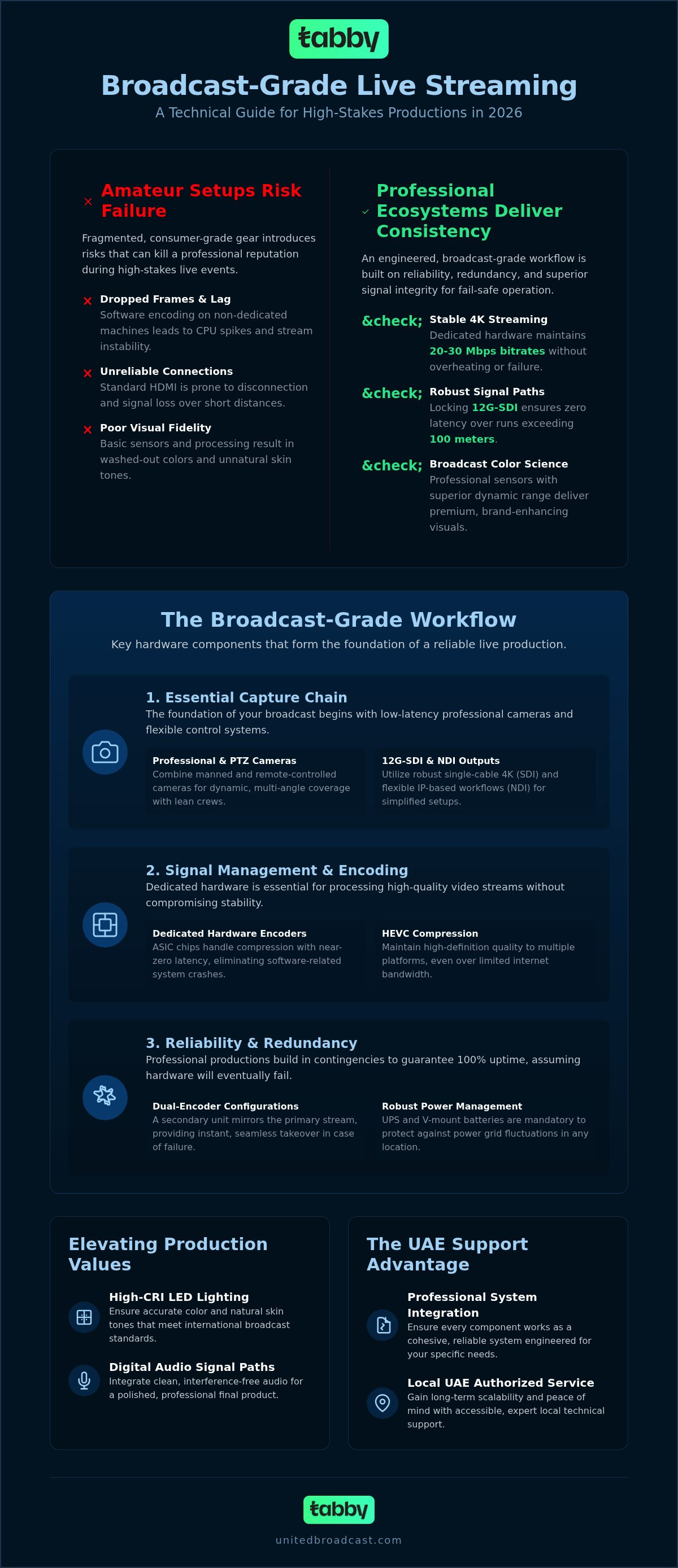
The demand for high-tier digital content in the UAE has reached a point where the distinction between consumer-grade gear and professional live streaming equipment Dubai is no longer subjective. Corporate entities and broadcast specialists now view 4K resolution and high bitrates as the baseline for any serious production. While a basic webcam might suffice for a casual video call, it lacks the processing power to maintain the 20-30 Mbps bitrates required for a crisp, artifact-free 4K stream. Choosing the right professional live streaming equipment Dubai means prioritizing hardware that can sustain these high-bitrate demands without overheating or compromising signal integrity during long-duration broadcasts.
The Shift from Consumer to Broadcast Standards
The transition to professional standards begins with how signals move through your workflow. While HDMI is common in home setups, it lacks the locking mechanisms and signal stability required for large-scale venues. Professional standards rely on SDI (Serial Digital Interface) connections to maintain signal strength over cable runs exceeding 100 meters without latency. This is a critical requirement in Dubai's massive event spaces and multi-room conference centers. Beyond connectivity, the sensors found in professional video cameras provide vastly superior dynamic range. They are engineered to translate complex studio lighting into accurate color science, ensuring skin tones look natural rather than digital or washed out. This level of visual fidelity directly impacts brand perception, positioning the content as a premium broadcast rather than a low-budget hobbyist stream.
Reliability and Redundancy in Professional Sets
A professional setup assumes that hardware will eventually fail and builds contingencies into the architecture. This involves deploying dual-encoder configurations where a secondary unit mirrors the primary stream, ready to take over instantly if the first unit encounters an error. In remote UAE locations where power grids might fluctuate, robust power management using V-mount batteries or uninterruptible power supplies (UPS) is mandatory. Hardware redundancy is the primary insurance policy for live broadcast. By utilizing dedicated hardware instead of software-only solutions, you offload the heavy lifting of encoding to specialized chips. This reduces the risk of a system crash caused by background OS processes or CPU spikes during a peak viewer surge. Dedicated hardware encoders utilize ASICs (Application-Specific Integrated Circuits) to handle video compression with near-zero latency, ensuring your feed remains stable even when pushing high-resolution HEVC data to multiple platforms simultaneously.
The Essential Capture Chain: Professional Video Cameras and Switchers
The capture chain represents the technical foundation of your broadcast. In 2026, professional live streaming equipment Dubai must prioritize low-latency signal paths to ensure that the audience experience remains seamless. This begins with selecting cameras that offer native 12G-SDI or NDI outputs. 12G-SDI is particularly vital for 4K productions, as it carries high-bandwidth data over a single coaxial cable without the compression artifacts often found in consumer-grade systems. For productions requiring greater flexibility, NDI (Network Device Interface) allows cameras to be discovered and controlled over a standard IP network, which simplifies cable management in complex venue environments.
Multi-camera setups have also evolved to include PTZ (Pan-Tilt-Zoom) cameras as a core component. These units are essential for lean production crews, allowing a single operator to control multiple angles from a remote joystick or software interface. When integrated correctly, PTZ cameras provide broadcast-quality images while maintaining a discreet footprint in corporate boardrooms or religious settings. They complement traditional manned cameras by providing consistent, repeatable shots that are difficult to achieve manually during long broadcasts.
High-Performance Cameras for Live Environments
Achieving a high-end aesthetic requires sensors that can handle the dynamic range of live stages. While Sony Alpha cameras and lenses are frequently utilized for compact setups due to their industry-leading autofocus and low-light performance, larger productions often integrate professional video cameras with global shutters. These shutters are essential when filming in front of large LED screens, as they eliminate the flickering or banding artifacts that rolling shutters often produce. For those seeking a cinematic feel, digital cinema cameras provide a depth of field and color depth that elevate a standard corporate stream into a high-value broadcast production.
Production Switchers and Vision Mixers
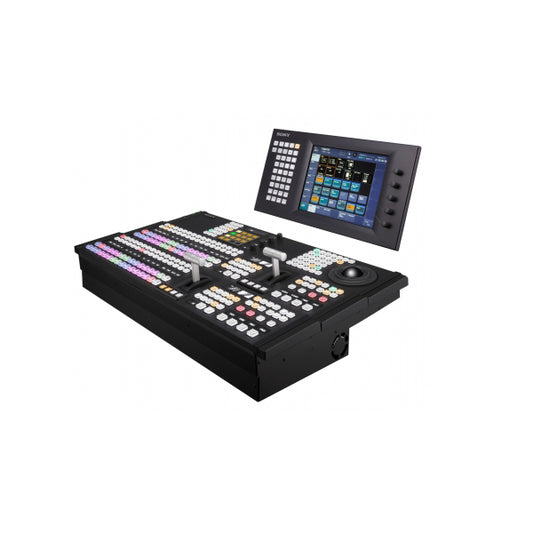
The production switcher serves as the central nervous system of your capture chain. It ingests multiple sources, from cameras to remote guest feeds, and allows the director to mix them in real-time. Hardware-based switchers remain the gold standard for reliability because they use dedicated processing chips rather than relying on a computer's CPU. This ensures that adding graphics, lower thirds, or instant replays doesn't introduce system lag. Modern vision mixers have scaled significantly; you can now find units ranging from portable 4-input switchers to massive broadcast consoles that handle dozens of 12G-SDI inputs simultaneously.
Integrating these diverse components into a unified, zero-failure workflow requires careful planning and technical expertise. If you're unsure how to align your camera outputs with your switching infrastructure, you should speak with a technical consultant to ensure total system compatibility and long-term scalability.
Signal Management: Hardware Encoders and NDI Workflows
Managing the signal from the capture chain to the end user requires a specialized middle layer that software alone cannot replicate. In 2026, the backbone of any professional live streaming equipment Dubai ecosystem is the dedicated hardware encoder. Unlike software-based solutions that share resources with an operating system, hardware encoders utilize specialized chips designed solely for video compression. This separation is critical for maintaining high bitrates and ensuring the stream doesn't stutter when the system faces peak demand or unexpected background tasks.
Hardware vs. Software Encoding
Thermal stability remains a primary reason why professionals avoid software encoding for critical tasks. During a four-hour corporate summit, a computer CPU can fluctuate in temperature, leading to thermal throttling and dropped frames. Hardware encoders are built with dedicated cooling and power management to prevent these failures. They also offer significant latency advantages; while software might introduce several seconds of delay, professional hardware can achieve sub-second latency. This is essential for interactive Q&A sessions or hybrid events where real-time engagement is a priority. You can choose between standalone units or camera-integrated modules, though standalone encoders generally offer more flexibility for complex multi-camera setups.
Efficiency is another major factor in signal management. Using HEVC (H.265) compression allows you to deliver 4K quality using significantly less bandwidth than the older H.264 standard. This codec is particularly useful in the UAE when streaming from venues with limited upload speeds. For outdoor productions where fixed fiber lines aren't available, bonded cellular technology combines multiple 5G and 4G LTE connections into a single, robust pipe. This ensures your broadcast stays live even if one network provider fluctuates, providing a layer of connectivity insurance—often built on high-performance IT infrastructure from GenX Systems LLC—that is mandatory for high-stakes remote broadcasts.
The shift toward NDI (Network Device Interface) has revolutionized how local networks handle video-over-IP in UAE studio environments. In large-scale venues, running hundreds of meters of SDI cable is often impractical and expensive. NDI allows you to transmit high-definition video over standard Ethernet cables, which significantly reduces infrastructure costs and setup time. This IP-based approach also paves the way for cloud-based switching and remote production, where the director can be located in a central studio while the cameras are on-site at a different location. By integrating these IP workflows into your professional video cameras, you create a scalable environment that can grow with your production needs without requiring a complete hardware overhaul.
Critical Production Values: Lighting and Audio for Live Broadcasts
Visual fidelity and auditory clarity are the two pillars that define the production value of any broadcast. While high-end cameras capture the data, it's the lighting and audio environment that shapes the final viewer experience. In the Middle East, selecting professional live streaming equipment Dubai also requires a strategy for environmental protection. Dust and heat are significant factors; fine particles can clog cooling fans in high-output LED panels, while ambient temperatures can cause digital audio processors to drift or fail. Utilizing professional lighting equipment in Dubai ensures that your gear is engineered to withstand these specific regional rigors while delivering studio-grade results.
Studio Lighting for Live Video
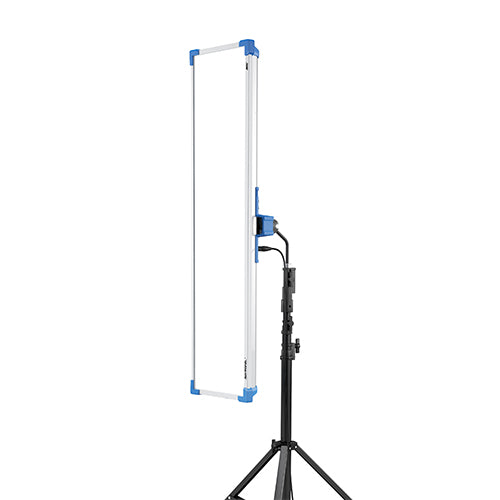
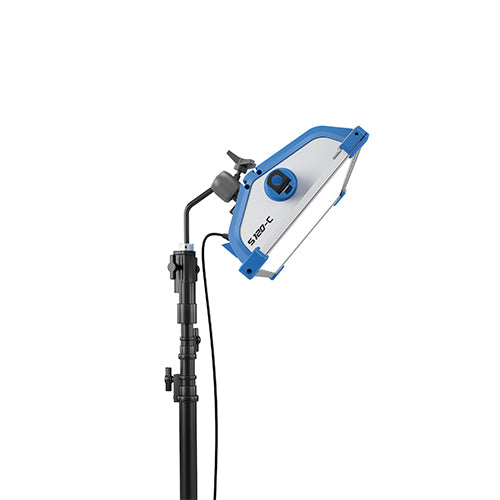
Consistent skin tone accuracy is non-negotiable for professional broadcasts. This is achieved by using fixtures with a high Color Rendering Index (CRI), typically 95 or above. ARRI lighting solutions are widely regarded as the gold standard for color science, providing a natural look that requires minimal correction in real-time. For productions that need to move quickly between locations without sacrificing quality, the ARRI Omnibar Production Kit provides a versatile, rapid-deployment solution. To ensure a professional look, always follow the three-point lighting principle: a key light for the main subject, a fill light to soften shadows, and a back light to create separation from the background. This depth is what gives live interviews a polished, three-dimensional appearance on screen.
Professional Audio for Live Streams
Audio failure is often more damaging to a stream than a temporary video glitch. Modern workflows are moving away from simple analog XLR inputs toward integrated digital mixers and networked audio protocols. This transition allows for more precise control over signal paths and synchronization between the voice and the visual feed. In Dubai's dense urban environments, managing frequency interference for wireless microphone systems is a primary challenge. It's essential to use wide-band digital wireless systems that can scan for clean frequencies in real-time to avoid signal dropouts. Additionally, you should always build redundant audio paths into your workflow. This might include a secondary shotgun mic or a backup digital interface to prevent "silent stream" disasters if the primary mixer encounters a hardware error.
System Integration and Technical Support in the UAE
Acquiring high-tier hardware is merely the first phase of building a broadcast ecosystem. The true differentiator between a collection of devices and a high-performance production hub lies in system integration. For those investing in professional live streaming equipment Dubai, purchasing piecemeal often leads to the very incompatibility issues that cause dropped frames and signal failure. A unified approach ensures that every camera, switcher, and encoder communicates through a synchronized clock and a standardized signal path. This level of technical cohesion is what separates a makeshift setup from a broadcast-grade studio.
From Gear to Solutions: System Integration
Effective integration involves designing a future-proof architecture that can handle the transition to 8K and beyond. Many of the principles found in OB van system integration apply directly to fixed corporate studios. This includes professional cable management, high-density rack-mount solutions, and centralized power distribution to prevent ground loops. When you customize broadcast studio gear in the UAE for specific workflows, you eliminate the guesswork during live events. Whether you're managing a house of worship or a government press room, a professionally integrated system allows your team to focus on the content rather than troubleshooting hardware handshakes.
Local Support and Technical Maintenance
The value of professional gear is only as good as the support infrastructure behind it. In the high-stakes world of live broadcasting, you can't afford to wait weeks for international shipping if a critical component requires attention. Access to a local UAE authorized service center is a vital insurance policy for your production. Being founded in 1997, UBMS has established a technical service center that provides in-house repairs and maintenance for major brands like Sony and ARRI. This proximity ensures that your equipment remains in peak condition through regular maintenance schedules, covering everything from sensor cleaning to firmware optimization.
Beyond repairs, local support provides the training necessary for internal corporate teams to master their new infrastructure. After-sales support isn't just about fixing what's broken; it's about optimizing your current workflow as technology evolves. Having a "trusted advisor" in the region means you have immediate access to technical guidance when shifting to IP-based workflows or expanding your multi-camera array. This long-term partnership provides the logistical excellence required to maintain a zero-failure broadcast environment year after year.
Future-Proofing Your Broadcast Ecosystem
Transitioning to a broadcast-grade workflow requires more than just high-resolution cameras. It demands a fail-safe architecture centered on hardware redundancy, HEVC encoding efficiency, and a synchronized signal chain. By prioritizing dedicated hardware over software-based shortcuts, you ensure your production remains stable under the most demanding live conditions. This technical precision is what allows your brand to maintain authority in a competitive digital market.
Finding the right professional live streaming equipment Dubai involves partnering with experts who understand the local technical landscape. United Broadcast & Media Solutions has been a pillar of the industry since 1997. As an authorized distributor for Sony, ARRI, and Aputure, we provide the specialized infrastructure and system integration expertise required by the Middle East's major broadcasters. Our national UAE service center ensures that your investment is protected by local warranties and elite technical maintenance.
Your journey toward a world-class broadcast operation begins with a reliable technical foundation. We're ready to help you build it.
Frequently Asked Questions
What is the best camera for professional live streaming in 2026?
The ideal choice depends on your specific production requirements, but industry standards currently favor models like the Sony FX series or ARRI Alexa 35 with live modules. These professional video cameras offer native 12G-SDI connectivity and superior low-light performance. When selecting professional live streaming equipment Dubai, prioritize sensors that provide high dynamic range and global shutters to eliminate flickering when filming in front of large LED event screens.
Do I need a hardware encoder if I have a powerful computer?
While a powerful computer can handle encoding, a dedicated hardware encoder is recommended for zero-failure environments. Hardware units use specialized ASIC chips that focus solely on video compression, which prevents the system crashes often caused by background OS updates or CPU spikes. This dedicated processing ensures your stream remains stable during long-duration broadcasts, providing a level of reliability that software-only solutions simply can't match.
What is the difference between SDI and HDMI for live streaming?
SDI is the broadcast industry standard because it uses locking BNC connectors and supports cable runs exceeding 100 meters without signal degradation. HDMI is primarily a consumer format that lacks locking mechanisms and typically fails after 15 meters. For professional setups in large UAE venues, SDI provides the physical security and signal integrity required to maintain a high-definition feed across long distances between the camera and the switcher.
Can I use cinema cameras for live broadcast events?
Yes, digital cinema cameras are increasingly used for live broadcasts to achieve a high-end, shallow depth-of-field aesthetic. These cameras provide superior color science and dynamic range compared to traditional broadcast sensors. Many modern cinema cameras now include dedicated live-production modules that allow them to integrate seamlessly into a standard switcher workflow, making them a popular choice for premium corporate launches and fashion events in Dubai.
How much internet bandwidth is required for a 4K professional stream?
For a stable 4K broadcast, you should have a dedicated upload speed of at least 20 to 30 Mbps. While you can stream at lower bitrates, this range ensures a crisp, artifact-free image for your viewers. Utilizing HEVC (H.265) compression is essential in this scenario, as it delivers high-quality visuals using roughly half the bandwidth of the older H.264 standard, which is vital for maintaining quality over limited connections.
What are the benefits of using NDI in a live production setup?
NDI (Network Device Interface) allows you to transmit high-quality video, audio, and metadata over standard 1Gbps or 10Gbps local networks. This IP-based workflow significantly reduces the need for expensive coaxial cabling and allows any device on the network to see any camera feed. It simplifies the infrastructure in complex UAE studio environments and makes it easier to scale your production by adding more sources without rewiring your entire facility.
How do I protect my streaming equipment from the heat in the UAE?
Protecting electronics in the Middle East requires active cooling and environmental management. Always use professional lighting equipment with high-quality heat sinks and active fans to prevent overheating. When filming outdoors, keep camera bodies and encoders in shaded, ventilated enclosures. It's also wise to use V-mount batteries designed for high-temperature stability and to ensure all rack-mounted gear has sufficient airflow within the equipment room to prevent thermal throttling.
Where can I get professional broadcast equipment repaired in the UAE?
The UBMS Service Center is the premier facility for maintaining and repairing professional live streaming equipment Dubai. Founded in 1997, we operate an authorized technical center specifically equipped to handle repairs for major brands like Sony and ARRI. Our in-house specialists provide everything from sensor cleaning to complex logic board repairs, ensuring that your broadcast gear remains in peak condition with the support of local UAE warranties.


