

Common Mistakes When Buying Cinema Cameras: A 2026 Professional Guide
The most expensive piece of equipment in your studio isn't the one with the highest price tag; it's the one that sits idle because of a compatibility oversight. Many professionals focus exclusively on sensor resolution while ignoring the technical infrastructure required to support it. Understanding the common mistakes when buying cinema cameras is essential for any Director of Photography or facility manager looking to protect their margins in 2026. You've likely felt the pressure to stay ahead of technical obsolescence, but chasing specs without a clear workflow strategy often leads to high capital expenditure risk.
We recognize that a cinema camera represents a long term partnership rather than a simple transaction. This guide provides a professional framework to help you avoid the pitfalls that even seasoned operators overlook, from hidden accessory costs to post production bottlenecks. You'll gain the insights needed to build a future proof equipment list that prioritizes maximum ROI and reliable technical support. We will examine the critical balance between raw performance and the logistical reliability of your gear ecosystem to ensure your investment remains a functional asset for years to come.
Key Takeaways
- Learn why prioritizing K-count over dynamic range and color science can compromise image quality and complicate your post-production pipeline.
- Account for the "body-only" fallacy by budgeting for high-speed media and proprietary peripherals that often represent a significant portion of the total investment.
- Avoid common mistakes when buying cinema cameras by evaluating regional environmental factors and the long-term value of local authorized service centers.
- Ensure your equipment matches your specific delivery funnel to avoid the technical mismatch of using cinema tools for high-speed broadcast environments.
- Leverage professional system integration to identify hidden technical needs and ensure all components of your production pipeline work seamlessly together.
The Resolution Trap: Why Buying for Specs Alone is a Mistake
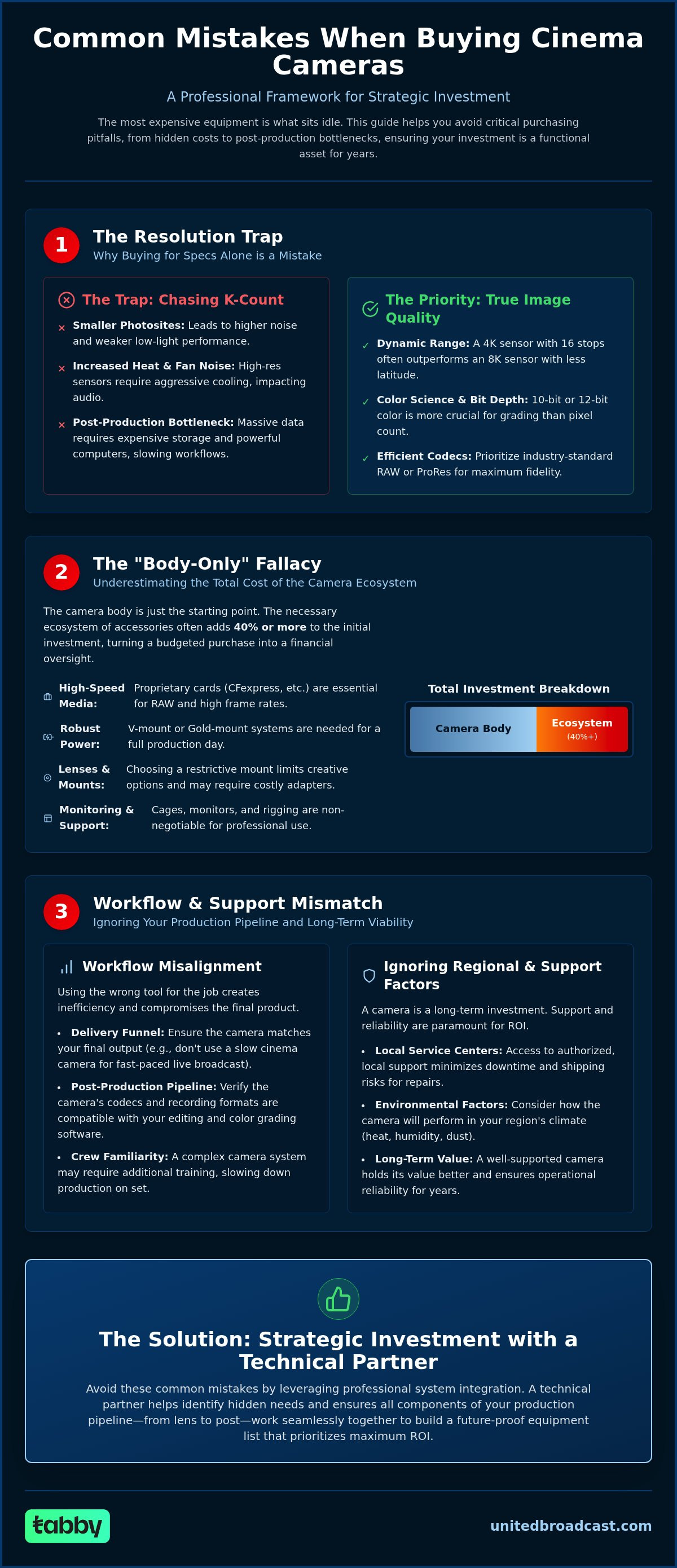
The "Resolution Trap" is a frequent pitfall where purchasers prioritize K-count over dynamic range, color science, and usable sensitivity. In 2026, many manufacturers market 8K or 12K sensors as the pinnacle of achievement, but these high numbers can become a liability. High resolution often comes at the cost of smaller photosites, which can negatively impact the signal-to-noise ratio and low-light performance. One of the common mistakes when buying cinema cameras is assuming that more pixels automatically translate to a more professional look. High-resolution sensors generate significant heat and require aggressive cooling systems, which can lead to increased fan noise or thermal throttling during long takes.
True image quality depends on how a sensor handles light and color rather than the density of its pixel grid. A 4K sensor with 16 stops of dynamic range will almost always produce a more cinematic result than an 8K sensor with limited latitude. You also need to consider your existing inventory of professional video cameras and lenses. Moving from Super 35 to Full Frame requires more than just a new body; it demands a complete reassessment of your glass to avoid vignetting or soft corners. Evaluating the signal-to-noise ratio remains a superior method for determining how a camera will perform in high-contrast or low-light environments.
Resolution vs. Bit Depth and Codecs
While resolution defines the grid, bit depth defines the accuracy of the color. 10-bit and 12-bit color depth are far more critical for high-end color grading than simple pixel count. Heavy compression in lower-tier codecs can destroy the fine gradients in skin tones, regardless of whether you shot in 4K or 8K. Professionals should prioritize cameras that support industry-standard RAW or ProRes workflows to ensure the highest possible fidelity for broadcast and theatrical deliverables. Avoid the common mistakes when buying cinema cameras by checking if the internal recording options match your color grading requirements.
The Reality of High Resolution in Post-Production
High resolution creates a massive burden on your technical infrastructure. The hidden costs of high-speed data storage and the high-performance computing required to debayer 8K+ footage can derail a project's budget. When resolution becomes a bottleneck for project turnaround times, it ceases to be an asset and becomes a logistical hurdle. Usable resolution is the balance between pixel density and optical quality. If your lenses cannot resolve the detail the sensor is capable of capturing, you are simply storing empty data that slows down your entire workflow.
Underestimating the Total Cost of the Camera Ecosystem
One of the most frequent common mistakes when buying cinema cameras is focusing exclusively on the price of the camera body. Professionals often fall into the "body-only" fallacy, where they secure a high-end sensor but lack the budget to make it functional. A cinema camera isn't a standalone tool; it's the core of a complex ecosystem. Without budgeting for high-speed media, robust power distribution, and precision monitoring, your primary investment remains an expensive paperweight. You'll find that the true cost of operation often exceeds the initial sticker price by 40% or more when you factor in the necessary peripherals.
High-performance sensors in 2026 require massive data throughput that standard consumer cards simply can't handle. Proprietary media like CFexpress Type B or specialized CODA cards are essential for capturing high-bitrate RAW footage or high-frame-rate sequences. These cards can easily add thousands to your bill. Similarly, internal batteries rarely suffice for professional sets. You'll need to invest in V-mount or Gold-mount power systems to run the camera, external monitors, and wireless transmitters throughout a full production day. Matching these high-end bodies with the right professional video cameras and supporting infrastructure ensures your workflow remains efficient and uninterrupted.
Lens Mounts and Optical Compatibility
Choosing a body with a restrictive mount is a strategic error that limits your future creative options. While PL mounts remain the industry standard for cinema glass, mirrorless mounts like E-mount or L-mount offer greater versatility through adaptation. Investing in Sony Alpha cameras and lenses provides a flexible entry point into this ecosystem, allowing you to scale from compact B-cam setups to full cinema rigs. While adapters can bridge the gap between different systems, they often introduce risks with autofocus reliability and metadata communication, which can complicate your post-production pipeline.
Essential Rigging and Support
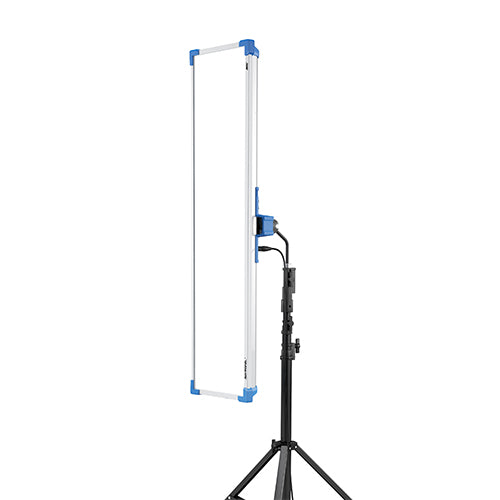
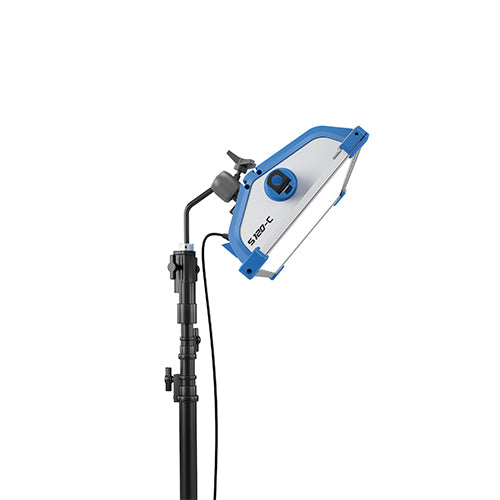
A premium sensor is only as effective as the stability of the shot. A professional tripod system capable of handling a fully rigged cinema camera is a non-negotiable requirement, yet it's often an afterthought in the budgeting process. You must also account for the "blind" nature of many cinema bodies, which necessitates external monitors, wireless video transmitters, and follow-focus systems for the crew. Furthermore, you need high-quality lighting equipment to provide the necessary photons for your sensor to perform at its peak dynamic range. If you're mapping out a new production pipeline, you can reach out to our specialists to ensure your entire ecosystem is fully compatible from day one.
Ignoring Regional Environmental and Support Factors
Operating high-performance cinema gear in the Middle East presents unique challenges that are often absent from standard technical reviews. One of the common mistakes when buying cinema cameras is failing to account for how extreme heat and humidity impact sensor performance and internal electronics. In environments where ambient temperatures regularly exceed 40 degrees Celsius, a camera's cooling architecture becomes its most critical feature. Sensors generate significant internal heat during high-bitrate recording, and without a robust thermal management system, you risk frame drops, thermal shutdowns, or long-term hardware degradation.
Purchasing from international grey-market sellers is another critical error that many professionals regret when technical issues arise. While the initial price might appear lower, these units often lack valid local warranties and specialized regional support. If a sensor requires calibration or a mainboard fails, shipping the unit back to a foreign territory can result in weeks of downtime and thousands in lost revenue. Relying on a local, authorized partner ensures you have access to a dedicated service center for regular maintenance. This local presence is essential for maintaining the high standards expected of professional video cameras in a demanding production environment.
Heat Management in High-End Sensors
Many buyers choose compact cinema bodies for their form factor but overlook their limited heat dissipation capabilities. For long takes in warm climates, you should prioritize cameras with active, isolated cooling paths that protect the sensor from dust and sand. Utilizing external recording monitors can also help mitigate internal heat by offloading the processing and storage tasks to a separate device. It's also vital to remember that high humidity can lead to fungal growth in expensive glass if not stored properly in climate-controlled environments.
The Value of National Technical Support
A "Global Warranty" often provides a false sense of security because it rarely covers immediate on-site assistance or local replacement parts. Working with a national provider gives you a direct line to technicians who understand the specific logistical and environmental pressures of your region. Beyond simple repairs, expert system integration services can prevent costly compatibility errors when building out complex studio environments. This level of professional support transforms a vendor relationship into a long-term technical partnership, ensuring your equipment remains operational and your workflow stays seamless throughout the year.
Workflow Misalignment: Buying for the Wrong Funnel
Selecting a camera based on brand prestige rather than its intended output funnel is a strategic error that impacts both your budget and your deadline. One of the common mistakes when buying cinema cameras involves choosing a high-end cinematic body for a project that actually requires broadcast-level efficiency. If your primary work involves live-to-air broadcasts or fast-turnaround corporate events, a cinema camera's manual requirements and massive data rates can become a liability. You need a tool that fits your specific distribution channel to ensure the investment generates a consistent return. Efficiency matters more than specs.
Workflow compatibility extends beyond the shoot itself and into the post-production suite. Failing to check if a camera's metadata and file structure align with your editor's requirements can lead to expensive delays. You should also consider the secondary market. Buying a camera that lacks rental demand means the asset won't generate income when it sits idle in your studio. A well-chosen camera should be a versatile asset that's as attractive to rental houses as it is to your own production team.
Cinema vs. Broadcast: Choosing the Right Tool
There are many scenarios where professional broadcast gear is more efficient than a cinema rig. You can find a wide range of specialized professional video cameras designed for these distinct environments. "Pure" cinema bodies often lack essential features like internal ND filters or professional XLR audio inputs, necessitating extra rigging that adds weight and setup time. You must also evaluate the ergonomics; a camera designed for a tripod-heavy studio environment rarely performs well in a handheld ENG scenario where speed is the priority.
Post-Production and Delivery Standards
Modern delivery standards often dictate the technical minimums for your equipment. Netflix-approved status is a vital benchmark for sensor quality and recording reliability, even if your current projects aren't destined for a streaming platform. It ensures the camera meets a global standard for dynamic range and color fidelity. Another frequent error is ignoring proxy workflows in high-resolution cameras. Without an efficient way to generate and manage proxies, your post-production timeline will suffer. Always ensure your camera choice supports the specific color spaces and bit depths required for modern HDR delivery to keep your content competitive in 2026. Addressing these common mistakes when buying cinema cameras early in the procurement phase prevents technical bottlenecks during the final stages of delivery.
The Solution: Strategic Investment with a Technical Partner
Avoiding the common mistakes when buying cinema cameras requires a shift in perspective. You must move from viewing equipment as a series of isolated purchases to seeing it as a unified system. Success in professional production depends on the reliability of the entire technical chain. While individual specifications are important, the way those components interact within a specialized environment determines the actual efficiency of your studio. A technical partner identifies hidden needs in your production pipeline that are often invisible during the initial research phase. This transition from a transactional purchase to a long term partnership ensures that your capital expenditure translates into measurable ROI.
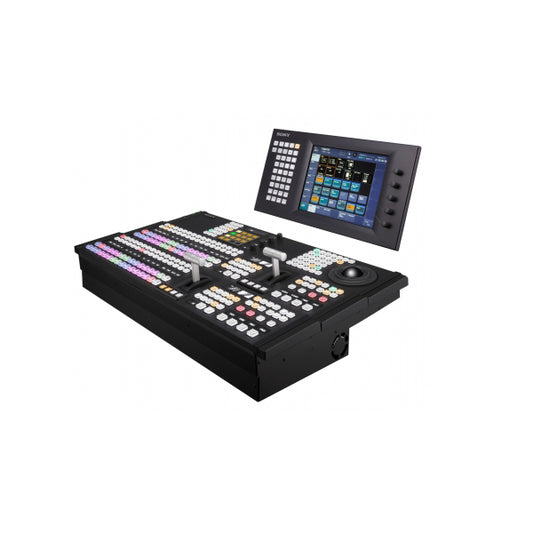
Expert system integration is the most effective safeguard against technical obsolescence and compatibility errors. It's one thing to buy a high-end sensor; it's another to ensure that your storage arrays, monitoring solutions, and lighting rigs are perfectly synchronized from day one. A dedicated partner provides the logistical excellence needed to build a future proof workflow, allowing you to focus on the creative aspects of production rather than troubleshooting technical bottlenecks. This collaborative approach minimizes the risk of buying redundant gear and ensures that every piece of equipment serves a specific, functional purpose in your funnel.
Expert Consultation Over Catalog Shopping
Professional consultation prevents the costly error of purchasing gear based solely on marketing materials. Hands on testing in a professional environment allows you to evaluate ergonomics and menu structures before committing to a system. Specialists at United Broadcast & Media Solutions (UBMS) help you customize camera packages, such as the ARRI Omnibar kit, to meet the specific requirements of your upcoming projects. This tailored approach ensures you don't overspend on features you won't use while securing the essential tools needed for high stakes deliverables.
Ensuring Equipment Longevity
The lifecycle of a cinema camera doesn't end at the point of sale. Maintaining peak performance requires regular firmware updates and precision sensor cleaning at an authorized service center. Professional media solutions protect your investment by providing the technical infrastructure for ongoing maintenance and emergency repairs. By choosing a partner with a deep history in the regional media ecosystem, you gain access to the specialized support required to keep your gear operational in challenging climates. You can find the right balance of performance and reliability through a dedicated technical partner who understands the high stakes of the industry.
Securing Your Production Future in 2026
Investing in high-end gear requires a strategy that balances raw performance with logistical reality. We've explored how focusing on resolution alone or ignoring the total cost of the camera ecosystem can lead to significant financial strain. Avoiding common mistakes when buying cinema cameras means prioritizing workflow compatibility and accounting for regional environmental pressures that impact long-term hardware reliability. A successful purchase isn't just about the sensor; it's about the technical infrastructure that keeps that sensor operational.
Since 1997, United Broadcast & Media Solutions has served as a dependable pillar for the UAE media industry. As an authorized distributor with a dedicated service center for professional repairs, we provide more than just equipment. Our system integration specialists ensure your studio environment is optimized for seamless operation from day one. We understand the high stakes of professional production and offer the technical expertise to support your investment through every stage of its lifecycle.
Your next production deserves the stability of a trusted technical partner. We're here to help you build a kit that delivers maximum ROI and total creative freedom.
Frequently Asked Questions
What is the most common technical mistake when buying a cinema camera?
Prioritizing sensor resolution over dynamic range and color science is the most frequent technical error. While high K-counts look impressive on spec sheets, they often lead to increased noise and massive data management hurdles. Professionals should instead evaluate the sensor's latitude and how it renders skin tones to ensure the camera meets actual production standards.
Should I prioritize resolution or dynamic range for professional work?
Dynamic range should always take priority over resolution for high-end professional work. Latitude determines how much detail is preserved in highlights and shadows, which is the true hallmark of a cinematic image. A 4K camera with 16 stops of dynamic range offers more creative flexibility in color grading than an 8K camera with limited highlight protection.
Is it a mistake to buy a cinema camera without a global warranty?
Yes, relying on a "Global Warranty" from a grey-market seller is one of the common mistakes when buying cinema cameras. These warranties often require you to ship equipment overseas for repairs, causing weeks of downtime. Local authorized support ensures you receive immediate technical assistance and genuine replacement parts without the logistical risks of international shipping.
How do I avoid hidden costs when purchasing a high-end camera body?
You can avoid hidden costs by budgeting for the entire camera ecosystem rather than just the body. Essential peripherals like proprietary high-speed media, V-mount power systems, and professional monitoring can represent a significant portion of your total investment. Always request a comprehensive system quote that includes rigging and media to see the true cost of operation.
Why is the camera mount choice considered a critical long-term decision?
The lens mount determines your long-term optical compatibility and the resale value of your kit. While PL mounts are the industry standard for cinema glass, modern mirrorless mounts like E-mount offer greater versatility through the use of adapters. Choosing a restrictive or obsolete mount can limit your ability to use new lens technology as it becomes available.
Can I use broadcast lenses on a digital cinema camera?
You can use broadcast lenses on cinema cameras, but it requires specific B4 to PL or E-mount adapters with optical elements. These adapters compensate for the smaller image circle of 2/3-inch broadcast lenses to cover larger cinema sensors. You must account for the light loss and potential softening of the image that these optical corrections can introduce.
What environmental factors should I consider for camera gear in the UAE?
Extreme heat, high humidity, and fine sand are the primary environmental threats to camera gear in the UAE. You must prioritize cameras with active, isolated cooling systems to prevent thermal shutdown during outdoor shoots. Proper storage in climate-controlled environments is also essential to prevent fungal growth in lenses and the corrosion of internal electronic components.
Is buying a used cinema camera a good idea for a production house?
Buying used gear can be risky for a professional production house because of potential sensor degradation or hidden mechanical wear. Unlike consumer cameras, cinema bodies often endure thousands of hours of operation in harsh conditions. If you choose the used route, ensure the unit undergoes a full diagnostic check at an authorized service center to verify its technical integrity.


