

The Total Cost of Building a Broadcast Studio: A Professional 2026 Guide
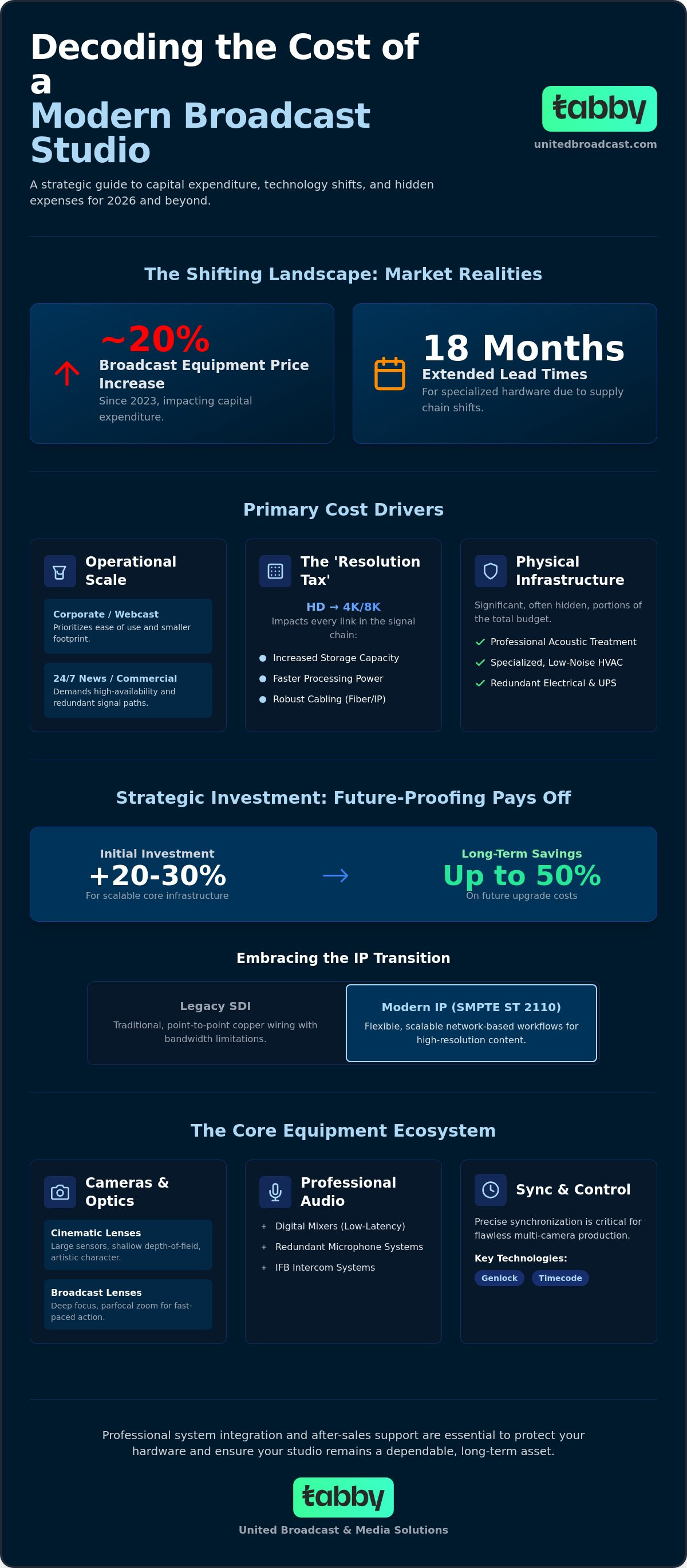
Did you know that broadcast equipment prices have climbed by approximately 20% since 2023, while lead times for specialized hardware have extended to 18 months? For technical directors and facility owners, calculating the true cost of building a broadcast studio in 2026 requires more than just a hardware list. It demands a strategic look at how global supply chain shifts and the industry move toward IP-based workflows impact your initial capital expenditure.
We understand that balancing high-tier production quality with a rigid budget is a complex task. You don't want to risk your investment on technology that won't scale or face unexpected costs during the system integration phase. This guide provides a clear roadmap for your project, detailing the essential equipment tiers and infrastructure requirements for a modern media environment. We'll explore the transition from legacy SDI to SMPTE ST 2110 standards, the financial benefits of hybrid cloud models, and how professional integration services ensure your studio remains a dependable, long-term asset.
Key Takeaways
- Identify the primary infrastructure drivers, from acoustic treatment to specialized HVAC, that influence the total cost of building a broadcast studio.
- Learn to select professional video cameras and high-CRI lighting systems that offer both color accuracy and future-proof connectivity.
- Evaluate the technical and financial implications of migrating from legacy SDI to modern IP-based workflows like SMPTE ST 2110.
- Distinguish between equipment tiers to align your investment with specific production goals, whether for corporate communication or commercial broadcasting.
- Recognize the importance of after-sales support and authorized service centers in protecting your hardware from environmental wear and technical obsolescence.
Key Drivers of Broadcast Studio Construction Costs
Calculating the total cost of building a broadcast studio begins with a precise definition of your operational scale. A corporate environment designed for executive webcasts requires a vastly different investment than a 24/7 news facility. While a corporate setup might prioritize ease of use, a professional television production studio demands high-availability infrastructure and redundant signal paths to prevent airtime failure. These requirements dictate everything from the number of camera angles to the complexity of the control room.
The 'Resolution Tax' is another critical budget factor that many facility owners overlook. Moving from HD to 4K or 8K doesn't just involve purchasing higher-end professional video cameras; it impacts every link in the signal chain. Higher resolutions require significantly more storage capacity, faster processing power for real-time graphics, and robust cabling infrastructure. This shift often necessitates a move away from traditional copper wiring toward fiber optics or high-capacity IP networks to handle the massive data throughput.
Physical infrastructure often contains the most significant hidden costs. Acoustic treatment is frequently underestimated, yet it's essential for professional audio clarity. Similarly, specialized HVAC systems must provide high-volume cooling to offset the heat generated by server racks and professional lighting equipment without introducing audible fan noise. These environmental factors, combined with the electrical load requirements for redundancy, represent a substantial portion of the construction budget.
Defining Your Studio's Technical Scope
Investing in future-proof technology typically adds 20% to 30% to the initial project cost. However, this strategic spending can save up to 50% on future upgrades by ensuring that core infrastructure, such as network switchers and routing backplanes, can handle increased data loads. You must also determine if the space will primarily host live-streamed events or recorded content. Live production requires more sophisticated control room hardware and real-time redundancy, whereas recorded setups might focus more on post-production integration and high-speed data transfer to edit suites.
Facility Requirements and Hidden Costs
Soundproofing is often the most overlooked budget item. True acoustic isolation involves structural modifications like floating floors or double-stud walls, which are expensive to retrofit. Power redundancy is another non-negotiable for professional environments. Uninterruptible Power Supply (UPS) systems ensure that critical broadcast uptime is maintained during local grid failures. Finally, choosing between overhead lighting grids and floor-standing setups involves a trade-off. Permanent grids offer a cleaner workspace and safer environment but require professional structural engineering and higher upfront installation costs.
The Equipment Ecosystem: Cameras, Lighting, and Audio
The core of your investment lies in the imaging and audio hardware that defines your production quality. When calculating the cost of building a broadcast studio, the choice of imaging technology dictates the long-term utility of the space. Selecting professional video cameras requires a balance between sensor size and connectivity. Larger sensors provide the shallow depth of field desired for cinematic productions, while smaller sensors in traditional broadcast chains offer the deep focus necessary for fast-paced news. You must ensure your acquisition tier supports the signal standards discussed in the previous section, whether that is 12G-SDI or full IP connectivity.
Optics play an equally vital role in your budget. Cinema lenses offer unparalleled image character and artistic texture, but they often lack the parfocal zoom capabilities found in dedicated broadcast lenses. For a studio environment requiring rapid framing changes and constant focus during zooms, specialized broadcast lenses are indispensable. Audio is the next critical layer. A professional signal chain includes digital mixers with low-latency processing, redundant microphone systems, and Interrupted Foldback (IFB) intercoms. These intercom systems allow directors to communicate with talent seamlessly without interrupting the program feed.
Camera Systems and Optical Chains
Successful multi-camera productions rely on precise synchronization. Genlock and Timecode ensure that every frame from every source aligns perfectly during switching, preventing digital artifacts. For smaller setups or secondary sets, integrating Sony Alpha cameras and lenses provides a compact and cost-effective solution for corporate environments. A major strategic decision in the cost of building a broadcast studio is choosing between Pan-Tilt-Zoom (PTZ) units and manned camera positions. PTZ systems reduce long-term labor costs, but manned cameras offer the creative flexibility and tracking precision that automated systems often cannot replicate.
Professional Studio Lighting Solutions
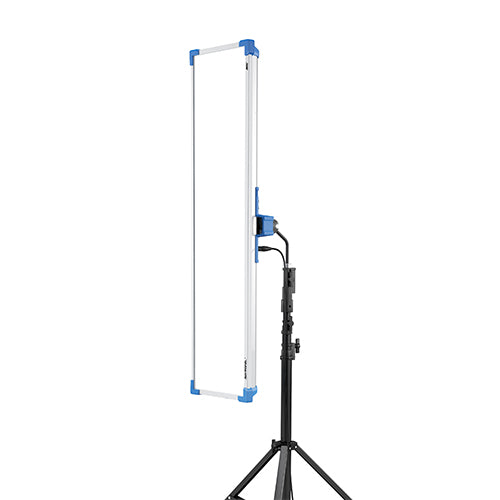
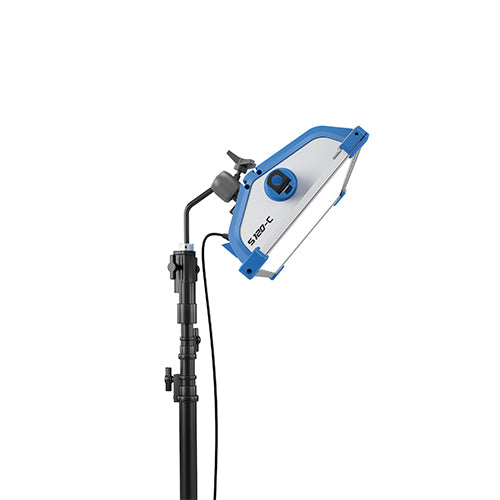
Lighting is no longer just about visibility; it's about color fidelity and heat management. ARRI lighting has become the global benchmark because of its superior skin tone reproduction and high Color Rendering Index (CRI). While the upfront cost of professional LED panels is higher than traditional Tungsten fixtures, the total cost of ownership is significantly lower. LEDs consume less power and generate minimal heat, which reduces the load on your HVAC system. Using versatile tools like the ARRI Omnibar Production Kit allows your team to adapt to different set configurations quickly without needing a massive inventory of single-purpose fixtures.
If you're unsure which imaging or lighting tier fits your specific production goals, you can consult with our technical design team for a tailored equipment list.
System Integration: The Control Room and Signal Backbone
The technical backbone of a facility is where the true cost of building a broadcast studio is often determined. While cameras and lights are visible assets, the signal backbone ensures these components function as a unified ecosystem. In 2026, the industry has largely transitioned toward IP-based infrastructures. Understanding the distinction between SMPTE ST 2110 and NDI is vital for your budget planning. ST 2110 offers uncompressed, professional-grade signal transport with precise timing, while NDI provides a more cost-effective, compressed alternative suitable for corporate and mid-tier productions. Choosing the wrong standard for your specific needs can lead to significant bottlenecks or expensive retrofitting later.
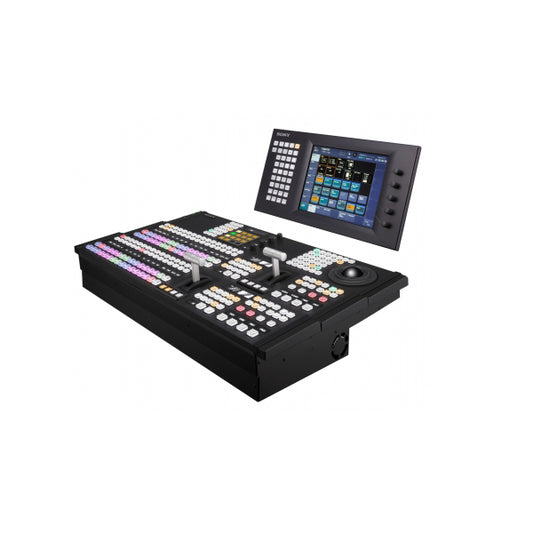
Video switchers and routers serve as the central nervous system of the operation. These devices manage multi-source environments, allowing for seamless transitions between live feeds, graphics, and remote call-ins. As production demands shift toward 4K and 8K, your storage and ingest requirements must scale accordingly. High-speed NAS (Network Attached Storage) or SAN (Storage Area Network) solutions are non-negotiable for handling the massive bitrates of high-resolution workflows. Without a robust data strategy, even the most advanced cameras will be limited by processing delays and storage bottlenecks.
Partnering with a professional broadcast system integrator plays a critical role in this phase. They ensure that every component is compatible and that the signal flow is optimized for zero-latency performance. Expert integration reduces deployment errors that could otherwise lead to costly downtime or hardware damage during the initial setup phase, providing a much higher return on investment over the life of the studio.
Control Room Architecture and Monitoring
Color consistency is paramount in professional broadcasting. High-grade broadcast monitors and multi-viewers allow the production team to see exactly what's being captured across the set. Beyond visuals, intercom and tally systems act as the essential coordination layer for the crew. These systems enable real-time communication between the director, camera operators, and talent. Ergonomics also impact the budget; custom consoles and rack management are essential for creating an environment where operators can work efficiently during long live broadcasts without fatigue.
Routing and Signal Distribution
Deciding between SDI, Fiber, and IP involves comparing the cost-per-port and the required cable runs. While 12G-SDI remains reliable for short distances, Fiber and IP offer the scalability needed for modern, larger facilities. You'll also need to account for signal converters and distribution amplifiers to maintain signal integrity across long distances. Finally, dedicated live streaming encoders are necessary to ensure high-quality delivery to Content Delivery Networks (CDNs) and social platforms, effectively bridging the gap between your local production and your global audience.
Budgeting Frameworks: Tiers of Studio Investment
A successful project depends on aligning your financial resources with your specific production tier. The cost of building a broadcast studio varies significantly based on whether you are facilitating internal corporate communications or a national news broadcast. For 2026, we recommend a 40/30/30 resource allocation rule. Under this framework, 40% of the budget is dedicated to hardware acquisition, 30% to professional system integration, and 30% to physical infrastructure and facility requirements like acoustics and HVAC.
The 'Pro-Sumer' Corporate Studio represents the entry point for internal communications and social media content. These setups often utilize compact systems like Sony Alpha cameras and lenses to achieve professional results without the complexity of a full broadcast chain. Moving up, the Commercial Production Hub is designed for agencies and independent creators. This mid-tier setup uses dedicated professional video cameras and networked audio to bridge the gap between portability and studio-grade output. Finally, the Tier-1 Broadcast Facility is the industry gold standard. It features full hardware redundancy, 8K-ready infrastructure, and high-end system integration designed for 24/7 live transmission.
Hardware vs. Integration Services
Professional integration services are not an optional add-on; they typically account for 20% to 35% of the total project budget. Attempting a DIY integration in professional environments often leads to signal interference, synchronization failures, and eventual hardware damage. An expert integrator ensures that the signal backbone discussed in the previous section remains stable under high-load conditions. You must also budget for crew training. Advanced technology only provides value if your operators are proficient in the new IP workflows and control interfaces. Beyond technical training, a professional studio identity is often reinforced through standardized crew attire, which is why many facilities explore Bulk Uniform Manufacturing and Supply Contracts as part of their operational branding strategy.
Scaling Your Budget for Growth
A modular build strategy allows you to manage the cost of building a broadcast studio by starting with a two-camera setup and expanding to five as your production needs increase. This prevents over-capitalization while ensuring the initial infrastructure is ready for future expansion. Financial strategies like equipment leasing can also help manage the initial capital expenditure. Understanding how advanced broadcast studio gear impacts your production value is essential for making these long-term investment decisions.
Ready to define the technical specifications for your next facility? Contact our system integration experts to receive a professional budget assessment tailored to your production tier.
Long-Term Costs: Maintenance and Environmental Protection
The total cost of building a broadcast studio isn't fully realized until you account for the operational expenditure required to sustain peak performance. While the initial capital investment covers the acquisition of hardware and the installation of the signal backbone, the longevity of these assets depends on a rigorous maintenance schedule. In professional media environments, neglecting technical upkeep often leads to catastrophic failures during live broadcasts, which can be far more expensive than a proactive service contract.
Modern IP-based workflows and high-resolution imaging systems require ongoing technical support. You must budget for annual Service Level Agreements (SLAs) that cover critical firmware updates and software patches for your routing and storage infrastructure. Additionally, professional media equipment follows specific depreciation and trade-in cycles. Planning for a hardware refresh every three to five years ensures your facility remains competitive and compatible with evolving industry standards, such as future iterations of SMPTE or ATSC protocols.
Regular maintenance cycles are particularly vital for optical and mechanical components. Utilizing authorized professional camera service centers for routine inspections prevents the accumulation of minor issues that could compromise image quality. These health checks should include everything from checking the torque on lighting grids to testing the redundancy of your power systems.
Protecting Sensitive Equipment in Arid Climates
In regions characterized by extreme heat and fine dust, environmental protection is a major factor in the cost of building a broadcast studio. High-end cinema sensors and server racks generate significant heat and are highly sensitive to particulate matter. You must implement specialized HVAC requirements for server rooms to maintain precise temperature and humidity levels. Dust mitigation strategies, such as positive pressure systems and high-efficiency filtration for cooling fans, are essential to prevent hardware overheating. Regular sensor cleaning and optical calibration should be performed by certified technicians to maintain the high-CRI performance of your lighting and the sharpness of your lenses.
The UBMS Advantage: After-Sales Technical Support
As a veteran system integrator founded in 1997, United Broadcast & Media Solutions understands the high stakes of professional production. We provide access to local expert repairs through our authorized service center, which is critical for minimizing production downtime. Our team conducts comprehensive system health checks to identify and resolve potential failures before they occur during live air. This localized support ensures that your investment continues to deliver professional-grade results for years to come.
Ready to plan your build? Consult with our system integration experts today to design a facility that is both high-performing and sustainable.
Future-Proofing Your Media Infrastructure
Building a professional facility in 2026 is a strategic investment that requires a balance between immediate production needs and long-term technical scalability. We've explored how the cost of building a broadcast studio is influenced by the shift to IP-based workflows, the selection of high-fidelity lighting, and the critical role of robust system integration. Success in this specialized field requires more than just high-end hardware; it demands a partner who understands the nuances of signal distribution and environmental protection in challenging climates.
Since 1997, UBMS has delivered comprehensive system integration services and technical expertise to the region's most prominent media entities. As an authorized service center for major global brands, we provide the localized support and maintenance necessary to protect your assets and minimize downtime. Our team is ready to help you navigate the complexities of modern broadcast design with confidence, ensuring your studio remains a high-performing asset for years to come.
Request a Custom Studio Integration Quote from UBMS to begin designing your world-class production environment today. We look forward to helping you bring your vision to life with precision and reliability.
Frequently Asked Questions
How much does a basic professional TV studio cost to build?
A basic professional studio typically requires a significant capital investment, often ranging from $1 million to $5 million for traditional hardware-centric facilities according to 2026 industry benchmarks. This investment covers core infrastructure, including cameras, basic lighting, and signal routing. Smaller corporate setups might require less, but achieving broadcast-grade reliability always involves a substantial commitment to high-tier equipment and professional integration.
What is the most expensive part of a broadcast studio build?
The signal backbone and system integration services usually represent the largest portion of the total cost of building a broadcast studio. While high-end cameras and lenses are visible assets, the invisible infrastructure demands the most technical resources. Components like SMPTE ST 2110 IP networking, uncompressed storage, and redundant power systems are critical. These elements ensure the facility remains operational and scalable for future technology shifts.
Do I need a system integrator for a small corporate studio?
Engaging a system integrator is highly recommended even for smaller corporate environments to ensure technical synergy between components. Professional integrators prevent common errors like signal latency, mismatched color spaces, or inadequate cooling for server racks. Their expertise ensures that your initial investment is optimized for ease of use. It also guarantees that the facility can scale as your production requirements grow.
Is it better to invest in 4K or 8K equipment in 2026?
Investing in 4K remains the primary standard for most broadcasters in 2026, though 8K is increasingly relevant for high-end archival and future-proofing. While 4K workflows are more cost-effective regarding storage and processing power, 8K-ready infrastructure ensures your studio won't become obsolete within a few years. Most professionals opt for 4K acquisition with an 8K-capable backbone to balance current costs with long-term utility.
How long does it take to design and build a broadcast studio?
A professional studio project typically spans 12 to 18 months from initial design to final commissioning. This timeline accounts for current global supply chain challenges and the extended lead times for specialized broadcast equipment documented in 2026. Proper planning includes several months for technical architecture, procurement of high-tier brands like Sony or ARRI, and several weeks for on-site integration and crew training.
What are the ongoing costs of running a professional studio?
Ongoing costs include technical support contracts (SLAs), software license renewals, and regular hardware maintenance at authorized service centers. You must also budget for high electrical consumption and specialized HVAC operation to protect sensitive electronics. Routine sensor cleanings and optical calibrations are essential. These tasks maintain the production quality expected in professional media environments and prevent unexpected downtime.
Can I use cinema cameras for a live broadcast environment?
Digital cinema cameras are increasingly used in live broadcasts to achieve a high-end, cinematic aesthetic. However, they require specific integration tools to function within a traditional control room environment, such as fiber adapters for tally and remote iris control. When properly integrated, these cameras offer superior dynamic range and skin tone reproduction. They provide a distinct visual advantage over standard broadcast sensors.
How does IP-based workflow affect the cost of a studio?
Transitioning to an IP-based workflow, such as SMPTE ST 2110, often increases initial infrastructure costs due to the requirement for high-capacity network switches. However, it significantly reduces the long-term cost of building a broadcast studio by replacing expensive SDI cabling with scalable fiber networks. This shift allows for greater flexibility in signal routing. It also enables easier future upgrades without the need to rewire the entire facility.


