

The Ultimate Guide to Professional Video Cameras in 2026
What if the AED 150,000 investment you make in your studio today becomes a legacy relic by next season because it fails to meet the specific 3840 photosite capture width now required for global streaming standards? In a market where the global professional video camera industry is projected to reach up to $67.82 billion this year, the gap between a high-performing asset and a costly technical bottleneck has never been thinner. You're likely feeling the pressure of sensor technology that evolves faster than your production cycle and the constant frustration of lens mount compatibility. Selecting professional video cameras in 2026 isn't just about buying a body; it's about committing to a technical ecosystem that can withstand the UAE's environmental challenges while delivering a measurable return on investment.
We agree that you shouldn't have to choose between cutting-edge features and reliable workflow integration. This guide will help you master the complex technical landscape and identify the ideal camera system for cinema, broadcast, or high-end production. You'll learn how to navigate the latest Netflix-approved requirements, the rise of AI-driven subject tracking, and the critical importance of selecting gear that's supported by expert maintenance and local system integration services.
Key Takeaways
- Identify the 2026 connectivity standards like 12G-SDI and Genlock to ensure your equipment meets the rigorous demands of modern studio environments.
- Learn to distinguish between cinema and broadcast workflows to choose professional video cameras that best support your specific needs for post-production flexibility or live output.
- Evaluate critical sensor technologies, including the choice between Super 35mm and Full Frame, to maximize your equipment's return on investment.
- Discover how to build a comprehensive production rig using calibrated monitoring and cinema lenses that define your unique visual character.
- Leverage expert system integration and certified service center support in the UAE to maintain your equipment's longevity and operational reliability.
Defining the Professional Video Camera Standards for 2026
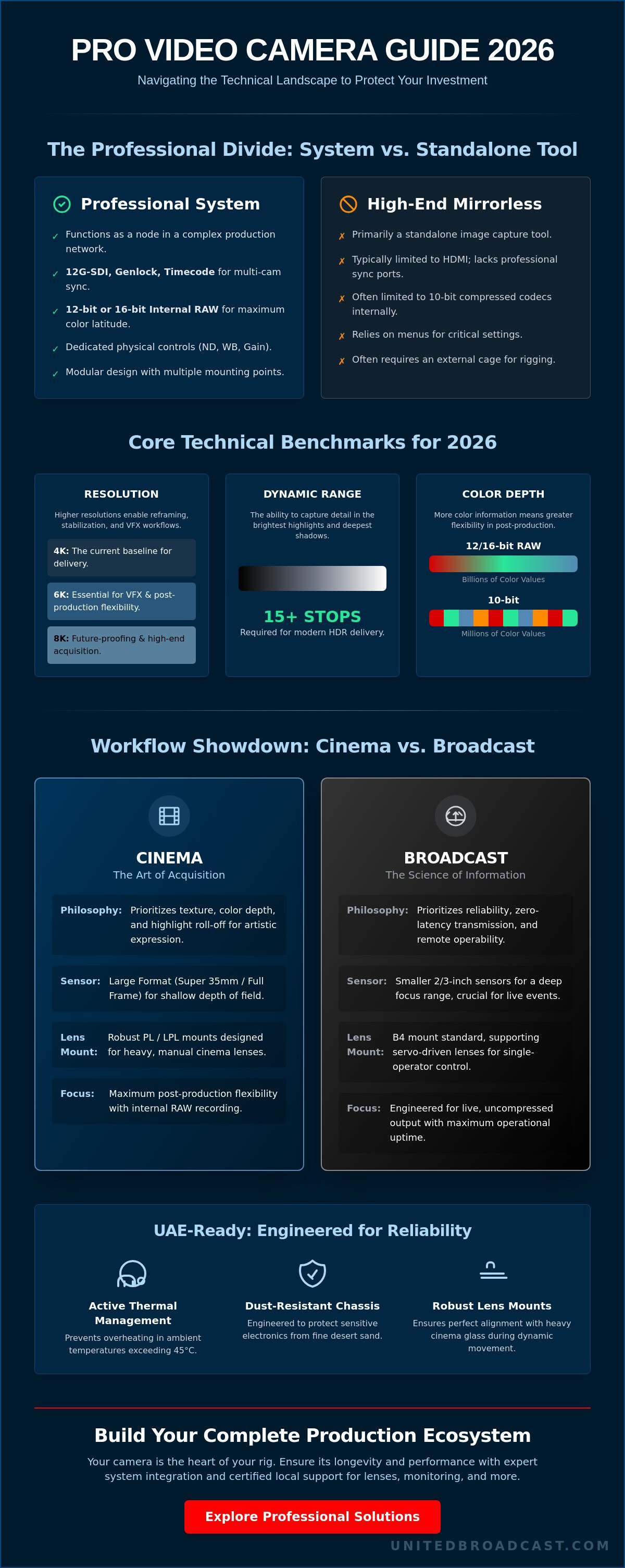
High-end mirrorless cameras often boast impressive specifications, but true professional video cameras are defined by their capacity to function as part of a larger technical ecosystem. A mirrorless camera is usually a standalone tool. In contrast, a professional system acts as a node in a complex production network. Understanding this distinction is vital when reviewing a Professional Video Camera Overview, as it highlights the necessity of standardized connectivity. Professional bodies provide 12G-SDI for uncompressed 4K output, Genlock for multi-camera synchronization, and dedicated timecode ports. These features ensure every frame aligns perfectly across multiple devices on a broadcast or cinema set.
Color science and bit-depth provide another clear boundary. While prosumer gear often reaches its limit at 10-bit, professional systems prioritize 12-bit or 16-bit internal RAW recording. This offers billions more color values. It gives colorists the latitude to manipulate images in post-production without causing digital artifacts or banding. These files retain the sensor's full potential, ensuring the footage meets the stringent requirements of global streaming platforms.
Physical design also dictates the utility of professional video cameras. Professional bodies feature dedicated toggle switches for gain, white balance, and internal ND filters. You won't have to dive into touch-screen menus during a high-stakes shoot. Modularity is equally important. Multiple 1/4-20 and 3/8-16 mounting points allow for the secure attachment of accessories like wireless transmitters and battery plates without needing an external cage.
The Evolution of Professional Resolution and Dynamic Range
4K serves as the current baseline. However, 6K and 8K acquisition is now essential for VFX-heavy workflows. These higher resolutions allow for reframing and stabilization in post-production without sacrificing final output quality. Resolution remains secondary to dynamic range, with top-tier systems offering 15+ stops of latitude. Dynamic range defines a camera's ability to preserve detail in both extreme highlights and deep shadows within a single frame for HDR delivery standards.
Build Quality and Professional Reliability
Reliability remains the most critical factor for UAE-based productions. Professional systems utilize active thermal management, employing internal fans and sealed heat sinks to prevent thermal shutdown in ambient temperatures that frequently exceed 45°C. Their chassis are engineered to resist fine dust particles common in the region. Using robust PL or LPL mounts ensures that heavy cinema glass remains perfectly aligned, even during high-G movements on a chase car or gimbal.
Cinema vs. Broadcast: Selecting the Right Workflow
Choosing between cinema and broadcast workflows is a foundational decision that affects your entire production pipeline. While both categories utilize professional video cameras, their engineering priorities diverge significantly. Cinema systems focus on the "acquisition of art," prioritizing texture, color depth, and highlight roll-off. Broadcast systems prioritize the "acquisition of information," focusing on reliability, zero-latency transmission, and remote operability. Understanding these differences is essential for ensuring your equipment matches your delivery requirements.
Digital cinema cameras typically feature large-format sensors to achieve a shallow depth of field. This allows directors to guide the viewer’s eye through selective focus. In contrast, traditional broadcast cameras often use smaller 2/3-inch sensors paired with B4 mounts. These provide a deeper focus range, which is critical for live sports or news where the subject's distance from the lens changes rapidly. Your choice of camera body dictates your entire lens ecosystem. A cinema-focused PL-mount system requires manual or wireless follow-focus units. A broadcast B4 system utilizes servo-driven lenses that allow a single operator to control zoom, focus, and iris from the tripod handles.
A growing trend in the UAE is the "cinematic broadcast" hybrid. High-profile live events now often incorporate large-format professional video cameras into a multi-cam environment to give live streams a premium, filmic quality. This requires specialized integration to bridge the gap between cinema bodies and broadcast infrastructure. If you're looking to upgrade your studio, you can find a wide range of broadcast studio gear tailored for these hybrid workflows. This approach combines the artistic look of film with the technical efficiency of a live gallery.
Digital Cinema Workflows
Cinema workflows rely heavily on post-production flexibility. Utilizing log profiles like S-Log3, Log-C, or REDCODE RAW ensures that the maximum dynamic range is preserved for the colorist. High frame rate (HFR) capabilities are also vital, allowing for smooth slow-motion capture at 4K or higher resolutions. Many filmmakers in the region also opt for anamorphic lenses to achieve the classic widescreen aesthetic and unique lens flares that spherical glass cannot replicate.
Live Broadcast and Multi-Camera Environments
Live environments demand robust connectivity. Fiber optic umbilical systems carry power, tally signals, return video, and intercom data through a single cable over long distances. This ensures the camera operator and the director remain in constant communication. For smaller studios or remote angles, PTZ cameras provide a compact solution. They allow for full pan, tilt, and zoom control from a remote gallery without needing a dedicated operator at every camera position.
Key Technical Specifications to Evaluate Before Purchase
Selecting the right hardware requires a deep understanding of how specific components impact your final image and operational efficiency. While resolution often dominates the marketing conversation, experienced operators look toward sensor size and shutter architecture as the true indicators of performance. The choice between Super 35mm and Full Frame (Large Format) sensors involves more than just field of view. Full Frame sensors offer a distinct aesthetic with a shallower depth of field and generally superior low-light performance. Super 35mm remains the industry standard for many, providing compatibility with a vast library of vintage and modern cinema glass while maintaining a manageable data footprint.
Shutter technology is another critical factor when evaluating professional video cameras. Global shutter sensors capture the entire frame simultaneously, which eliminates the "jello effect" or skewed vertical lines often seen in fast-moving subjects. This is indispensable for sports, action sequences, or environments with frequent strobe lighting. Rolling shutter sensors are more common and often offer higher dynamic range, but they require exceptionally fast readout speeds to remain viable for high-end production. You must weigh the need for motion accuracy against the desire for maximum latitude in your highlights and shadows.
Data management and power logistics represent the hidden costs of any camera system. High-bitrate recording demands expensive media like CFexpress Type B cards or proprietary SSD modules. You should calculate the cost of storage per hour of footage as part of your initial investment. Similarly, professional bodies require robust power solutions. V-Mount and Gold Mount battery systems are standard because they provide the high-current draw necessary to power the camera and peripherals like wireless transmitters and monitors throughout a fourteen-hour production day.
Sensor Technology and Low-Light Performance
Dual Base ISO technology has fundamentally changed how cinematographers approach lighting. By providing two distinct native ISO circuits, cameras can deliver clean images at much higher sensitivity levels, such as ISO 3200 or 12800, without the traditional increase in electronic noise. Pixel pitch matters more than total pixel count for low-light noise because larger individual pixels have a greater surface area to collect light. This ensures that professional video cameras maintain a high signal-to-noise ratio even in uncontrolled night environments.
Connectivity and Peripheral Support
A professional body must support a suite of peripherals to function on a modern set. This includes integrated wireless video transmission for real-time monitoring and dual XLR inputs with high-quality preamps for broadcast-grade audio. Advanced metadata support is also essential. Systems that utilize Cooke /i Technology or similar protocols record lens data like focal length, iris, and focus distance directly into the file metadata. This streamlines the VFX and post-production process by providing accurate lens characteristics for every frame captured.
Building Your Production Rig: Beyond the Camera Body
A high-end sensor is only as effective as the ecosystem surrounding it. While professional video cameras provide the processing power and data capture, the optical character and operational stability come from your choice of glass and support systems. Building a balanced rig requires a strategic approach where every component, from the baseplate to the matte box, serves a specific functional purpose. You're not just assembling parts; you're creating a cohesive imaging tool.
Lenses represent the most significant long-term investment in your kit. Unlike camera bodies that may be superseded within a few years, high-quality cinema glass often retains its value for decades. Beyond sharpness, cinema lenses are selected for their flare characteristics, bokeh quality, and color rendition. On-set monitoring is equally vital. Both on-camera and director’s monitors must undergo regular color calibration using professional probes. This ensures that what the DP sees matches the final HDR delivery, preventing costly errors in exposure and color balance that are difficult to correct in post-production.
In the UAE, environmental factors play a decisive role in equipment longevity. The combination of high ambient humidity and fine desert dust can be catastrophic for internal electronics and optical coatings. Regular maintenance is not optional. It's essential to perform professional sensor cleaning and lens calibration at a certified service center to prevent fungal growth and mechanical failure caused by abrasive sand particles. If you're ready to build your next-generation rig, explore our extensive inventory of professional video cameras and specialized accessories.
The Lens Ecosystem: Prime vs. Zoom
Choosing between prime and zoom lenses depends on your production's pace. Prime lenses generally offer wider apertures and superior optical performance, making them ideal for controlled cinematic environments. Modern high-end zooms have narrowed the performance gap, providing the speed needed for documentary and broadcast work. Many cinematographers now pair modern high-resolution sensors with vintage-look lenses to take the digital edge off the image, creating a more organic, filmic texture.
Professional Lighting and Grip
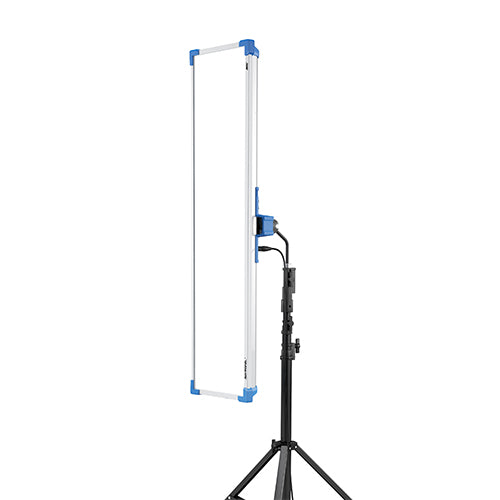
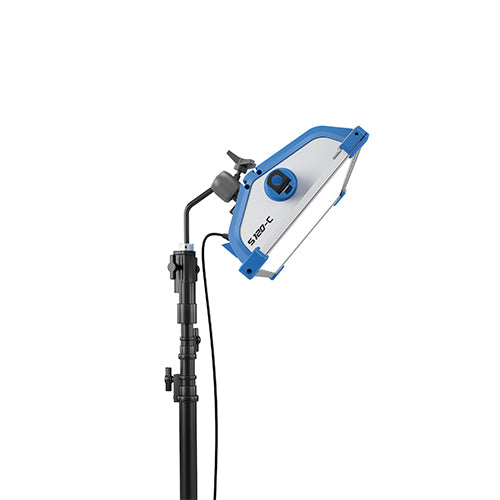
Camera sensitivity must be matched with high-output, color-accurate lighting. Modern LED studio systems allow for precise control over color temperature and green-magenta shifts, ensuring skin tones remain natural. You can learn more about professional lighting equipment and how it integrates with your camera's native ISO. Professional grip equipment, including heavy-duty tripods and high-payload gimbals, provides the safety and precision movement required for high-stakes productions.
The UBMS Advantage: Expert Integration and Technical Support
Acquiring professional video cameras is a significant capital investment that marks the beginning of a long-term technical partnership. In the high-stakes environment of 2026, a camera is only as valuable as the support system that keeps it operational. United Broadcast & Media Solutions provides a bridge between global technology and local production needs. We offer a comprehensive portfolio of industry-leading brands, including Sony, ARRI, and RED, ensuring that your team has access to the most advanced imaging systems currently available. Our role extends beyond being a vendor; we act as a dedicated technical pillar for the regional media community.
Post-sales support is the foundation of our service philosophy. We understand that equipment failure during a shoot isn't just a technical glitch; it's a threat to your production's ROI and reputation. Our team prioritizes reliability and logistical excellence to ensure you never face unnecessary downtime. By maintaining a deep inventory of essential components and accessories, we provide a stable supply chain for the most demanding broadcast and cinema environments in the UAE. This stability allows you to focus on the creative process while we handle the technical infrastructure.
System Integration for Modern Media
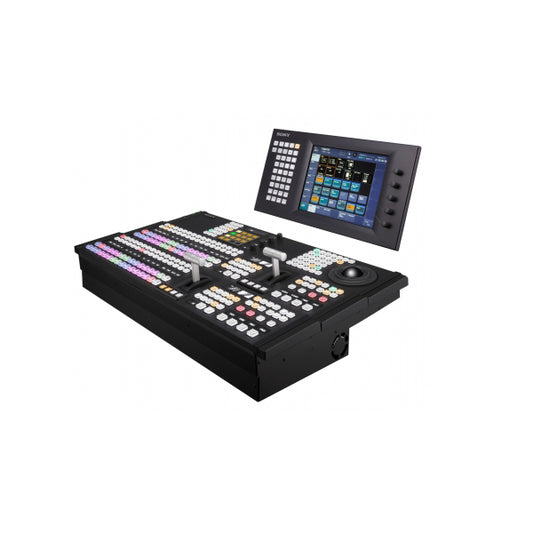
Modern production houses require more than standalone equipment. They need turnkey solutions where cameras, switchers, and storage systems work in perfect harmony. Our expert system integration services focus on designing custom broadcast and studio environments from the ground up. We ensure full interoperability between disparate hardware components, focusing on zero-latency 12G-SDI and IP-based signal flows. We consult on future-proof infrastructure, helping you navigate the technical requirements of 4K and 8K workflows to ensure your facility remains competitive for years to come.
Certified Maintenance and Repair
The UAE’s unique environmental challenges, such as fine desert dust and extreme heat, require specialized care for high-end optics and sensors. Our dedicated service center is staffed by certified technicians who perform precision repairs and sensor cleaning using factory-standard tools. Local support is critical for rapid turnaround times, as shipping equipment internationally for service can lead to weeks of lost productivity. We provide the calibration services necessary to maintain the tight tolerances required for professional imaging. Contact UBMS for expert camera service and integration to protect your equipment and streamline your production workflow.
Future-Proofing Your Production Infrastructure
Mastering the technical landscape of 2026 requires more than just following spec sheets. It's about understanding how resolution, connectivity, and environmental reliability intersect to create a viable production workflow. Whether you're configuring a multi-camera broadcast studio or a specialized cinema rig, your choice of professional video cameras must account for both immediate delivery standards and long-term maintenance needs in the UAE. The transition from standalone tools to integrated ecosystems is now complete, and your hardware must reflect that reality.
Since 1997, United Broadcast & Media Solutions has served as a trusted advisor to the region’s media industry. As an authorized distributor for top-tier brands like Sony, ARRI, and RED, we provide the tools and the technical infrastructure to support them. Our dedicated service center ensures your equipment remains at factory standards despite the harsh local climate. Explore the Latest Professional Video Cameras at UBMS today. We're ready to help you build a production environment that stands the test of time and delivers exceptional results.
Frequently Asked Questions
What is the difference between a cinema camera and a camcorder?
A cinema camera prioritizes artistic control through large sensors and interchangeable lenses, while a camcorder is an all-in-one solution designed for speed and deep focus. Cinema bodies usually record in RAW or high-bitrate log profiles to maximize post-production flexibility. Camcorders often feature integrated zoom lenses and built-in ND filters, making them better suited for news gathering and documentary work where setup time is limited.
How do I choose the right lens mount for my professional camera?
Your choice of lens mount should align with your existing glass inventory and the specific requirements of your production style. PL and LPL mounts are the industry standards for cinema lenses, offering the most secure connection for heavy optics. Mirrorless-style mounts like Sony E, Canon RF, or L-Mount provide greater versatility, as they can be adapted to take almost any lens type using professional-grade adapters.
Why is dynamic range more important than resolution in professional video?
Dynamic range is more critical because it determines the camera's ability to preserve detail in extreme lighting conditions, which is essential for high-quality HDR delivery. While resolution provides sharpness, dynamic range provides the "film-look" by ensuring smooth highlight roll-off and shadow detail. Most professional video cameras in 2026 meet the 4K resolution baseline, so the true differentiator becomes the 15+ stops of latitude a sensor can provide.
What are the essential accessories for a professional camera rig?
A functional professional rig requires a robust power system, color-accurate monitoring, and high-speed recording media. You'll need V-Mount or Gold Mount batteries to power the camera and peripherals simultaneously. External monitors are necessary for precise focus pulling, while high-payload tripods or gimbals ensure the stability of the entire system during complex camera movements.
How does humidity and heat affect professional video equipment in the UAE?
Extreme heat can cause thermal shutdown in equipment without active cooling, while high humidity increases the risk of fungal growth on lens elements. In the UAE, ambient temperatures often exceed 45°C, making internal fans and heat sinks vital for continuous recording. Dust and sand particles can also penetrate non-weather-sealed bodies, necessitating regular professional cleaning and maintenance at a certified service center.
Can I use professional video cameras for live streaming?
Yes, most professional video cameras are designed for seamless integration into live streaming workflows via 12G-SDI or HDMI outputs. Many modern systems also support IP-based protocols like NDI or SRT, allowing for high-quality video transmission over standard network infrastructure. This makes them ideal for high-end corporate events and professional broadcast applications where image quality cannot be compromised.
What recording media is recommended for 8K video production?
8K video production requires recording media with exceptionally high sustained write speeds to handle the massive data throughput. CFexpress Type B cards are currently the standard for many high-resolution systems, though some cinema cameras utilize proprietary SSD modules for maximum reliability. It's essential to verify that your media’s minimum sustained write speed exceeds the bitrate of your chosen 8K recording format to avoid dropped frames.
Does UBMS provide training for new camera systems?
UBMS serves as a comprehensive hub for the media community by hosting educational sessions and product-specific events. These sessions are designed to help operators and engineers understand the nuances of new camera systems and integrated broadcast workflows. You can check our event calendar or contact our technical team to learn more about upcoming opportunities to gain hands-on experience with the latest imaging technology.


