

How to Budget for a Documentary Film Gear Package
A camera’s headline specifications won’t tell you whether it belongs in your documentary package. To learn how to budget for a documentary film gear package, start with the production conditions: how you’ll move, record sound, light interviews, and manage footage in the field.
It’s easy to focus on the camera body and overlook the equipment that makes a workflow practical. Lenses, support, power, media, audio, lighting, backups, and post-production requirements all affect what you need and how to allocate your budget. The right choices depend on your shooting style, locations, crew, and delivery needs, not simply the biggest specifications.
This guide helps you build a gear list around your production plan, compare package options by capability, and identify trade-offs before committing funds. It also covers often-missed accessories and workflow requirements, then sets out steps for sourcing and supporting your equipment. Treat camera, lens, and lighting decisions as connected parts of one system, so your budget supports the footage you need from shoot day through post-production.
Key Takeaways
- Start your gear plan with access, locations, crew size, and shooting duration so the package fits the realities of production.
- Learn how to budget for a documentary film gear package by prioritizing equipment according to its role in your workflow, rather than headline specifications.
- Compare lean, interview-led, and mobile observational setups by image needs, audio inputs, recording time, operator workload, and compatibility.
- Use a structured worksheet to track each item’s purpose, quantity, priority, compatibility, and quote status, including storage and maintenance needs.
- Test the complete setup before filming to catch workflow gaps and plan backups and media handoffs.
How to Budget for a Documentary Film Gear Package Around Your Production
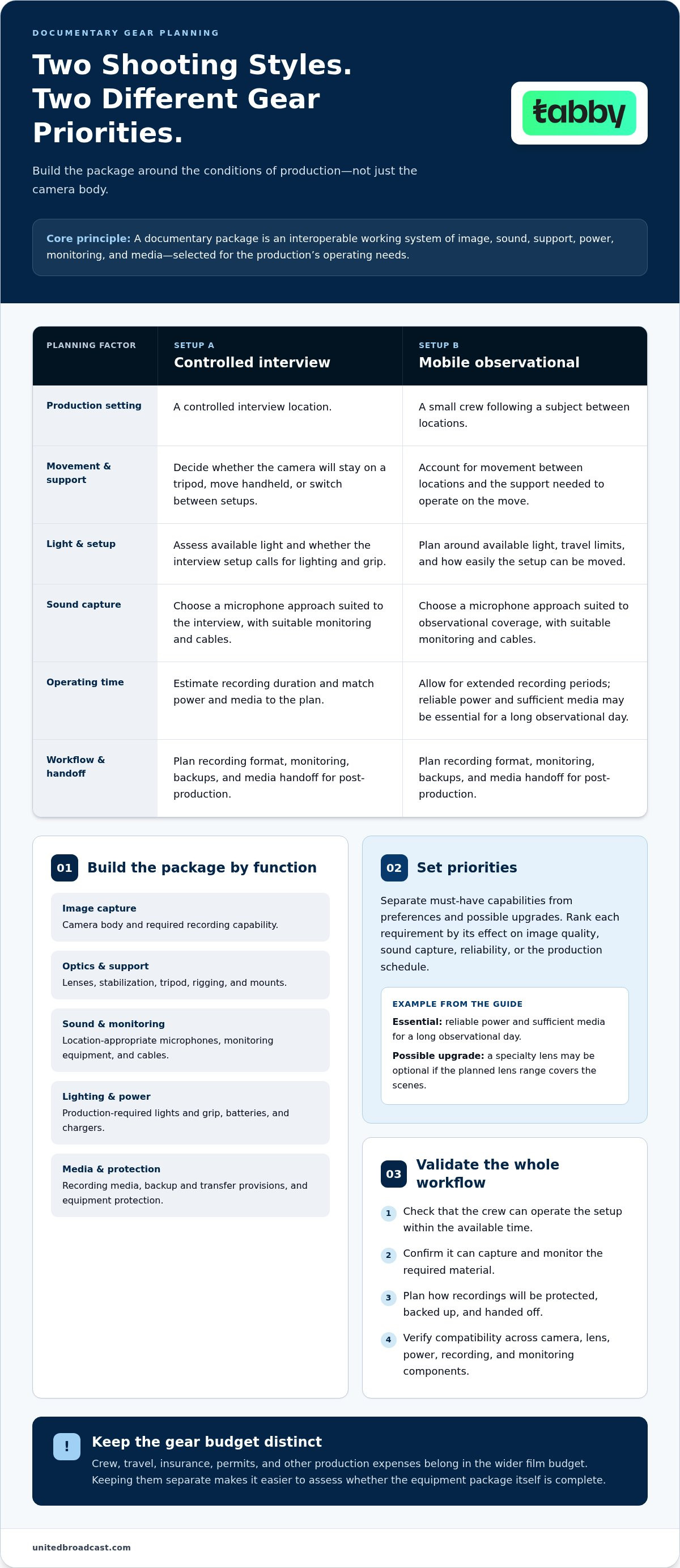
A documentary filmed in controlled interview locations has different equipment needs from a small crew following a subject between locations. Access limits, travel, crew size, and shooting duration affect what the package must do, how long it must operate, and how much support it needs. To learn how to budget for a documentary film gear package, work in sequence: define production conditions, identify technical requirements, prioritize essential gear, then validate the complete workflow.
A documentary gear package is an interoperable working system of image, sound, support, power, monitoring, and media equipment selected to meet a production’s specific operating needs. Keep its budget distinct from crew, travel, insurance, permits, and other production expenses. Those costs belong in the wider film budget, but combining them with equipment makes it harder to see whether the package itself is complete. For broader context on understanding film budgeting, consider how gear fits alongside the other cost categories in a production plan.
Translate the documentary plan into equipment requirements
List the types of scenes you expect to shoot: interviews, observational coverage, vérité sequences, travel days, or controlled-location filming. Then record the conditions that shape equipment choices. Will the camera stay on a tripod, move handheld, or switch between setups? How much available light can you expect? Will weather exposure, restricted access, or limited setup time affect the kit?
Define workflow requirements before comparing equipment. Note recording formats and duration, monitoring needs, backup procedures, and how media will be handed off for post-production. These requirements influence the whole system, including lenses, lighting, storage, and the number of accessories you need.
Set priorities before comparing equipment
Separate must-have capabilities from preferences and possible upgrades. Rank each requirement by its effect on image quality, sound capture, reliability, or the production schedule. For example, reliable power and sufficient media may be essential for a long observational day, while a specialty lens may be optional if the planned lens range covers the scenes.
Use the professional video camera range to compare camera categories, then assess options against your documented needs rather than headline specifications alone. Confirm compatibility against current manufacturer documentation, especially across camera, lens, power, recording, and monitoring components.
Finally, validate the proposed package as a working setup. Check that the crew can operate it within the available time, capture and monitor the required material, protect and back up recordings, and complete the planned media handoff. This review turns a gear list into a defensible budget and helps expose gaps before production begins.
What Belongs in a Documentary Film Gear Package?
A useful gear list accounts for more than the camera body. Build it by function, including each category only if the production plan calls for it. An interview in a controlled room may need a different setup from a mobile shoot where the crew must travel light, adapt to available light, and record for extended periods.
A complete documentary workflow matters more than a camera body alone because every component must work together to capture, monitor, protect, and transfer usable footage and sound. Account for supporting equipment too: batteries, chargers, cables, mounts, media, and the tools or process needed to manage recordings.
Camera, lenses, and support equipment
Choose camera capabilities according to recording format, expected operating time, movement, and delivery requirements. Consider lenses and support as a connected system: focal-length coverage, focus operation, stabilization, tripod or handheld use, and rigging all affect how efficiently the camera can be operated. Use professional video camera options for category context, and verify compatibility against current manufacturer documentation.
Sound, lighting, power, and media
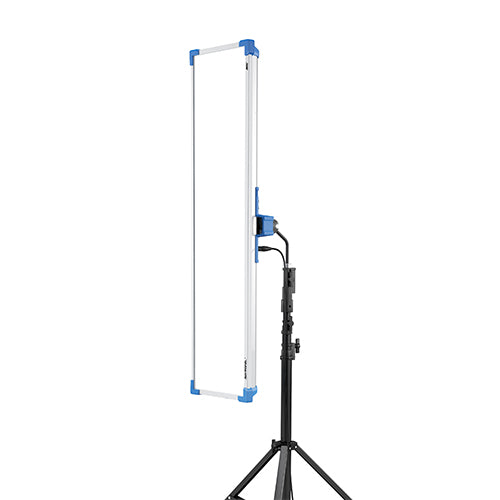
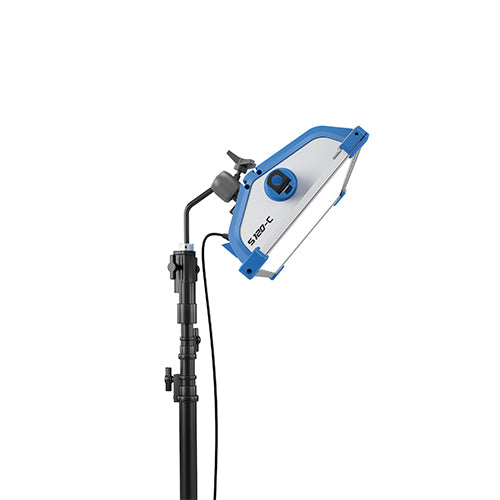
Plan sound for the location and scene. Interviews may call for a different microphone approach from observational coverage, but both need suitable monitoring, cables, and a way to capture clear, usable production sound. Include lighting and grip when the interview setup, available light, or shooting conditions require them. Transport limits matter too: a lighting setup that is difficult to move may not suit a mobile crew.
Power and media are easy to underestimate. Match batteries and chargers to expected operating time, and plan recording media capacity, backups, data transfer, and equipment protection as part of the package. Include the mounts, adapters, and cables needed to connect the components instead of assuming they’ll be available on set.
Use this functional checklist to assess what belongs in the working package:
- Image capture: camera body and required recording capability.
- Optics and support: lenses, stabilization, tripod, rigging, and mounts.
- Sound and monitoring: location-appropriate microphones, monitoring equipment, and cables.
- Lighting and power: production-required lights, grip, batteries, and chargers.
- Media and protection: recording media, backup and transfer provisions, and equipment protection.
Make the inventory practical by noting each item’s purpose and the other components it depends on. If you’re planning a camera, lens, and lighting workflow as one system, the UBMS team can discuss your equipment requirements.
How to Compare Documentary Gear Options Without Overbuying
The highest specification doesn’t automatically make the best documentary package. A feature adds value only if it supports the planned footage, recording conditions, or delivery requirements. Compare options against the work they need to do, including the accessories and support each setup depends on, rather than choosing by headline specifications alone.
Use this framework to compare package scope by shooting style. It’s a starting point, not a universal equipment list or price guide.
| Image requirements | Audio inputs | Recording duration | Operator workload | System compatibility | |
|---|---|---|---|---|---|
| Lean | Meet delivery needs with a streamlined camera and lens setup. | Support the planned recording method without unused input capacity. | Allow for the expected takes and shooting blocks. | Keep setup and adjustments manageable for the available crew. | Check that essential lenses, monitoring, media, and power connect correctly. |
| Interview-led | Prioritize consistent framing and repeatable image quality in controlled setups. | Plan for the interview microphones and monitoring approach. | Allow for full interviews, retakes, and setup changes. | Account for camera operation alongside lighting and sound tasks. | Confirm that camera, lens, support, lighting, and sound components work together. |
| Mobile observational | Favor a configuration suited to movement and changing conditions. | Ensure the setup can capture and monitor sound while following action. | Plan for extended or unpredictable recording periods. | Reduce rig complexity and make power and media changes practical in the field. | Verify connections and operating requirements across the camera, accessories, and backup workflow. |
Choose package scope for the shooting style
For interview-led work, assess stable camera support, sound capture, and lighting that can be set consistently. For run-and-gun filming, prioritize manageable operation, dependable power, and quick media handling. Mixed productions need a deliberate balance: identify components that can serve both controlled interviews and mobile coverage, then account for any separate support each mode requires.
Compare buying choices by total workflow impact
Compare the complete setup, not just its principal equipment. Include required batteries, chargers, cables, mounts, media, monitoring, and backup needs. Ask whether an option simplifies setup, reduces operational risk, or adds complexity the crew can’t support. This makes how to budget for a documentary film gear package a practical workflow decision, not a specification contest.
Before committing, verify current specifications and compatibility against manufacturer information. Consider serviceability and long-term maintenance as part of ownership, including how equipment will be supported if it needs repair. A lower-complexity system that fits the crew’s operating capacity may serve the production better than a more capable configuration that slows setup or complicates media handling.
How to Build and Validate a Documentary Gear Budget
A useful gear budget is an itemized, purpose-linked plan that connects every equipment decision to a production need. It should show what each item does, how it works with the rest of the package, and whether it is essential or optional. This makes it easier to compare quotes and explain why each line belongs in the production plan.
Create an itemized package and compare scenarios
Start with a baseline package that meets the production requirements. Record optional upgrades separately so they don’t obscure the cost of the essential setup. When comparing scenarios, use the same assumptions for each, including locations, recording duration, crew responsibilities, and delivery needs.
| Item | Production purpose | Quantity | Compatibility | Priority | Quote status |
|---|---|---|---|---|---|
| Camera | Capture planned scenes and meet delivery needs | As required | Check lenses, media, power, and monitoring | Core | Pending / received / reviewed |
| Required accessories | Make the camera and other equipment usable on location | As required | Check mounts, cables, and connections | Essential | Pending / received / reviewed |
| Consumables | Support the planned shoot and media workflow | As required | Confirm fit with the workflow | Required | Pending / received / reviewed |
| Maintenance | Account for upkeep and equipment support | As required | Match to owned equipment | Planned | Pending / received / reviewed |
| Post-production storage | Protect and transfer recorded material | As required | Check capacity and handoff process | Core workflow | Pending / received / reviewed |
Track quote validity, delivery, support, and project-specific procurement requirements alongside the item details. Record applicable taxes as shown in the quote, and ensure each comparison uses the same assumptions. Add a contingency line for unexpected equipment needs or changes, setting its value according to the project rather than applying an unsupported universal percentage.
Check the package before committing
Validate the complete chain: cameras, lenses, recording media, monitoring, power, and accessories. Review the list against call sheets, locations, crew responsibilities, and backup procedures. If interviews depend on planned lighting setups, use this professional lighting guide to inform your equipment planning.
A final compatibility and workflow review can reveal missing items before they affect the shoot. Include serviceability and maintenance in the ownership plan so equipment support is considered alongside initial selection.
Turn the Documentary Gear Budget into a Reliable Production Workflow
A budget becomes production-ready when the equipment has been tested as a system, not just listed as compatible on paper. Pre-production checks can expose connection issues, missing accessories, or operational steps that would otherwise slow a shoot. They also show whether the package suits the crew’s capacity and the time available at each location.
Test the package against real production conditions
Rehearse a representative interview and, if the project includes mobile coverage, a representative moving setup. Follow the intended recording and monitoring process from camera setup through media handoff. Check that each component fits and connects as expected, then test the workflow under realistic operating conditions.
Use the rehearsal to check power endurance for planned shooting blocks, media capacity for expected recording, accessory fit, and backup steps. Confirm that files can be transferred using the planned process and are accessible at the handoff point. Document who is responsible for setup, camera operation, media changes, backups, file transfer, and troubleshooting. Clear ownership reduces missed steps when the crew is working under time pressure.
Plan for equipment support and next steps
Keep equipment records, configuration notes, compatibility references, and maintenance requirements with the production documentation. This gives the team a consistent record of how the system was configured and what needs attention before the next shoot. For owned equipment, include servicing and repair considerations in longer-term planning rather than treating support as an afterthought.
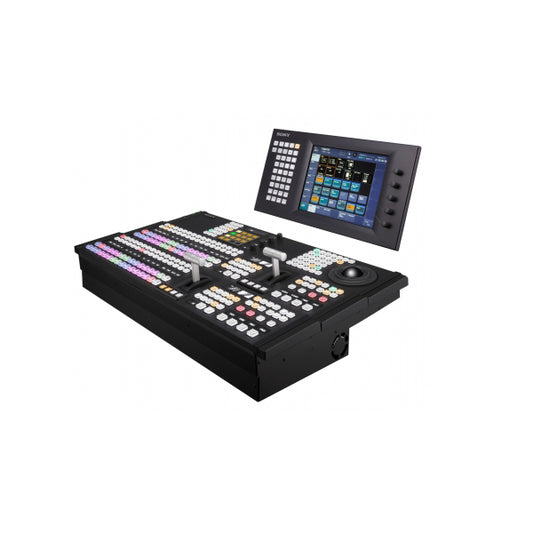
If the documentary package needs to connect with wider studio or broadcast systems, consider system integration requirements early. Signal paths, monitoring, and media handoff should fit the existing workflow, not create a separate process that adds avoidable setup or operational complexity. These checks complete the practical process of how to budget for a documentary film gear package: plan the requirements, test the workflow, document responsibilities, and account for ongoing support.
Use rehearsal findings to update the equipment list and resolve gaps before filming begins. A tested, documented workflow helps the crew work consistently from setup through delivery.
Build a Gear Plan That’s Ready for Production
A defensible documentary gear budget starts with the production plan, not a list of impressive specifications. Match equipment to the locations, shooting style, crew capacity, and recording workflow. Then itemize the complete package, compare options against the same requirements, and test the setup before filming. That’s a practical way to approach how to budget for a documentary film gear package while accounting for the accessories, media, power, and support that keep the workflow moving.
United Broadcast & Media Solutions (UBMS) sells professional video cameras, digital cinema cameras, cinema lenses, professional lighting equipment, and broadcast studio gear. The company also provides system integration for broadcast environments and studio setups, plus repairs and technical support through its dedicated service center. These capabilities support planning for a package that needs to work as a dependable system, from camera operation through post-production handoff.
Bring your production requirements and gear list together, then refine the package around what the project genuinely needs. A clear plan gives your team a stronger foundation for informed equipment decisions.
Use the contact link above to discuss your documentary gear requirements with UBMS.
With the workflow planned and tested, you can move into production with greater confidence.
Frequently Asked Questions
How much should I budget for a documentary film gear package?
There’s no single budget that fits every documentary; the right amount depends on shooting style, locations, crew capacity, recording duration, and delivery requirements. To understand how to budget for a documentary film gear package, itemize the required equipment and supporting needs, then compare quotes using the same assumptions. Keep gear costs separate from crew, travel, insurance, permits, and other production expenses. For UAE planning, record quoted amounts in AED.
What equipment should be included in a documentary film gear package?
Include the camera and lenses, sound equipment, camera support, lighting, power, recording media, and monitoring that the production actually needs. Add practical accessories such as batteries, chargers, cables, mounts, and any media-management provisions required for backup and transfer. For example, an interview setup may need stable camera support and planned lighting, while a mobile shoot may prioritize compact operation and dependable power. Check compatibility across the complete system.
How do I choose a camera for a documentary film?
Choose a camera by matching its capabilities to recording format, delivery requirements, operating duration, movement, and crew workflow. Consider how it will work with the planned lenses, audio connections, monitoring, media, and power. A camera with more features isn’t automatically the better fit if those capabilities don’t support the footage or create extra setup demands. Verify current specifications and compatibility against manufacturer documentation before making a selection.
Do documentary filmmakers need a lighting kit?
Not every documentary needs a dedicated lighting kit. The decision depends on access to available light, locations, interview plans, transport limits, and how consistent the image needs to be across setups. A controlled interview may benefit from planned lighting, while observational filming may call for a lighter approach that adapts to the environment. Budget for the lights and required support only when they serve a clear production purpose.
Should I buy or rent equipment for a documentary?
Compare ownership with short-term rental access based on how often the equipment will be used, the length of the shoot, and the costs of supporting and maintaining owned gear. Buying may suit equipment needed across repeated projects; rental access may be worth comparing for specialized items used briefly. Include accessories, transport, maintenance, and setup needs in the comparison. UBMS supplies professional equipment for purchase and does not provide equipment rental services.
What costs are often missed when budgeting for documentary gear?
Budgets often miss the supporting items that make core equipment usable: batteries, chargers, cables, adapters, mounts, and monitoring accessories. Also account for recording media, backup storage, data transfer, equipment protection, consumables, maintenance, and post-production storage. Review the full chain from capture to media handoff. Keep crew, travel, insurance, and permits in the wider production budget rather than treating them as equipment expenses.
How can I avoid buying more documentary equipment than I need?
Write down production requirements before comparing equipment, then mark each capability as essential, preferred, or a possible future upgrade. Compare options against the same shooting conditions, crew capacity, and delivery needs. Include required accessories and support equipment in the comparison, since a principal device may depend on them to work as intended. Leave out features that don’t solve a documented production need or improve the workflow.
Why should I test a documentary gear package before filming?
Testing reveals compatibility and workflow gaps while there’s still time to address them. Rehearse a representative setup and check connections, power endurance, media capacity, monitoring, and backup steps. Practice file transfer as well, so the crew understands the handoff process. Document who handles setup, operation, media changes, and troubleshooting. A practical rehearsal can show whether the package fits the schedule and the crew’s operating capacity.


