

Light Stands & Grips: The 2026 Buying Guide for Professional Media Production
A single failed T-handle or an unstable base is often the only thing standing between a successful shoot and the catastrophic loss of your cinema sensors and high-end optics. In professional media production, your grip equipment acts as the primary insurance policy for your most expensive assets. You've likely experienced the frustration of a heavy LED panel drifting mid-take or the stress of forcing incompatible pins into receivers that just don't fit. It's a risk that seasoned professionals simply cannot afford to take when the stakes are high.
This 2026 buying guide will help you master the technical essentials of light stands & grips, ensuring your equipment remains secure and perfectly positioned. We will explore how to select components based on payload physics and mounting versatility rather than just maximum height. By looking at the latest safety standards, including the ANSI E1.53-2025 requirements for overhead mounting, you'll learn how to build a modular, interchangeable rig that protects your gear and streamlines your workflow for a set-and-forget production environment.
Key Takeaways
- Understand how light stands & grips function together as a unified ecosystem to provide precision control and protect your high-end equipment.
- Distinguish between the versatility of the C-Stand for light modification and the stability of Roller Stands for heavy studio payloads.
- Expand your rigging capabilities by utilizing specialized clamps and articulating arms for secure mounting on non-traditional surfaces.
- Implement essential safety protocols, such as proper sandbagging techniques and payload calculations, to ensure compliance with current industry standards.
- Select professional-grade components from trusted brands to build a modular kit that offers long-term reliability and cross-brand compatibility.
Understanding the Core Ecosystem of Light Stands & Grips
The foundation of any high-end production isn't just the camera or the light fixture; it's the infrastructure that keeps them in place. Professional light stands & grips form a specialized ecosystem designed to provide absolute stability under the rigors of a cinema set. While a stand provides vertical elevation, the "grip" side of the equation includes the clamps, arms, and mounting hardware that allow for precise placement in three-dimensional space. This equipment ensures that your lighting design remains consistent from the first rehearsal to the final wrap.
In professional environments, the distinction between lightweight "stills" gear and heavy-duty cinema grip is critical. Stills equipment often prioritizes portability over payload capacity. Cinema-grade gear, however, is built to support the substantial weight of large LED panels and Fresnel fixtures while protecting adjacent professional video cameras from accidental impact. A failure in a locking riser or a stripped T-handle doesn't just disrupt the schedule; it risks the integrity of high-value optics and sensors. The most iconic piece of this ecosystem is the C-stand (or Century stand), which has remained a production staple for decades due to its unique offset leg design and versatility.
The Anatomy of a Professional Support System
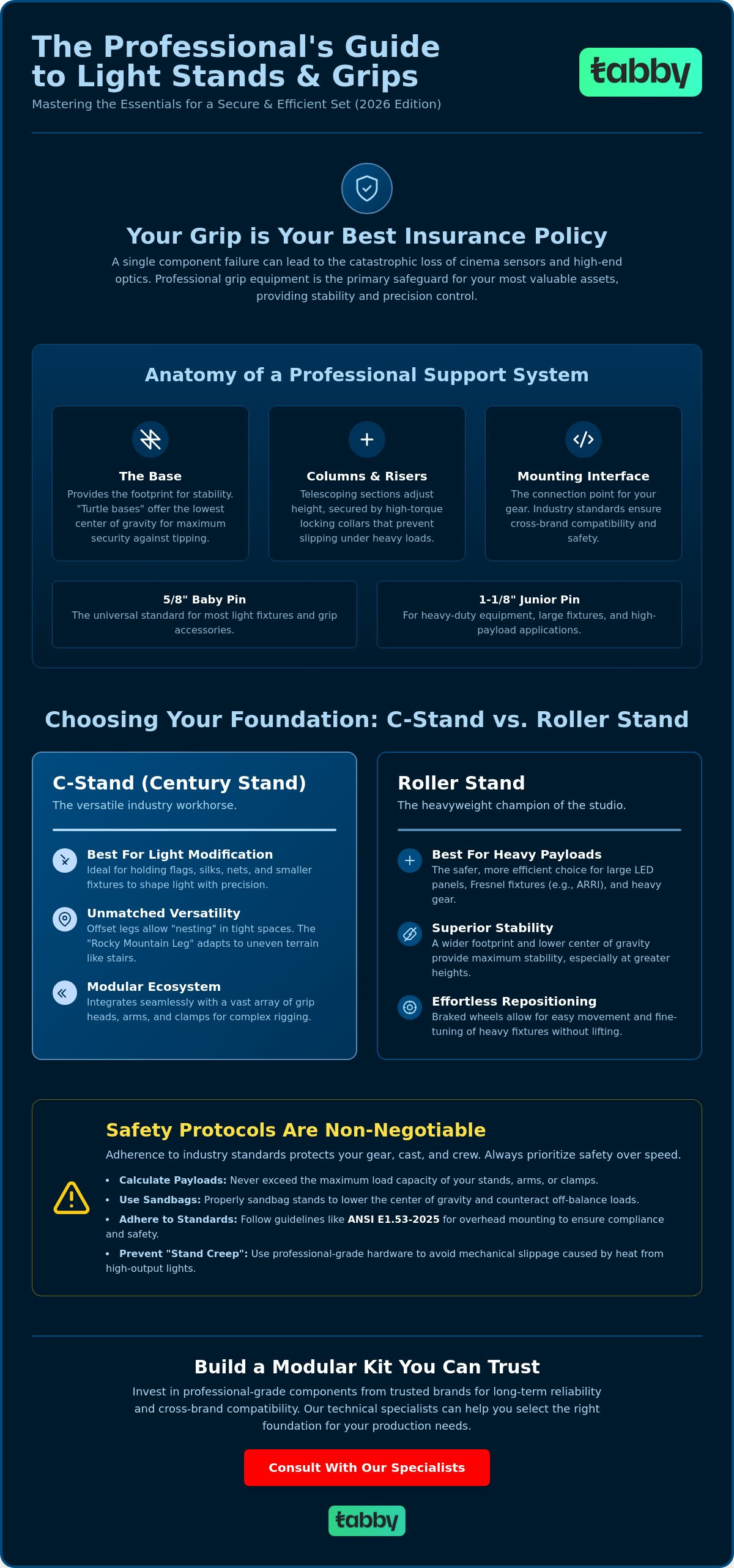
A professional stand consists of three primary components: the base, the columns, and the risers. The base provides the footprint, with "turtle bases" offering the lowest center of gravity for maximum stability. Vertical columns use telescoping risers to adjust height, secured by high-torque locking collars that prevent slipping. Professional standards rely on two primary mounting interfaces: the 5/8-inch "Baby Pin" for standard fixtures and the 1-1/8 inch "Junior Pin" for heavy-duty equipment. Chrome-plated steel remains the industry standard for durability and weather resistance, though high-grade aluminum is often used for location work where weight is a factor.
Why Quality Grip is Your Best Insurance Policy
Investing in professional-grade hardware is a strategic decision to mitigate risk. Low-quality stands are prone to "stand creep," where heat from high-output lights causes metal expansion and mechanical slippage. This can lead to subtle shifts in lighting angles that ruin continuity over long production days. Beyond consistency, safety is the primary driver. The ANSI E1.53-2025 standard, published on January 5, 2026, establishes strict requirements for the primary and secondary mounting of portable studio luminaires. Adhering to these standards by using verified hardware ensures that your rig remains compliant and safe, especially when rigging fixtures over cast and crew.
Choosing Your Foundation: C-Stands vs. Roller Stands
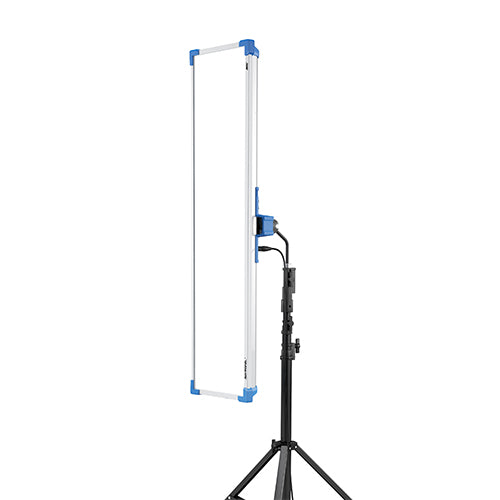
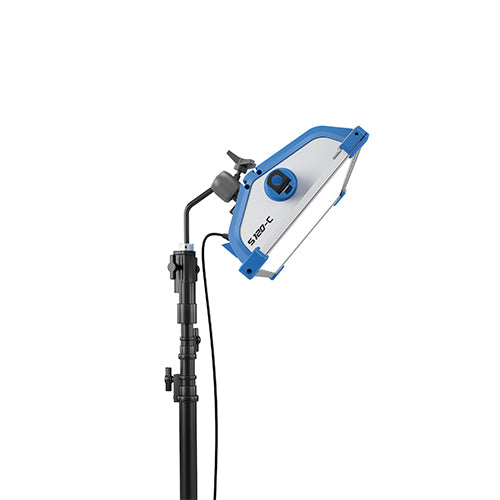
Selecting the correct foundation for your lighting rig is a decision governed by the physics of the payload and the specific requirements of your environment. While C-stands are synonymous with professional light stands & grips, they are not a universal solution for every fixture. A common mistake in production is prioritizing height over the relationship between weight distribution and the center of gravity. For heavy studio fixtures, such as high-output ARRI lighting units, a roller stand is often the safer and more efficient choice due to its wider footprint and lower weight distribution.
C-stands remain the industry workhorse for light modification, flags, and smaller fixtures. Their unique offset leg design allows them to "nest" together, which is essential when working in cramped locations where floor space is at a premium. However, as the height of the stand increases, the stability decreases unless the payload is perfectly balanced. For more complex rigging scenarios involving camera movement or specialized mounts, you can refer to the Grip Job Profile to understand how professionals manage these foundations on high-stakes sets. If you are unsure which base suits your current inventory, you can consult with our technical specialists for a tailored recommendation.
The Versatility of the C-Stand System
The strength of the C-stand lies in its modularity. Most professional models feature a "sliding leg" or Rocky Mountain leg, which allows the stand to remain level on stairs or uneven terrain. Safety on set requires strict adherence to the "Right-Hand Rule." This means ensuring the weight of the fixture is on the right side of the knuckle, so gravity naturally tightens the T-handle rather than loosening it. For low-angle lighting or compact storage, "Turtle Bases" allow the vertical column to be removed entirely, providing a stable mount just inches from the floor.
Heavy-Duty Solutions: Junior and Senior Stands
When your production moves into heavy-duty territory, roller stands provide the necessary mechanical advantage. These stands typically utilize a "Junior" (1-1/8 inch) receiver to accommodate larger cinema fixtures. Many professional models incorporate air-cushioned risers. This safety feature prevents the column from crashing down if a lock is accidentally released, protecting both the equipment and the operator's hands. For massive overhead rigs or large softboxes, wind-up stands offer mechanical assistance, allowing a single operator to safely elevate heavy loads that would otherwise require multiple crew members.
The Grip Toolkit: Clamps, Arms, and Mounting Hardware
While the stand provides the height, the grip toolkit provides the orientation. Professional light stands & grips rely on a sophisticated array of clamps and arms to solve the geometry of a set. Without these connectors, you're limited to placing lights directly atop a vertical column. To achieve the complex shadows and precise highlights required for high-end cinematography, you need the ability to offset fixtures and mount them to architectural elements like pipes, doors, or beams. This versatility is what separates a basic setup from a professional lighting rig.
The Super Clamp and the Matthellini (often called a Cardellini) are the two most essential tools in this category. A Super Clamp excels on flat surfaces and poles, providing a 5/8-inch receiver for lights or accessories. The Matthellini uses a specialized jaw design to grip square, round, or rectangular tubing with immense pressure. For gaffers looking for a more integrated approach, the ARRI Omnibar Production Kit offers a streamlined solution. It allows multiple fixtures to be mounted to a single stand or truss point, reducing the footprint of your gear and maintaining a clean, professional workspace during complex shoots.
Essential Clamps for Every Gaffer
Choosing the right jaw is a matter of surface integrity. Cardellini clamps are preferred for mounting to speed rail or lumber because their design distributes pressure evenly across the contact points. In contrast, traditional C-clamps provide a permanent, screw-driven hold ideal for heavy rigging in truss-based studio environments. When clamping to architectural features, gaffers must use rubber pads or specialized spacers to prevent damage to the location. Mechanical failure or surface scarring on a location can lead to expensive repair costs that far exceed the price of a proper clamp.
Articulating Supports and Booms
Extending the reach of a fixture requires an understanding of leverage. Boom arms allow for overhead hair lights or rim lighting without placing a stand in the shot. However, the physics of an extension demands proper counterweighting. A standard rule is to ensure the sandbag or weight is at least 1.5 times the weight of the fixture when the arm is fully extended. Additionally, managing cable strain on articulating "Magic Arms" is vital. Tight bends or unsupported loops can damage the ports on your monitors or small LED panels, leading to signal loss during a critical take.
Safety Protocols and Payload Management
Safety on a modern media set is a non-negotiable requirement that protects both personnel and high-value technical assets. Professional light stands & grips must be operated within their mechanical limits to prevent structural failure. Payload capacity is the maximum weight a stand can safely support at full extension. Exceeding this limit, even by a small margin, compromises the center of gravity and increases the risk of the stand buckling or tipping. In accordance with the ANSI E1.53-2025 standard, every overhead fixture requires a secondary mounting device, such as a steel safety cable, to prevent a fall in the event of a primary coupling failure; there are no exceptions to this rule in a professional environment.
Adhering to these protocols is essential for compliance with workplace safety regulations like OSHA 1915.82 and HSE standards. These regulations mandate that walkways and work areas remain clear and that all equipment is secured to prevent accidents. If you need assistance calculating the safety requirements or payload limits for your upcoming production, speak with our technical support team today.
Sandbagging and Base Stability
The "Golden Rule" of sandbagging is placement on the high leg. This ensures that the weight of the bag provides maximum leverage against the tipping point created by the fixture. For a standard 10kg light fixture, industry veterans typically recommend a 2:1 weight ratio, meaning at least 20kg of ballast should be applied to the base. Proper bag handling is also essential. You should inspect bags regularly for tears to avoid leaking sand on sensitive studio floors or into delicate cooling fans. In tight spaces or for low-profile setups, shot bags filled with stainless steel pellets offer a more compact alternative to traditional sandbags without sacrificing stabilizing mass.
Cable Management and Trip Hazards
Effective cable management is a primary component of set safety. Cables should be dressed neatly down the stand leg, secured with reusable ties or gaffer tape to prevent snagging by passing crew members. This practice doesn't just prevent trips. It ensures that a person accidentally catching a cable won't pull the entire lighting rig over. When working with haze machines or in high-humidity environments, creating "drip loops" is a critical technical requirement. A drip loop allows moisture to collect and fall from the bottom of a cable arc rather than running directly into the power ports of your lighting equipment.
Selecting Professional Gear at United Broadcast
Building a reliable production inventory requires more than just purchasing individual components; it involves selecting a system that ensures long-term interoperability and safety. At United Broadcast & Media Solutions (UBMS), we provide a curated Light Stands & Grips collection designed to meet the rigorous demands of the regional media landscape. Our inventory features world-class brands including Manfrotto, Matthews, and ARRI, ensuring that every piece of hardware in your kit meets global standards for payload management and mechanical durability. Selecting the right hardware is a technical process. Our team of specialists understands the specific requirements of broadcast studios and high-end cinema sets. We don't just provide equipment; we offer the technical infrastructure and expertise needed to support your production goals.
The professional media landscape is evolving, with the global lighting market projected to grow to USD 149.1 billion by 2026. This scale reflects the increasing complexity of modern productions and the need for dependable support gear. Whether you're rigging a complex overhead array or a simple location interview, our after-sales support and dedicated service center ensure your gear remains in peak operating condition. We prioritize long-term partnerships over one-off transactions, providing a stable hub for the professional community.
Featured Solutions for Studio and Location
For large-scale LED studio lighting, we offer heavy-duty roller stands that provide the stability and mobility required for fast-paced broadcast environments. These foundations are essential for managing the high-output fixtures discussed earlier in this guide. Independent filmmakers and small crews can benefit from our compact C-stand kits, which offer the versatility of the Century stand system in a more portable form factor. Additionally, we provide specialized grip hardware designed specifically for digital cinema camera rigging, allowing for secure mounting in unconventional configurations.
The UBMS Advantage for Professionals
Choosing UBMS means partnering with an authorized dealer that prioritizes equipment integrity. This status ensures that every stand, clamp, and arm you purchase comes with genuine parts and full manufacturer warranties. We maintain a robust in-stock availability of essential accessories to ensure you never have to compromise on set safety. Our commitment to logistical excellence includes:
- Access to industry-standard safety cables and secondary mounting hardware.
- Professional-grade sandbags and shot bags for critical ballast requirements.
- Technical guidance on payload physics and mounting compatibility.
- Expert repair services to maintain the mechanical life of your grip kit.
Our role as a technical partner ensures that you have the right tools to protect your high-end optics and sensors on every shoot. Browse our full range of Light Stands & Grips today to secure your next production.
Securing Your Production Workflow
Mastering the technical nuances of light stands & grips is a fundamental step in transitioning from basic setups to high-end media production. You now understand that stability is a direct result of payload physics, from the nesting versatility of C-stands to the robust weight distribution required for heavy roller stands. By implementing strict safety protocols, such as the high leg sandbagging rule and the mandatory use of safety cables for overhead fixtures, you protect both your crew and your technical investments from unnecessary risk.
United Broadcast & Media Solutions brings over 25 years of industry expertise to your project. As an authorized distributor for ARRI, Manfrotto, and Matthews, we ensure you have access to genuine hardware backed by full technical service center support. Our team understands the high stakes of professional sets and provides the logistical excellence needed to keep your production moving forward. Contact our technical specialists today to build a custom grip solution that meets the specific demands of your next shoot. Your equipment deserves the highest standard of support.
Frequently Asked Questions
What is the difference between a Baby Pin and a Junior Pin?
A Baby Pin is a 5/8-inch (16mm) diameter stud that serves as the industry standard for small to medium lighting fixtures and accessories. In contrast, a Junior Pin is a 1-1/8 inch (28mm) diameter stud designed for heavy-duty cinema lights. While Baby Pins are commonly found on C-stands, Junior Pins are utilized on larger roller stands to support the significant weight of high-output studio equipment.
How do I choose the right sandbag weight for my light stand?
You should follow a minimum weight ratio of 2:1 relative to the weight of your lighting fixture. If your light weighs 10kg, apply at least 20kg of ballast to the base of the stand. For maximum stability, always place the sandbag on the highest leg of the stand. This ensures the weight acts as an effective counter-lever against the direction of the payload.
Can I use a regular photo tripod as a light stand?
No, you shouldn't use a photo tripod for lighting because it lacks the vertical structural integrity and specialized mounting interfaces required for safe operation. Photo tripods use threaded screws designed for camera bases, while professional lighting requires pins and receivers that can handle lateral stress and heat. Using a tripod risks mechanical failure and can lead to the fixture falling during a shoot.
What is a "Rocky Mountain Leg" and when should I use it?
A Rocky Mountain Leg, also known as a sliding leg, is an adjustable component on a C-stand that moves independently up and down the main riser. You should use it to level your stand on uneven terrain, such as stairs, curbs, or steep inclines. This feature is a critical safety tool for location work where a perfectly flat floor isn't available.
Are air-cushioned light stands better than spring-cushioned ones?
Air-cushioned stands are generally the superior choice for professional media production because they provide a controlled, slow descent of the risers. This prevents the light from crashing down if a locking knob is accidentally loosened, protecting your optics and the operator's fingers. Spring-cushioned stands offer a basic bounce but don't provide the same level of pneumatic safety and gear protection.
How do I properly maintain my grip equipment to prevent rust or seizing?
Clean your light stands & grips after every shoot by wiping the risers with a dry, lint-free cloth to remove dust and moisture. Periodically apply a small amount of dry silicone lubricant to the T-handles and columns to ensure smooth operation. Avoid using grease or oil-based lubricants, as these substances attract grit that can cause internal scratching and lead to the hardware seizing over time.
What is the maximum payload I should put on a standard C-stand?
A standard 40-inch C-stand typically has a maximum payload capacity of approximately 10kg when the weight is positioned at the end of a grip arm. If you mount the fixture directly onto the baby pin without an extension, the capacity increases. However, you should always consult the manufacturer's specific rating for your model to avoid structural buckling or accidental tipping under heavy loads.
Do I need a specific permit for using light stands in public national spaces?
Yes, most municipal authorities require a filming permit for any production that places "footprint" equipment like stands and cables in public areas. These regulations ensure that walkways remain accessible and that the production carries adequate liability insurance. You should check with the local film commission or municipality well in advance of your shoot to verify the specific legal requirements for your location.


