

The Professional Guide to 4K Cinema Cameras: Choosing the Right Gear for 2026 Productions
Four thousand lines of resolution means nothing if your production falls apart in the grade. That's the uncomfortable truth that separates a genuine 4K cinema camera from the wave of consumer and prosumer bodies that share the same marketing label. The pixel count is identical on paper, yet the gap in sensor latitude, color science, and RAW recording capability between a broadcast-grade acquisition tool and a consumer camcorder is vast enough to define the difference between a deliverable that meets platform specifications and one that simply doesn't.
If you're deep in pre-production for a 2026 project and feeling the pressure of that distinction, you're not alone. The market has never offered more choice, and paradoxically, that abundance is precisely what makes the decision harder. Which sensor format protects your existing lens investment? How do you build a RAW workflow that doesn't collapse under its own data weight? And critically, how do you future-proof a capital purchase against standards that are still evolving?
This guide cuts through the specification noise. You'll gain a clear framework for evaluating cinema-grade 4K acquisition tools across sensor size, color pipeline, codec options, and total ecosystem cost, so you can make a confident, technically sound decision for your specific production niche.
Key Takeaways
- A professional 4K cinema camera is defined by its dynamic range, color science, and RAW recording capability — not its pixel count alone — and understanding this distinction is the foundation of every sound acquisition decision.
- Dynamic range and noise floor are the specifications that determine whether your footage survives the grade, making them more critical evaluation criteria than resolution for high-end 2026 productions.
- The right camera body is only one component of a complete acquisition system; lens selection, professional lighting, and supporting accessories directly determine how much of your sensor's potential is realized on set.
- Sourcing professional equipment through an authorized national distributor protects your investment with local warranty coverage and technical support — critical safeguards that gray-market purchases cannot provide.
- This guide maps the current cinema camera landscape by production type — documentary, narrative, and commercial — giving you a structured framework to match the right tool to your specific workflow and budget.
Defining the 4K Cinema Camera: More Than Just Pixels
Resolution is a starting point, not a destination. When a manufacturer stamps "4K" on a consumer camcorder and a professional digital cinema body, they're using the same two characters to describe instruments that operate in fundamentally different tiers of image acquisition. Understanding that gap is the first technical competency any serious cinematographer or production supervisor needs to develop before committing capital to a 2026 acquisition.
A professional 4K cinema camera is defined primarily by its capacity for high-dynamic-range acquisition. Dynamic range determines how much tonal information the sensor captures between the deepest shadow and the brightest highlight in a single frame. A camera recording 14 or more stops of dynamic range gives a colorist the latitude to recover detail, reshape contrast, and build a final image that reflects a deliberate creative intent. A consumer body recording the same pixel count but with compressed color information and limited latitude delivers footage that can't survive aggressive grading without breaking down visually. The pixels are identical. The acquisition quality is not.
This distinction between acquisition quality and display resolution is central to every professional purchasing decision. Display resolution describes how many pixels a screen renders. Acquisition quality describes the depth of information captured per pixel, including bit depth, color sampling, dynamic range, and the codec used to store that data. A 4K image recorded in 8-bit 4:2:0 with heavy in-camera processing and a 12-bit RAW file from a cinema-grade sensor are both "4K." Only one of them is a professional deliverable.
DCI 4K vs. UHD: Understanding the Standards
The two dominant 4K standards differ in more than marketing language. DCI 4K, defined by the Digital Cinema Initiatives consortium, specifies a native resolution of 4096 x 2160 pixels, producing a 1.90:1 aspect ratio that accommodates the full scope of theatrical projection and post-production reframing. UHD, the consumer standard, measures 3840 x 2160 pixels at a 16:9 aspect ratio. For theatrical release and streaming platforms with cinema-tier delivery requirements, the wider DCI frame provides critical horizontal real estate for composition and stabilization crops. You can read more about the technical foundations underpinning these formats in the broader context of digital cinema standards and technology. Most professional cinema sensors capture at or above DCI 4K natively, allowing operators to extract either format from a single acquisition without resampling artifacts.
The "Cinema" Label: Ergonomics, I/O, and Reliability
Professional I/O separates a cinema tool from a capable mirrorless body. SDI outputs carry a signal without degradation over long cable runs on set. XLR inputs handle balanced professional audio at line or microphone level. Genlock and timecode connectivity synchronize multi-camera rigs and integrate cleanly with broadcast infrastructure. These aren't conveniences; they're operational requirements on a professional set.
Sustained 4K RAW recording also generates significant heat. Cinema-grade bodies are engineered with active cooling systems that maintain stable operating temperatures across long takes, preventing the thermal throttling that forces consumer cameras into recording limits. A cinema camera is ultimately defined by its modularity: standardized mounting points, accessory rails, and a build architecture designed to accept follow focus systems, matte boxes, wireless video transmitters, and external recorders without compromise.
That complete system capability is precisely why professionals prioritize purpose-built cinema bodies over mirrorless alternatives, regardless of how capable those alternatives have become in controlled conditions.
Key Technical Specifications for High-End 4K Production
Pixel count is settled. The more consequential question for 2026 productions is what each pixel actually captures. Latitude and noise floor are the specifications that determine whether your footage survives a demanding grade, and they're shaped by decisions made at the sensor and codec level, long before any colorist opens a timeline.
Dynamic range sits at the center of every serious acquisition decision. A sensor recording 14 or more stops of latitude gives a colorist genuine creative control over shadow recovery, highlight rolloff, and contrast shaping. Below that threshold, aggressive grading produces banding, noise amplification, and color shifts that no amount of post-production skill can fully correct. As professional filmmaking technology trends continue to push toward HDR deliverables for streaming platforms and theatrical exhibition, sensors with wide latitude aren't a luxury specification; they're a baseline requirement for productions with serious distribution ambitions.
Internal RAW Recording vs. Compressed Codecs
Internal RAW recording captures minimally processed sensor data before the camera applies debayering, noise reduction, or compression. The result is a file that retains the full latitude of the sensor and offers maximum flexibility in post. Compressed codecs like Apple ProRes deliver smaller file sizes and faster editing performance, but they bake in processing decisions that can't be reversed. For high-end narrative and commercial work, RAW is the preferred acquisition format. ProRes remains a practical choice for documentary and event production where turnaround speed and storage management take priority over maximum grading latitude.
Global Shutter: A Non-Negotiable for High-Motion Work
Rolling shutter distortion, the visual skew produced when a sensor reads lines sequentially rather than simultaneously, is a persistent liability on fast-moving subjects. A global shutter exposes every pixel at the same instant, eliminating this artifact entirely. For action sequences, sports coverage, and any production involving rapid camera movement, a professional 4K cinema camera with a global shutter is the technically correct tool. It's not a feature to evaluate; it's a prerequisite for clean acquisition in high-motion environments.
Sensor Size: Super 35mm vs. Full Frame
Super 35mm remains the industry standard reference for cinema optics. It offers a field of view that matches the enormous catalog of cinema lenses built around that format, and its slightly smaller surface area produces a depth-of-field characteristic that many cinematographers consider optimal for narrative work. Full frame sensors capture more light across a larger surface, improving low-light performance and delivering a shallower depth of field at equivalent apertures. The tradeoff is a narrower compatible lens ecosystem and, in some cases, vignetting with lenses designed for smaller image circles. Neither format is universally superior; the right choice depends on your existing glass, your aesthetic intent, and your lighting conditions.
Color Science and Bit Depth: The 10-bit vs. 12-bit Debate
Ten-bit recording is the professional minimum. It provides 1,024 tonal steps per channel, enough to execute smooth color grades without visible banding in gradients and skies. Twelve-bit RAW extends that to 4,096 steps per channel, preserving finer tonal transitions and providing the headroom required for HDR mastering to standards like Dolby Vision and HDR10+. Proprietary color science compounds this distinction significantly. ARRI's LogC encoding and their ALEXA color science are widely regarded as the industry benchmark for natural skin tone reproduction. Sony's S-Log3 and S-Gamut3.Cine pipeline offer a different but equally professional starting point, with strong integration into the broader Sony ecosystem. Choosing between them is as much a workflow decision as an aesthetic one, and it's worth discussing with a technical advisor before committing to a platform. If you're mapping out a 4K acquisition system and want guidance specific to your production context, speak with the team at United Broadcast before finalizing your specification.
Leading 4K Cinema Cameras for 2026 Productions
Industry Workhorses: The Gold Standard Models
High-budget narrative and commercial productions in the region consistently gravitate toward ARRI and Sony's cinema-tier systems. The ARRI ALEXA 35 remains the benchmark for feature acquisition, delivering a claimed 17 stops of dynamic range and a color science that colorists worldwide treat as a reference standard. Its active thermal management handles prolonged outdoor shoots without throttling, a practical requirement when shooting in direct Gulf sun. Sony's VENICE 2 offers a comparable large-format acquisition pipeline with native dual ISO capability, making it a strong choice for productions that move between daylight exteriors and controlled interior environments within the same shooting day. Both systems integrate cleanly into established broadcast workflows through SDI infrastructure, which matters when a production's post pipeline is already built around those signal standards.
Managing the transport of these high-value camera systems across the Emirates requires reliable logistics, and Al Rad Rent Car offers the specialized vehicle support needed to move production crews and sensitive equipment safely between sets.
For productions requiring a proven 4K cinema camera with direct broadcast integration, the Sony XDCAM line and Canon Cinema EOS C-series bodies occupy an important middle tier. They offer the codec flexibility, timecode connectivity, and thermal stability that episodic and commercial broadcast work demands, at a capital cost that makes multi-camera configurations viable.
Compact Cinema Solutions: Versatility on Set
The B-cam conversation has shifted significantly. Compact cinema bodies from Sony and Canon now share color science with their larger siblings, making matched multi-camera setups genuinely practical rather than a post-production compromise. The Sony FX6 and FX3 are strong examples: both record in S-Log3 to S-Gamut3.Cine, meaning footage cut alongside a VENICE 2 or FX9 A-cam grades consistently without manual intervention.
For gimbal and drone acquisition, that compact form factor is the deciding factor. A body that matches the A-cam's color pipeline but fits within a drone's payload limit removes the need for a separate grade pass on aerial footage. Sony Alpha systems paired with cinema lenses extend this further for hybrid productions, where stills and motion are captured in the same session under the same color profile.
- Documentary: Prioritize compact bodies with internal ND, long battery life, and fast codec options for solo or small-crew operation.
- Narrative: Invest in large-format sensors with RAW recording and modular build architecture for maximum post-production flexibility.
- Commercial: Match color science across A and B cameras; prioritize bodies with robust SDI output and broadcast-standard codecs for agency deliverables.
Sourcing any of these systems through an authorized national distributor like United Broadcast ensures that local warranty coverage and technical support are part of the purchase, not an afterthought. In a market where production schedules don't accommodate shipping delays for international repairs, that national service infrastructure is a specification that belongs on the evaluation list alongside sensor size and codec options.

Optimizing the 4K Rig: Lenses, Lighting, and Accessories
A cinema sensor captures only what the glass in front of it can resolve. That's not a nuance; it's a hard technical constraint. Investing in a high-specification 4K cinema camera body while pairing it with optically compromised glass is a contradiction that no amount of post-production work corrects. The lens, the lighting, and the monitoring chain are not supporting elements of a production rig. They're co-equal components of the acquisition system.
Cinema Lenses: Resolving for 4K and Beyond
The distinction between sharpness and character is one that separates cinema lenses from photographic glass. Sharpness describes a lens's ability to resolve fine detail across the image plane. Character describes how a lens renders out-of-focus areas, handles flare, and distributes contrast across the frame. Cinema lenses are designed to balance both qualities consistently across a matched set, so that focal lengths cut together without visible rendering shifts in a grade.
Technically, a lens intended for 4K acquisition needs to resolve detail at the center and across the corners of the image circle without softening or chromatic aberration that erodes the sensor's native resolution. Large-format sensors place additional demands on lenses, requiring a wider image circle that many older cinema primes weren't designed to cover. Lens selection therefore depends on both the sensor format and the aesthetic intent of the production.
Consistent optical performance across a shoot also depends on the physical condition of the glass. Decentered elements, damaged coatings, and worn focus mechanisms all degrade image quality in ways that are difficult to diagnose on set and costly to correct in post. Proactive cinema lens repair and maintenance keeps your glass performing to its rated specification across the full run of a production, protecting both image quality and schedule.
Professional Lighting and Power Solutions
Wide dynamic range is a sensor capability. Realizing it on set requires controlled, purposeful lighting. A 14-stop sensor doesn't automatically handle a high-contrast scene; it gives a cinematographer the latitude to shape that scene deliberately, provided the lighting is designed to work within the sensor's range rather than against it. Harsh, uncontrolled practicals or direct midday sun can easily exceed even a professional sensor's latitude, producing clipped highlights that no grade recovers.
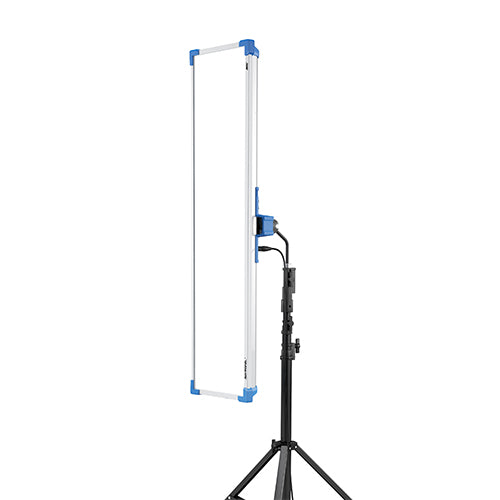
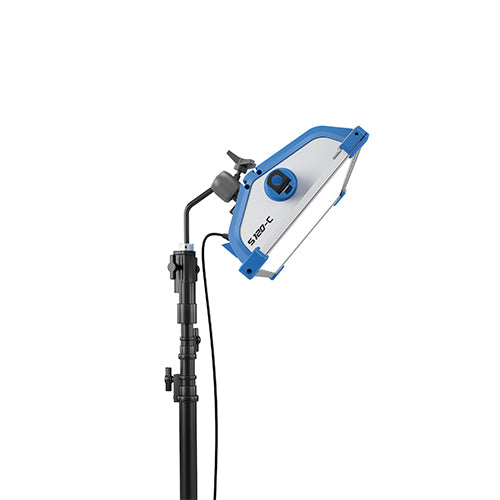
Professional lighting equipment gives the gaffer and DP the tools to compress contrast ratios, lift shadow detail, and shape the tonal range of a scene to fit the sensor's acquisition window. Tunable LED fixtures, diffusion, and negative fill are the practical instruments of that control.
Power management compounds this on location. Cinema cameras running RAW workflows draw significant current, and when high-output lighting is added to the same power infrastructure, reliable battery and distribution systems become a set-efficiency requirement. Purpose-built production tools like the ARRI Omnibar Production Kit address this directly, integrating power and control into a streamlined on-set solution that reduces cable complexity and supports faster turnaround between setups.
External monitoring rounds out the system. A calibrated on-set monitor displaying false color or waveform overlays gives the focus puller and DP accurate exposure feedback that a camera's built-in screen can't reliably provide in bright ambient conditions. Pulling critical focus on a large-format sensor at wide apertures demands a monitoring chain that resolves the image accurately at a usable size. Without it, even the sharpest cinema glass and the most capable sensor deliver footage that misses focus in the edit.
Professional Acquisition and Support in the UAE
Purchasing a professional 4K cinema camera is a capital decision with a long tail. The body you acquire today will anchor your acquisition pipeline for years, and the support infrastructure behind that purchase determines whether it performs reliably across that entire lifespan. In the UAE, where production schedules are tight and international logistics can introduce delays measured in weeks, the difference between an authorized national distributor and a gray-market supplier isn't a minor procurement detail. It's a risk management decision.
Gray-market equipment arrives without local warranty coverage and without manufacturer-authorized service access. When a sensor develops a fault mid-production or a codec board fails before a critical shoot, the gray-market buyer's only option is international shipping to a service center that may or may not accept the unit. An authorized purchase through a national distributor resolves that scenario entirely, because the service infrastructure is already in place locally.
United Broadcast and Media Solutions has operated as an authorized distributor of professional cinema and broadcast equipment in the UAE since 1997. That tenure reflects something more than longevity; it reflects the kind of deep manufacturer relationships and regional technical knowledge that only develop through sustained, high-level engagement with the industry. UBMS doesn't function as a box-moving retailer. It operates as a technical partner across the full lifecycle of a production system.
The UBMS Service Center: Ensuring Production Uptime
High-end cinema sensors are precision instruments. Dust ingress, optical misalignment, and firmware-related performance degradation are real operational risks on active productions, particularly in the UAE's demanding environmental conditions. The UBMS dedicated service center provides manufacturer-authorized repairs and routine maintenance for professional cinema and broadcast equipment, keeping cameras performing to their rated specifications across extended production runs. Scheduled maintenance between productions is the most cost-effective way to prevent unplanned downtime on set, and having that capability available nationally removes the logistical friction that makes international servicing impractical for working productions.
System Integration: From Camera to Studio
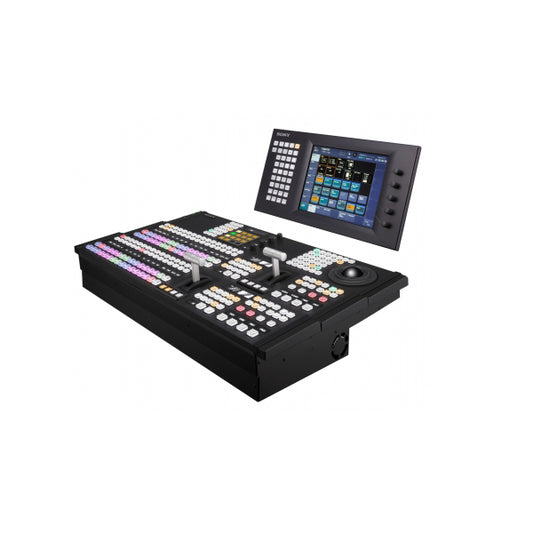
Acquiring a 4K cinema camera is one component of a broader production infrastructure decision. Integrating that camera into a live broadcast environment, a multi-camera studio configuration, or an OB van workflow requires a different level of technical expertise entirely. UBMS provides system integration services for complex broadcast and studio builds, ensuring that signal routing, monitoring chains, and recording infrastructure are engineered to work as a cohesive system rather than a collection of independently sourced components. For productions scaling toward broadcast-grade infrastructure, that integration expertise is as valuable as the equipment itself.
Explore the full range of professional video cameras available through United Broadcast, or contact the team directly to discuss a complete acquisition and integration solution matched to your 2026 production requirements.
Build Your 2026 Acquisition System With Confidence
Choosing the right 4K cinema camera for 2026 comes down to three decisions that compound on each other: selecting a sensor with the dynamic range your post pipeline demands, matching that sensor to a lens and lighting system that can actually realize its potential, and sourcing the entire rig through a support infrastructure that keeps it operational across the full run of a production.
Getting any one of those decisions wrong costs more than the price difference between options. It costs schedule, deliverables, and client confidence.
UBMS has operated as an authorized distributor for top global cinema and broadcast brands in the UAE since 1997. With a dedicated on-site technical service center and specialist system integration expertise, the team is positioned to support your acquisition decision from initial specification through long-term production uptime. That's not a sales proposition; it's a practical advantage in a market where downtime isn't an option.
If you're ready to specify a complete 4K acquisition system for your next production, the UBMS technical team can help you get it right from the start.
Consult with UBMS Experts for Your 4K Cinema Setup
Frequently Asked Questions
Is there a difference between 4K and UHD for cinema cameras?
Yes, and the difference matters for professional deliverables. DCI 4K measures 4096 x 2160 pixels at a 1.90:1 aspect ratio, while UHD measures 3840 x 2160 at 16:9. That wider horizontal frame in DCI 4K gives cinematographers more room for composition adjustments, stabilization crops, and reframing in post without resampling artifacts. For theatrical and premium streaming deliverables, DCI 4K is the correct acquisition target.
Most professional cinema bodies capture at or above DCI 4K natively, so operators can extract either format from a single acquisition. Consumer cameras typically top out at UHD, which is a meaningful distinction when your delivery specification requires the wider DCI frame.
Can I use photography lenses on a 4K cinema camera?
Technically yes, with the right mount adapter, but there are practical trade-offs worth understanding. Photography lenses often lack the consistent focus throw, smooth aperture control, and matched color rendering that cinema lenses provide across a set. On a large-format cinema sensor, many photographic primes also don't cover the full image circle, producing visible vignetting at the frame edges.
For run-and-gun documentary work, adapted photography glass can be a practical compromise. For narrative or commercial productions where focal lengths need to cut together seamlessly in the grade, a matched set of cinema primes is the technically correct choice. The lens is a co-equal component of the acquisition system, not an accessory.
How much storage space does 4K RAW footage require per hour?
Storage requirements vary significantly by camera platform and recording format. As a general reference, 4K RAW at cinema-grade bit rates typically demands considerably more storage per hour than compressed codecs like ProRes. ProRes 4444 at 4K runs roughly 1TB per hour depending on frame rate, while uncompressed or minimally compressed RAW from high-end cinema bodies can exceed that substantially. Always confirm the specific data rate for your chosen camera and codec before finalizing your storage and media budget.
For productions running RAW workflows, fast NVMe-based media and a robust data management plan aren't optional considerations. Building in a buffer for on-set redundancy, dailies drives, and offline backup is standard practice on any production where footage loss isn't recoverable.
What is the most important spec in a 4K cinema camera after resolution?
Dynamic range is the specification that determines whether your footage survives a demanding grade. A 4K cinema camera recording 14 or more stops of latitude gives a colorist genuine control over shadow recovery, highlight rolloff, and contrast shaping. Below that threshold, aggressive grading produces noise amplification, banding, and color shifts that post-production skill can't fully correct. Bit depth compounds this: 10-bit is the professional minimum, while 12-bit RAW preserves the finer tonal transitions required for HDR mastering.
Codec architecture sits close behind. A high-dynamic-range sensor paired with a heavily compressed 8-bit codec loses much of its acquisition advantage before the footage reaches the colorist. Evaluating dynamic range and codec together, rather than separately, gives a more accurate picture of a camera's real grading latitude.
Is a global shutter necessary for 4K professional production?
It depends entirely on the production type. A global shutter exposes every pixel simultaneously, eliminating the rolling shutter skew that appears on fast-moving subjects or during rapid camera movement. For action sequences, sports coverage, and handheld documentary work, it's a practical prerequisite for clean acquisition. On controlled narrative sets with deliberate camera movement, rolling shutter is a manageable constraint rather than a disqualifying limitation.
The honest answer is that global shutter becomes non-negotiable the moment your production involves unpredictable subject motion or fast pans. If there's any ambiguity about your shooting conditions, prioritizing a body with global shutter removes a variable that's difficult to correct in post.
How does sensor size affect the 4K image quality?
Sensor size influences depth of field, low-light performance, and lens compatibility, not pixel count directly. A larger sensor surface captures more light per unit area, which improves performance in low-light conditions and produces shallower depth of field at equivalent apertures. Full frame sensors offer these advantages but require lenses with a wider image circle, which narrows the compatible glass catalog. Super 35mm remains the cinema industry's reference format, with a vast ecosystem of purpose-built cinema lenses designed around its field of view.
Neither format is universally superior. The right sensor size depends on your existing lens investment, your lighting conditions, and the aesthetic the production requires. A cinematographer prioritizing natural low-light performance will favor full frame; one working with an established Super 35mm lens set has little practical reason to change formats.
What technical support is available for cinema cameras in the UAE?
Access to manufacturer-authorized service is the critical variable. Gray-market purchases arrive without local warranty coverage, meaning any fault requires international shipping to a service center that may not accept the unit. For productions operating on fixed schedules in the UAE, that's an unacceptable risk. Purchasing through an authorized national distributor resolves this entirely by placing local warranty coverage and technical support infrastructure behind the acquisition from day one.
United Broadcast and Media Solutions operates a dedicated service center in the UAE for professional cinema and broadcast equipment, providing manufacturer-authorized repairs and routine maintenance. For productions requiring broader infrastructure support, UBMS also provides system integration services for studio and broadcast environments. Contact the UBMS team to discuss service coverage for your specific equipment and production requirements.


