

Professional Live Streaming Equipment in Dubai: The 2026 Buyer's Guide
Approximately 115,000 social media users in the UAE go live every single day, contributing to a regional market projected to reach $3.4 billion by 2030. While anyone can start a stream with a smartphone, professional broadcasters know that high-stakes productions require more than just a stable Wi-Fi connection. If you've ever experienced the frustration of a stream dropping mid-event or struggled with the lag of consumer-grade encoders, you understand that professional results demand dedicated hardware. Finding the right live streaming equipment Dubai professionals trust is the first step toward securing your reputation.
You likely want a setup that guarantees zero-failure performance and superior 4K image quality. This guide provides the technical clarity you need to distinguish between hobbyist gear and broadcast-grade systems that offer true redundancy. We'll explore essential hardware configurations, from high-performance encoders to specialized cameras, ensuring you have the local technical support required for long-term reliability. By the end of this article, you'll have a clear roadmap for building a robust, professional-grade streaming environment tailored for the UAE market.
Key Takeaways
- Learn why professional live streaming requires dedicated hardware encoding and SDI-based capture to eliminate the failure risks associated with software-only solutions.
- Discover how to select the high-performance live streaming equipment Dubai professionals use to maintain stable, high-bitrate broadcasts in any environment.
- Understand the critical role of H.265 (HEVC) encoding and hardware switchers in achieving 4K transmission while maximizing local bandwidth efficiency.
- Explore how professional audio and lighting equipment do more than just improve aesthetics; they actually reduce encoder load and significantly enhance audience retention.
- Identify the importance of expert system integration and local after-sales support to ensure your broadcast setup remains reliable for long-term production.
What Defines Professional Live Streaming Equipment in 2026?
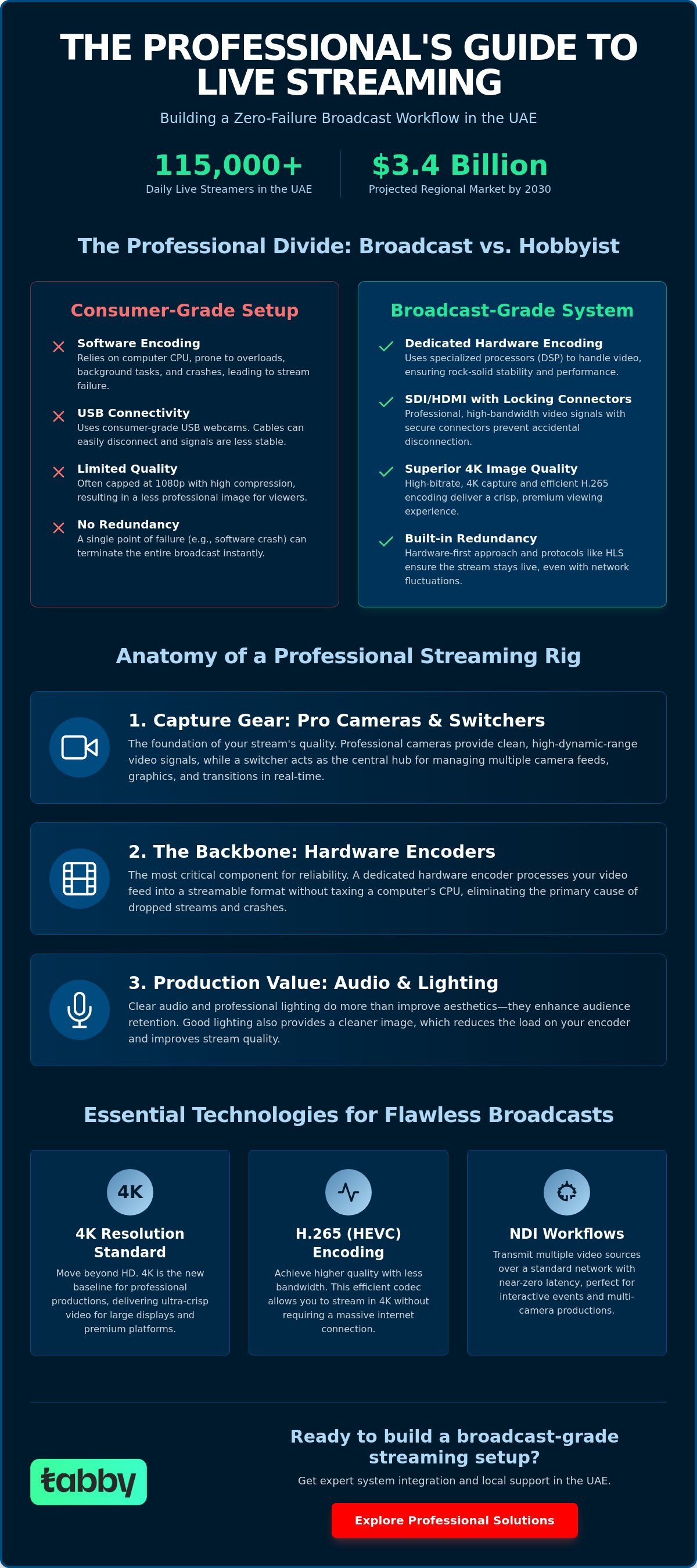
Professional live streaming in 2026 is no longer defined by the simple ability to go live, but by the ability to stay live with broadcast-grade fidelity. For the corporate and government sectors in the UAE, signal reliability is the primary metric of success. This standard is achieved through a specific combination of high-bitrate capture and dedicated hardware encoding. While consumer setups rely on USB webcams and software-based processing, a professional workflow utilizes SDI-based professional video cameras and standalone encoders. This shift ensures that the video signal remains stable even under heavy network load.
Building a 'zero-failure' workflow requires hardware redundancy at every stage of the signal chain. In Dubai, where high-profile events demand perfection, professionals use the HTTP Live Streaming (HLS) protocol to ensure adaptive bitrate delivery. This allows the stream to adjust to the viewer's internet speed without dropping the connection. When sourcing live streaming equipment Dubai specialists prioritize gear that offers physical reliability alongside technical performance.
The Shift to 4K and NDI Workflows
By 2026, 4K resolution has become the baseline for professional streams. High-definition is no longer sufficient for large-scale displays or premium digital platforms. Alongside 4K, NDI (Network Device Interface) has emerged as the modern standard for IP-based video. NDI allows multiple video signals to be sent over a standard local area network with incredibly low latency. This is essential for live interaction, such as Q&A sessions or real-time auctions, where even a two-second delay can disrupt the flow of the event.
Why Hardware Reliability Trumps Software Solutions
Software solutions are powerful, but they're vulnerable to CPU overload. A single background update or a system glitch can crash the entire stream. Professional gear utilizes dedicated Digital Signal Processing (DSP) to handle encoding tasks, which offloads the work from the main computer. This hardware-first approach provides a level of stability that software can't match. Additionally, professional equipment features physical SDI or HDMI locking connectors. These prevent accidental cable disconnections during a live broadcast, a simple but vital feature for high-stakes environments. Investing in the right live streaming equipment Dubai offers means choosing tools built for the rigors of continuous, live operation.
Essential Capture Gear: Professional Video Cameras and Switchers
The camera serves as the fundamental point of origin in any broadcast signal chain. High-quality capture is non-negotiable; if the source signal lacks clarity or dynamic range, no amount of downstream processing can fix it. When selecting professional video cameras, it's essential to prioritize models that provide clean HDMI or SDI outputs. This means the feed sent to your encoder is free of on-screen data like battery icons or focus squares. For those building out their inventory of live streaming equipment Dubai offers a range of options that cater to both fixed-studio and mobile event environments.
Choosing Cameras for Live Broadcast
Selecting the right sensor is critical for managing the varied lighting conditions often found in UAE corporate venues or outdoor events. Cameras with high dynamic range (HDR) allow you to maintain detail in both bright highlights and deep shadows. For lean production crews, remote-controlled PTZ (Pan-Tilt-Zoom) cameras are becoming an industry standard. They allow a single operator to manage multiple angles from a central console. Regarding reliability, the Sony Alpha series and dedicated broadcast cams are preferred for their superior thermal management, which prevents sensor shutdown during long-duration broadcasts in warm environments. Following a structured approach, like the one found in IBM's live streaming checklist, helps ensure every piece of capture gear is vetted before the "Go Live" button is pressed.
The Role of the Production Switcher
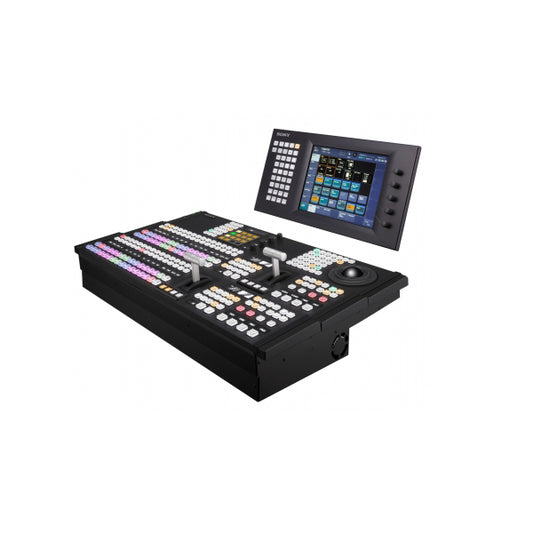
A production switcher is the brain of a multi-camera setup. It allows you to manage real-time transitions, cut between angles, and layer graphics or lower-third overlays without interrupting the stream. Modern switchers have evolved significantly; many now integrate sophisticated audio mixing capabilities, allowing you to manage sound levels directly from the video interface. This integration reduces the amount of hardware you need to transport and set up.
When deciding on a switcher, you'll need to choose between compact hardware switchers and large-scale broadcast consoles. Compact units are ideal for mobile rigs and smaller corporate presentations, while large consoles offer the tactile control and extensive I/O required for stadium-scale events. These devices ensure that your live streaming equipment Dubai setup remains professional and polished. If you're unsure which configuration fits your specific production needs, it's often helpful to consult with a technical specialist to design a scalable system.
Encoding and Connectivity: The Backbone of Your Stream
The encoder is the most critical point of failure in any live broadcast. While a camera failure might lose an angle, an encoder failure terminates the entire production. Professional live streaming equipment Dubai specialists deploy focuses on converting high-resolution video into a streamable format without compromising stability. In 2026, H.265 (HEVC) encoding has become the standard for bandwidth efficiency across the UAE. This protocol allows you to deliver 4K video at nearly half the bitrate required by older H.264 standards. This efficiency is vital when operating on shared corporate networks or in areas where upload speeds may fluctuate.
Beyond simple compression, the protocol used for transmission determines the stream's resilience. Secure Reliable Transport (SRT) has largely superseded older methods due to its ability to recover from packet loss over "noisy" networks. This is particularly relevant when adapting to national UAE connectivity standards. Hardware encoders are designed to interface seamlessly with local ISP infrastructures provided by Etisalat and Du, ensuring that the handshake between your local network and the global CDN remains uninterrupted. This technical precision is what separates a professional broadcast from a standard video call.
Hardware Encoders vs. Software Encoding
Dedicated hardware encoders offer a level of reliability that software-based solutions like OBS or vMix cannot match for mission-critical tasks. A hardware encoder uses a dedicated Digital Signal Processing (DSP) chip designed solely for video compression. It doesn't have to compete with a computer's operating system, background updates, or CPU-intensive tasks. This isolation results in significantly lower latency and eliminates the risk of system crashes during 24/7 streaming applications. For non-technical operators, hardware units often feature one-button presets. This simplifies the workflow and reduces the chance of human error during high-pressure live events.
Cellular Bonding for On-Location Streaming
Remote productions across the UAE, from desert locations to construction sites, often lack access to dedicated fiber lines. Cellular bonding technology solves this by combining multiple 5G and 4G signals into a single, robust data pipe. By using bonding routers that aggregate signals from different carriers, you create a layer of redundancy. If one network's tower becomes congested or fails, the encoder automatically shifts the data load to the remaining active connections. This ensures that your live streaming equipment Dubai setup maintains a consistent bitrate regardless of the venue's physical constraints. This approach is essential for maintaining broadcast-grade quality during mobile or outdoor events where fixed internet is unavailable.
Lighting and Audio: Professional Production Value
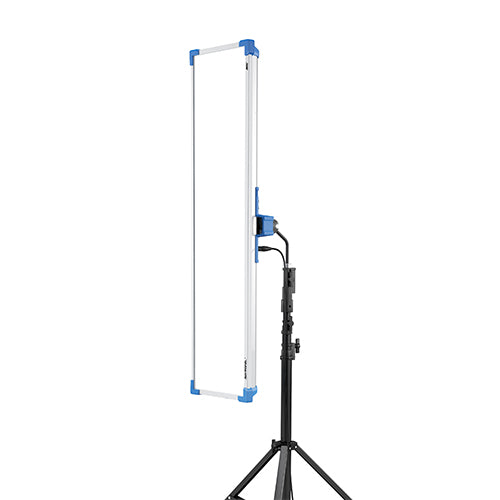
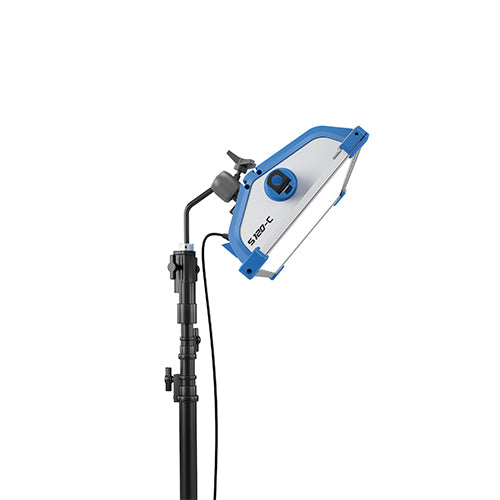
While visual clarity is essential, high-quality audio is arguably more important for audience retention. Viewers will often tolerate a temporary drop in video resolution, but they'll quickly abandon a stream with distorted or unintelligible sound. Beyond aesthetics, professional lighting equipment plays a technical role in stream stability. By providing ample, consistent illumination, you reduce the amount of digital noise the camera sensor produces. This cleaner signal allows the hardware encoder to work more efficiently, as it doesn't have to waste bandwidth trying to compress random sensor grain. For those investing in top-tier ARRI lighting, the result is superior color accuracy that reflects the high standards of the UAE's media landscape.
Audio Interfaces and Synchronization
Achieving broadcast-grade sound requires moving away from consumer-grade jacks toward balanced XLR inputs. Balanced connections are designed to reject electromagnetic interference, which is common in venues with extensive cabling and wireless signals. A common challenge in live setups is the "audio-to-video" sync issue. Because video processing typically takes longer than audio processing, the sound often arrives before the image. Professional audio interfaces or production switchers include adjustable delay settings to perfectly align the two signals. Choosing between lavalier and shotgun microphones depends on your format. Lavalier mics are ideal for mobile presenters and corporate interviews, while shotgun mics are better for controlled studio environments where you want to keep the hardware out of the frame.
Studio Lighting for Consistent Stream Quality
A standard three-point lighting setup remains the most effective way to create depth and professional separation for corporate live streams. In Dubai, where studio spaces must remain cool to protect sensitive electronics, LED panels are the preferred choice. They offer high output with minimal heat generation compared to traditional tungsten sources. When selecting your live streaming equipment Dubai setup, prioritize lights with a high Color Rendering Index (CRI). A CRI of 95 or higher ensures that skin tones look natural and vibrant, preventing the "washed out" look common in amateur productions. If you need assistance designing a complete studio lighting and audio package, contact our system integration team for a technical consultation.
System Integration and National Support in the UAE
Procuring the right hardware is only the first phase of building a professional broadcast environment. True operational success depends on how these individual components are woven into a cohesive signal chain. When investing in live streaming equipment Dubai organizations often find that the complexity lies in the underlying infrastructure rather than the devices themselves. System integration ensures that every camera, switcher, and encoder works in harmony, preventing the technical bottlenecks that lead to stream failure. A well-integrated system provides the peace of mind that comes with knowing your signal path is optimized for maximum uptime.
UBMS provides comprehensive national support across the UAE, acting as a dedicated technical partner rather than just a vendor. This level of local expertise is essential for high-stakes environments where downtime isn't an option. Our team understands the specific network requirements and regulatory standards of the region, ensuring your setup remains compliant and efficient. For a more detailed look at building out these complex infrastructures, you can explore our guide on Advanced Broadcast Studio Gear UAE.
Custom Broadcast System Integration
Designing a custom workflow for a corporate or TV studio involves more than just connecting cables. It requires a deep understanding of signal routing, talkback systems for crew communication, and tally systems to let presenters know which camera is live. These elements are the invisible threads that hold a production together. A professionally integrated system is also built with longevity in mind. By utilizing high-bandwidth backbones and modular components, these setups remain scalable for future 8K upgrades without requiring a complete overhaul of the existing wiring or network architecture. This foresight protects your initial investment while allowing your production capabilities to grow.
Professional Maintenance and Service Center
The Middle East presents unique environmental challenges for high-end electronics. Humidity and fine desert dust can quickly accumulate in cooling fans and sensor housings, leading to overheating or hardware degradation. This is especially true for encoders and switchers that run for extended periods. Our dedicated service center provides the necessary repairs, firmware updates, and preventative maintenance required to keep your gear in peak condition. Regular calibration is particularly vital for multi-camera productions. Without professional color matching, your stream will suffer from jarring visual inconsistencies when switching between different angles. Consistent maintenance ensures that your live streaming equipment Dubai setup delivers a uniform, broadcast-standard image for every broadcast, regardless of the external conditions.
Elevating Your Broadcast Standards in the UAE
Establishing a broadcast-grade presence in the UAE requires a strategic shift from consumer-level tools to a dedicated hardware ecosystem. By prioritizing 4K capture, hardware-based encoding, and professional-grade lighting, you ensure your productions meet the high expectations of the regional market. For creators aiming to refine their on-screen presence and strategy, leveraging professional Artist Consultancy and Digital Services ensures that technical excellence is matched by optimized performance. Success isn't just about the initial purchase; it's about the technical integration and the local support that keeps your systems operational under pressure.
As an authorized distributor for over 50 global broadcast brands, United Broadcast & Media Solutions provides the expertise needed to navigate these technical requirements. Our expert system integration team brings over 25 years of experience to every project, supported by a dedicated UAE-based service center for professional repairs and maintenance. Selecting the right live streaming equipment Dubai professionals rely on is the foundation of a zero-failure workflow. We're ready to help you design a setup that combines technical precision with long-term reliability. Explore our full range of Professional Video Cameras and Streaming Gear to begin your upgrade today. We look forward to supporting your next broadcast.
Frequently Asked Questions
What is the best camera for live streaming in the UAE?
The best camera depends on your production scale, but the Sony Alpha series and dedicated broadcast cameras are industry leaders for their thermal reliability and 4K performance. These cameras provide the clean output necessary for professional live streaming equipment Dubai workflows. You should ensure your choice includes SDI connectivity for secure, long-distance signal transmission in larger corporate or event venues.
Do I need a hardware encoder if I have a powerful PC?
Hardware encoders are essential for high-stakes broadcasts because they use dedicated Digital Signal Processing (DSP) rather than sharing resources with a computer's operating system. While a powerful PC can handle software encoding, it remains vulnerable to background updates or CPU spikes. Hardware units provide an isolated, stable environment that guarantees consistent uptime for mission-critical or 24/7 applications.
Can I use 5G for professional live streaming in Dubai?
You can use 5G for professional streaming in Dubai, particularly when utilizing cellular bonding technology to aggregate signals from multiple carriers like Etisalat and Du. This creates a redundant data path that compensates for local network congestion. It's a reliable solution for on-location broadcasts where a dedicated fiber line isn't available, ensuring your bitrate remains stable during outdoor events.
What is the difference between SDI and HDMI for live streaming?
SDI is the professional standard featuring locking connectors and the ability to carry signals over 100 meters without degradation. HDMI is a consumer-grade interface limited to shorter distances and prone to accidental disconnection. For a robust live streaming equipment Dubai setup, SDI is preferred for its physical security and signal integrity in complex environments where cables must run through high-traffic areas.
How do I prevent my live stream from lagging or buffering?
Preventing lag requires a hardwired Ethernet connection and the use of modern protocols like SRT (Secure Reliable Transport). You should avoid using Wi-Fi for the primary broadcast signal. Additionally, using H.265 (HEVC) encoding reduces the required bandwidth by nearly 50 percent compared to older standards, allowing for a smoother stream even when network conditions aren't ideal.
What lighting is best for a permanent corporate live streaming studio?
Permanent corporate studios benefit most from LED panels with a Color Rendering Index (CRI) of 95 or higher. These lights provide natural skin tones and generate very little heat, which is vital for maintaining a comfortable environment in Dubai's climate. A three-point lighting configuration ensures professional depth and eliminates harsh shadows that can distract your audience during a broadcast.
Does UBMS provide technical support for live streaming setups?
UBMS provides full technical support, including custom system integration and after-sales service through our dedicated UAE service center. We assist with everything from initial studio design to regular maintenance and firmware updates. Our team ensures that your broadcast environment remains reliable and technically optimized, allowing you to focus on content rather than troubleshooting hardware issues.
Is 4K streaming worth the investment in 2026?
4K streaming is definitely worth the investment in 2026 as it has become the expected baseline for professional corporate and government broadcasts. High-resolution streams provide superior clarity on large-scale event displays and future-proof your content for high-end digital platforms. It also allows for cleaner digital zooming and cropping during multi-camera switching without losing significant image detail.


