

The Ultimate Guide to Professional Video Cameras: 2026 Technology and Workflow Integration
In 2026, the most expensive sensor in the world won't save a production if the underlying workflow architecture fails to bridge the gap between cinema and broadcast standards. You've likely recognized that impressive spec sheets are only half the battle. Managing equipment longevity in the demanding UAE climate while ensuring that different brands actually communicate is a persistent challenge for even the most seasoned engineers. Selecting professional video cameras has become a high-stakes decision that hinges more on system interoperability than raw pixel counts.
We recognize the pressure of building a future-proof inventory that meets global standards without sacrificing operational reliability. This guide will help you master the technical landscape of professional video cameras, providing the exact criteria needed to select high-end gear for cinema and broadcast. We will examine the shift toward 8K and HDR requirements, clarify the confusion between disparate workflows, and establish professional maintenance standards to ensure your equipment survives the rigors of the field.
Key Takeaways
- Navigate the 2026 technical landscape by mastering 8K and HDR standards for future-proof production.
- Differentiate between cinema and broadcast workflows to select professional video cameras that align with your specific delivery requirements.
- Evaluate the impact of sensor size and dynamic range on image quality to achieve a cinematic or broadcast-ready aesthetic.
- Understand the necessity of professional system integration to ensure seamless interoperability across your entire studio infrastructure.
- Learn the value of utilizing authorized service centers to protect your investment and maintain equipment performance in harsh regional climates.
Defining the Professional Video Camera Landscape in 2026
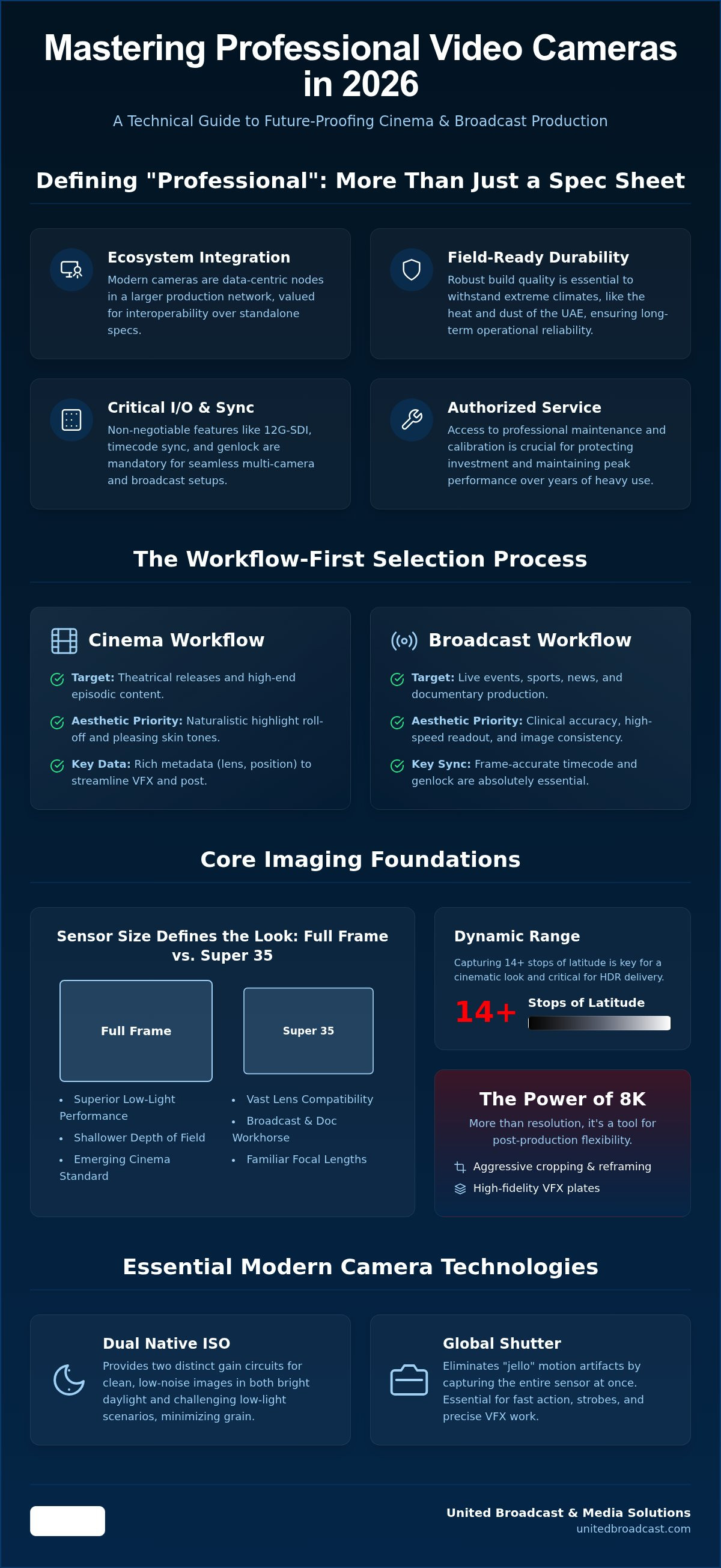
In 2026, the term "professional" describes an ecosystem rather than a single device. While prosumer camcorders offer impressive specs, true professional video cameras are defined by their ability to integrate into complex broadcast and cinema environments. This includes robust build quality designed for extreme climates, standardized connectivity like 12G-SDI, and sensors that prioritize dynamic range over mere pixel count. These systems aren't just tools for capturing light; they are data-centric nodes within a larger production network.
High-end gear requires a dedicated support infrastructure to remain operational. In regions like the UAE, where heat and dust are constant factors, having access to an authorized service center is essential for long-term reliability. This distinction ensures that your hardware maintains its performance standards over years of heavy use. Understanding this Digital Cinematography Overview helps clarify how modern systems have evolved from simple capture devices into sophisticated imaging platforms that demand precise calibration and professional maintenance.
The Shift to 8K and Beyond
8K resolution has transitioned from a niche luxury to a standard tool for high-end productions. It isn't always about the final display resolution. Instead, 8K provides the necessary data for aggressive cropping in post-production and high-fidelity visual effects. Modern hardware must now balance these massive data rates with high-speed recording capabilities. Capturing 8K at high frame rates requires specialized cooling and high-bandwidth media. These features separate professional video cameras from consumer-grade alternatives that often throttle performance due to thermal limitations.
Workflow-First Camera Selection
Choosing a camera starts with identifying the final output. A theatrical release demands different metadata and color science than a live-streamed event. In multi-camera environments, features like timecode sync and genlock are non-negotiable for maintaining frame-accurate alignment across dozens of devices. Professional systems also capture rich metadata, including lens data and camera position, which streamlines the handoff to post-production and VFX teams. This workflow-first approach ensures that the gear supports the project rather than creating technical bottlenecks during the edit.
Technical Foundations: Sensors, Dynamic Range, and Color Science
The imaging chain begins at the sensor, where the physical world is converted into digital data. In the current market, the choice between Full Frame and Super 35 sensors defines the aesthetic and functional capabilities of professional video cameras. Full Frame sensors have become the standard for high-end cinema, offering a shallower depth of field and superior low-light performance. Conversely, Super 35 remains the industry workhorse for broadcast and documentary work. It provides a familiar focal length equivalent and better compatibility with a vast range of existing cinema glass. Understanding these physical constraints is vital when building a kit that needs to perform across diverse production environments.
Dynamic range and color science are the true differentiators between mid-range gear and elite systems. While resolution gets the headlines, the ability to capture 14 or more stops of dynamic range is what allows for a cinematic look. This latitude ensures that highlights don't clip harshly and shadows retain detail, which is essential for HDR delivery. Each manufacturer approaches this differently. Sony focuses on clinical accuracy and high-speed readout, while ARRI is renowned for its naturalistic highlight roll-off and skin tone reproduction. As you explore The Future of High-Resolution Cameras, it's clear that the industry is pushing toward sensors that can maintain these high standards even at extreme resolutions.
Sensor Technology and Low-Light Performance
Dual-native ISO has revolutionized how we handle noise floors. By providing two distinct gain circuits, cameras can capture clean images in both bright daylight and low-light interiors without the heavy grain associated with traditional gain boosting. Shutter technology also plays a role. While rolling shutters are common, global shutters are preferred for fast-moving action to avoid "jello" distortion. Smaller pixel pitch on high-resolution sensors can sometimes lead to diffraction issues, so balancing resolution with sensor size is a key technical consideration for professional video cameras.
Bit Depth and Compression Standards
Recording in 10-bit or 12-bit is no longer optional for professional workflows. These higher bit depths provide the billions of colors necessary for heavy color grading and seamless HDR mastering. To manage this data, professionals rely on robust codecs like ProRes or XAVC, or uncompressed RAW for maximum flexibility. This requires high-speed media, specifically CFexpress Type B cards, which offer the sustained write speeds needed for high-bitrate capture. If you're unsure which recording format best suits your studio infrastructure, our team can provide technical guidance on system compatibility.
Choosing Between Cinema, Broadcast, and Hybrid Systems
Selecting the right imaging system requires more than comparing resolution. It involves a strategic assessment of the production environment. While cinema systems focus on the aesthetic texture of the frame, broadcast systems are engineered for the rigors of live transmission and remote operation. Each category serves a specific role within the media ecosystem, and the decision often rests on how the footage needs to be delivered and managed in real-time. Choosing professional video cameras that don't align with your delivery requirements can lead to costly technical bottlenecks during production.
Digital Cinema Camera Excellence
Digital cinema cameras prioritize maximum image quality and lens versatility. These systems are defined by their modularity, allowing operators to build out rigs with PL mounts for industry-standard cinema glass. High-end models feature integrated motorized ND filters, which are essential for maintaining a specific depth of field in changing light conditions without swapping external filters. When integrating brands like ARRI or Sony into your kit, you're investing in a specific color science that defines the production's final look. For those seeking elite imaging tools, exploring a curated selection of professional video cameras ensures you're viewing gear that meets global cinema standards.
Broadcast and Live Production Gear
Broadcast cameras are the backbone of live TV. Unlike their cinema counterparts, these units prioritize connectivity and remote control. They utilize 12G-SDI and fiber-optic outputs to send high-bandwidth signals over long distances with zero latency. In a studio environment, Remote Control Protocols (RCP) allow a vision mixer or shader to adjust exposure and color balance for dozens of cameras simultaneously from a central gallery. We've also seen a significant rise in PTZ (Pan-Tilt-Zoom) cameras. These systems are revolutionizing small-to-medium studio setups by providing high-quality capture with a minimal physical footprint and remote operation capabilities.
The rise of professional hybrid systems, often called "Mirrorless Pro" cameras, has introduced a new level of agility to the field. These compact systems are ideal for gimbal-based shooting where weight and size are primary concerns. However, for long-form documentary or news gathering, the traditional shoulder-mount ergonomics of a full-sized broadcast camera remains superior. A shoulder-mount design provides three points of contact, offering a level of stability that handheld or gimbal systems struggle to match during extended shoots. Understanding these ergonomic trade-offs is just as important as the technical specs when finalizing your equipment list.
Operational Essentials: Lenses, Lighting, and Environmental Protection
High-performance professional video cameras require a holistic ecosystem to reach their full potential. The lens acts as the primary gatekeeper of image quality, while lighting defines the texture and depth of the frame. Without high-tier optics and controlled illumination, even the most advanced sensors fail to deliver their promised dynamic range. Integrating these components requires a technical understanding of how light interacts with the sensor's specific color science.
Lens Mounts and Optical Quality
The choice between PL and E-mount often dictates your long-term lens strategy. PL mounts remain the professional standard for cinema glass, offering a robust, locking connection that supports heavy lenses. E-mount systems provide a shorter flange distance, allowing for greater versatility through adapters. For creators prioritizing speed and autofocus performance, Sony Alpha cameras and lenses offer a seamless integration that bridges the gap between photography and cinema. Regardless of the mount, regular lens calibration is essential. Ensuring your glass is properly shimmed prevents focus marks from drifting, which is critical for accurate focus pulling on high-resolution sensors.
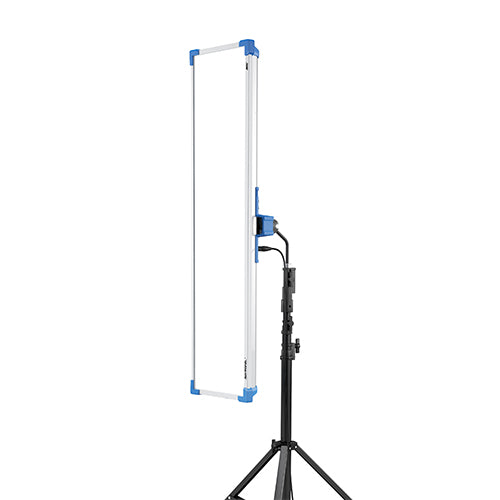
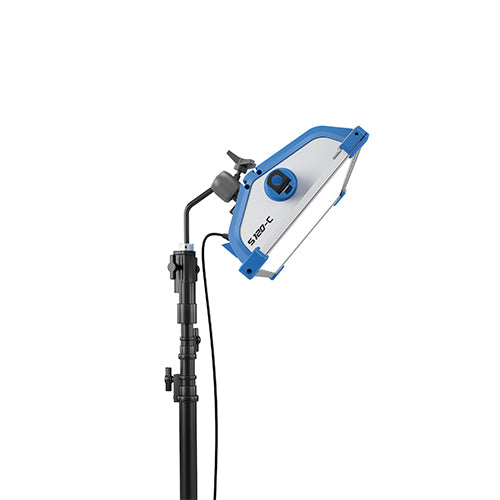
Shifting away from traditional tungsten, modern sets now rely on professional lighting equipment such as high-output LED panels and COB lights. These fixtures offer precise color temperature control and high TLCI ratings, ensuring skin tones remain natural across different shots. Their low heat emission is a significant advantage in the UAE, where managing ambient temperatures is already a logistical hurdle. Using high-output LEDs reduces the cooling load on set, protecting both the talent and the sensitive electronics within your camera rig.
Managing Heat and Humidity for High-End Sensors
Operating professional video cameras in coastal and desert environments presents unique technical risks. High ambient temperatures can increase the noise floor of a sensor, while humidity can lead to internal condensation or fungal growth within expensive optics. We recommend several best practices for regional productions:
- Utilize specialized cooling systems or external fans during stationary outdoor shoots to maintain optimal sensor temperature.
- Protect gear from fine desert dust using custom-fit dust jackets, even during brief breaks in filming.
- Avoid rapid transitions from cold air-conditioned environments to high-humidity outdoor settings to prevent internal fogging.
Regular professional cleaning at an authorized service center is the only way to ensure fine particulates don't permanently damage the sensor or internal cooling fans. This preventive maintenance is essential for preserving the resale value and operational reliability of your equipment.
Optimizing Your Production with Professional System Integration
System integration is not merely about connecting cables; it's about architecting a workflow that maximizes uptime and minimizes technical friction. A well-designed studio allows for centralized control of all imaging parameters, enabling engineers to match multiple cameras from a single station. This is particularly vital in 2026 as productions move toward higher resolutions and more complex metadata requirements. By planning a future-proof studio with scalable camera systems, you ensure that your facility can handle the transition to 8K or advanced HDR workflows without requiring a complete hardware overhaul.
From Stand-Alone Gear to Studio Ecosystems
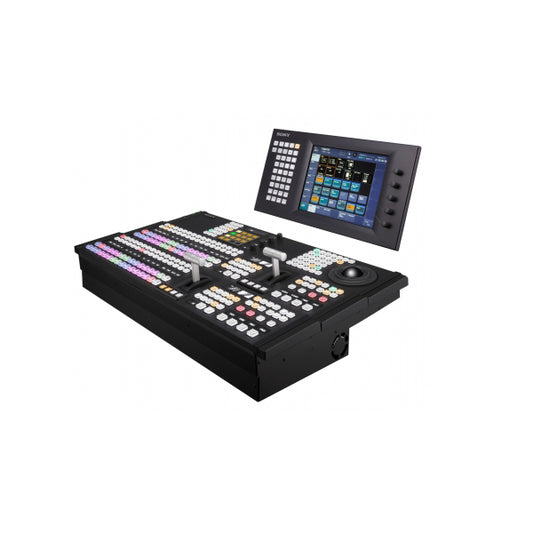
Modern studio environments rely on a sophisticated backbone of video switchers, routers, and intercom systems. In 2026, the transition to IP-based workflows has become standard in national broadcast setups. Utilizing protocols like NDI or ST 2110 allows for high-bandwidth video transmission over standard network infrastructure, significantly reducing the physical cabling required for large-scale deployments. Beyond the signal path, professional video cameras are often customized with specialized hardware to meet specific production needs:
- Heavy-duty cranes and jibs for sweeping cinematic movements.
- Precision gimbal systems for stabilized handheld operation.
- Specialized drone mounts for high-resolution aerial cinematography.
- Fiber-optic adapters for long-distance signal transmission in live venues.
After-Sales Support and Maintenance
Maintaining the technical integrity of a studio requires more than just high-end hardware. Because professional gear represents a significant capital investment, protecting it through authorized service centers is a business necessity. These facilities provide access to specialized diagnostic tools and genuine spare parts that unauthorized shops cannot provide. Regular professional calibration ensures that multiple camera units maintain color consistency across a multi-cam shoot, while frequent firmware updates unlock new features and resolve compatibility issues with modern codecs.
For a deeper look into building a comprehensive facility, read our guide on Advanced Broadcast Studio Gear. This resource details the specific components needed to support high-tier imaging systems in a live or post-production environment. Local technical support provides the final layer of security, ensuring that expert help is available when technical challenges arise during critical production windows. Partnering with a dedicated technical provider ensures your equipment remains at peak performance throughout its operational lifecycle.
Building Your Production Future in 2026
Success in modern production requires a shift from viewing cameras as isolated tools to seeing them as part of a high-performance ecosystem. We've explored how sensor technology, color science, and workflow-specific hardware define the quality of your output. Protecting these investments in the demanding UAE climate through authorized maintenance is just as critical as the initial selection process. Mastering the technical landscape of professional video cameras ensures your studio remains competitive and scalable in a rapidly evolving market.
United Broadcast & Media Solutions brings over 25 years of industry expertise to your project. As an authorized distributor for Sony, ARRI, and Canon, we provide the technical infrastructure and expert system integration services required for world-class broadcast and cinema environments. Our dedicated service center ensures your gear maintains peak performance through every shoot, from desert exteriors to climate-controlled studios.
We look forward to supporting your next production with reliable gear and expert technical guidance.
Frequently Asked Questions
What is the best professional video camera for a high-end cinema production in 2026?
Flagship models from Sony and ARRI remain the industry standards for high-end cinema in 2026. These systems offer the necessary dynamic range and color science required for theatrical releases and premium streaming. Selecting professional video cameras for cinema depends on your specific metadata needs and lens choices, as these units prioritize image texture and modularity over automated features.
How do I choose between a mirrorless pro camera and a dedicated cinema camera?
Your choice depends on the balance between agility and technical control. Mirrorless pro systems offer incredible speed and portability for gimbal work, while dedicated cinema cameras provide standardized IO, internal ND filters, and superior thermal management. Cinema cameras are designed for long shoot days where reliability and precise manual control are non-negotiable for the camera crew.
What are the essential accessories for professional video cameras in the UAE?
Essential accessories in the national climate include specialized cooling solutions and robust dust protection kits. High-speed CFexpress Type B media is necessary for managing 8K data rates, while high-output LED lighting helps maintain color accuracy without adding excessive heat to the set. Don't overlook the importance of high-quality cinema lenses to fully utilize your sensor's resolution.
Can I use broadcast cameras for cinematic filmmaking?
You can use broadcast cameras for cinema, but you must account for differences in sensor size and highlight roll-off. While broadcast systems excel in live connectivity and deep depth of field, they may require more work in post-production to achieve a traditional cinematic look. Many modern hybrid workflows now use broadcast bodies for multi-cam events that still require a high-end aesthetic.
How does humidity and heat affect professional camera sensors?
Extreme heat can significantly increase the noise floor of a sensor, leading to grainier images even at low ISO settings. High humidity introduces the risk of internal condensation and fungal growth within the lens elements and sensor housing. Regular maintenance at an authorized service center is vital to ensure that cooling fans and weather seals remain functional in these harsh environments.
What is the difference between PL mount and EF mount for professional lenses?
The PL mount is the global standard for cinema, featuring a heavy-duty locking mechanism that prevents lens play. The EF mount is a legacy photographic standard that is still common but lacks the physical robustness required for large cinema glass. Most professional video cameras now utilize mirrorless mounts like E-mount or RF-mount, which can be easily adapted to PL for maximum flexibility.
Why is 8K resolution becoming a standard for professional video production?
8K resolution has become standard because it provides immense flexibility for reframing and visual effects in post-production. Even if the final delivery is 4K, capturing in 8K allows for aggressive cropping without losing detail. It also ensures that your content meets the long-term archival standards required by major global streaming platforms and national broadcasters.
Where can I get professional camera repair and maintenance in the UAE?
Authorized service centers in the UAE provide the only reliable path for professional camera maintenance and repair. Facilities like the UBMS service center use genuine parts and specialized diagnostic tools to calibrate sensors and update firmware correctly. This professional support is essential for protecting your equipment investment and ensuring operational reliability during high-stakes productions.


