

Professional LED Studio Lights: The 2026 Guide to High-End Broadcast Lighting
What if the LED studio lights you rely on are secretly undermining your production value with inconsistent color rendering and thermal drift? It's a challenge every broadcast engineer faces; the frustration of matching high-end fixtures only to find that skin tones look unnatural or that flicker ruins a high-speed shot. You know that achieving a seamless, professional look requires more than just raw output. It demands a sophisticated understanding of how light interacts with modern sensor workflows.
This guide provides the technical expertise you need to master high-end lighting systems. We'll show you how to achieve perfect color accuracy using fixtures with a CRI of 95 or higher and how to integrate smart control standards like NDI and Bluetooth Mesh into your existing setup. You will learn to eliminate heat issues in enclosed spaces while significantly reducing long-term energy and maintenance costs. By the end of this article, you'll have a clear roadmap for building a reliable, software-driven lighting ecosystem that delivers world-class results for every broadcast.
Key Takeaways
- Understand the critical distinction between consumer-grade equipment and professional broadcast ecosystems to ensure long-term reliability in high-stakes environments.
- Master advanced color metrics like TLCI and SSI to achieve perfect skin tone rendering and seamless color matching across different camera sensors.
- Identify the ideal form factor for your production by evaluating the specific advantages of soft panels, COB emitters, and Fresnel LED studio lights.
- Streamline your studio workflow through the implementation of centralized DMX512 controls and modern wireless ecosystems for more efficient rigging.
- Leverage expert system integration and industry-standard brands like ARRI to build a mission-critical lighting environment tailored to your technical needs.
Table of Contents
The Evolution of Professional LED Studio Lights in Broadcast
The broadcast industry has undergone a total transformation in how it approaches illumination. Traditional Tungsten and HMI fixtures, while once the gold standard for color quality, were notoriously energy-intensive and difficult to manage. By 2026, the global market for LED lighting is projected to reach 115.2 billion USD, reflecting a massive shift toward high-efficiency ecosystems. This transition isn't just about saving electricity; it's about gaining total control over the production environment. Modern facilities now treat lighting as a software-driven asset rather than a simple hardware requirement.
Defining "Broadcast Grade" is essential for any serious facility manager or director of photography. Many entry-level products marketed as LED studio lights fail in professional settings because they lack the necessary electronic stability. High-end broadcast fixtures must maintain absolute color consistency across the entire dimming range. They also need to eliminate flicker at high frame rates, which is a common failure point for cheaper drivers. Professional systems provide the reliability required for 24/7 news cycles and high-stakes live productions where equipment failure isn't an option.
The economic benefits of this evolution are substantial. National studios have found that switching to LED technology reduces power consumption by up to 80% compared to traditional arrays. There is also a massive reduction in the HVAC load. Because LEDs generate significantly less heat, the air conditioning systems don't have to work as hard to keep the studio and talent cool. In 2026, sustainability has become a core design focus, driven by updated regulations like California's Title 24 energy code, which mandates strict lighting control requirements for new commercial constructions.
LED vs. Traditional Lighting Sources
Thermal management is the most immediate benefit for crew and talent alike. Cool-running LEDs allow presenters to remain comfortable during long broadcast shifts, which reduces the need for frequent makeup touch-ups and prevents equipment from overheating in tight spaces. While a traditional bulb might last only 250 to 1,000 hours, a high-quality LED diode is rated for tens of thousands of hours. This longevity drastically lowers maintenance costs and minimizes studio downtime. The LED stage lighting technology used in modern studios also ensures that color remains stable over years of use, unlike traditional gels that fade or bulbs that shift color as they age.
Key Advantages for Modern Production
Speed defines the modern newsroom and field production. Professional LED studio lights offer instant dimming and bi-color adjustment at the touch of a button. You no longer have to wait for fixtures to cool down or swap physical gels to change the color temperature. This flexibility is vital for location-based news gathering where lighting conditions change rapidly. These fixtures integrate seamlessly with digital workflows and automated studio control systems. For mission-critical environments, broadcasters frequently rely on ARRI lighting solutions because they provide the precision and system integration required for high-end media production.
Critical Technical Metrics for Studio Lighting Accuracy
Relying solely on the Color Rendering Index (CRI) is a mistake in modern broadcast environments. While CRI measures how light appears to the human eye, it doesn't account for how digital sensors interpret spectral data. For professional LED studio lights, the Television Lighting Consistency Index (TLCI) has become the essential metric. A TLCI score above 90 indicates that a camera will require minimal post-production color correction; a score of 95 or higher is the standard for high-tier networks. This metric is specifically designed to reflect the color processing of broadcast cameras, making it far more relevant than older standards.
The Spectral Similarity Index (SSI) represents the next frontier in accuracy. It compares a light's spectral power distribution against a reference source like daylight or a blackbody radiator. This is critical because modern digital cinema cameras have unique sensitivities. If an LED has significant spectral gaps, certain colors will simply "disappear" or shift unpredictably. High SSI ratings ensure that your lighting remains consistent across different camera brands, preventing the nightmare of trying to match a Sony sensor with an ARRI sensor under the same lights.
Skin tone reproduction lives or dies by the R9 value. Most standard LEDs score well in R1 through R8 but fail in R9, which represents saturated red. Since human skin tones are primarily composed of red spectral information, a low R9 value leads to "dead" or greenish complexions. Additionally, flicker-free performance is non-negotiable for sports and high-speed filming. Professional fixtures use high-frequency dimming circuits to ensure that even at 240 fps, there's no perceptible banding or brightness fluctuation. If you are designing a new studio floor, our team can provide a technical consultation to ensure your metrics meet these rigorous standards.
Color Science and Spectral Output
LED arrays have evolved from basic bi-color setups to sophisticated RGBWW and full-spectrum systems. Bi-color lights often struggle with "spectral spikes," where an overabundance of blue or green light distorts the image. RGBWW fixtures solve this by adding dedicated white and warm-white diodes to fill the spectral gaps. This allows for a much wider gamut and more natural white light. Achieving a perfect white balance across multiple fixtures requires units with calibrated engines that can be synchronized via digital control protocols.
Thermal and Noise Management
Silent operation is a requirement for any sound stage. Active cooling systems in high-end LED studio lights use ultra-quiet maglev fans that stay below the noise floor of professional microphones. Passive cooling is an alternative, though it often results in larger, heavier fixtures. Thermal regulation is vital because excessive heat causes LED diodes to degrade and shift in color temperature over time. Advanced thermal regulation maintains the junction temperature of the diodes to ensure that color accuracy remains absolute over a 12-hour production day.
Comparing LED Form Factors: Panels, COB, and Fresnels
Selecting the right LED studio lights involves more than choosing a brand; it requires matching the fixture's physical architecture to the specific requirements of the frame. In a high-end broadcast environment, a single lighting style is rarely sufficient. Designers instead utilize a strategic mix of soft panels, point-source COB lights, and Fresnels to create depth, separation, and texture. Each form factor serves a distinct purpose in the visual narrative, from providing a flattering base layer to adding precise highlights.
Soft Lighting Solutions for Broadcasters
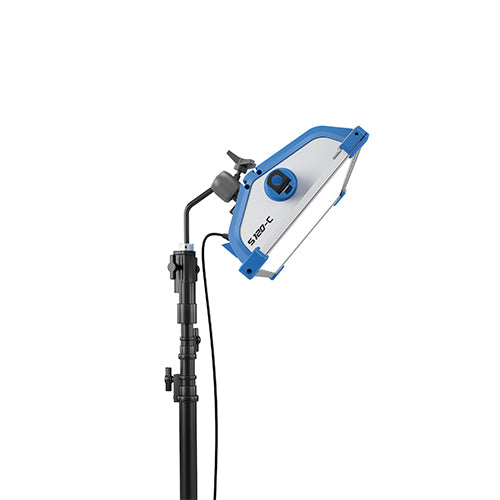
LED soft panels are the workhorses of the modern interview set. When choosing between edge-lit and direct-lit panels, the decision often comes down to the required output versus the desired softness. Edge-lit panels utilize a light guide to produce an incredibly soft, wrap-around quality that is ideal for talent who may be sensitive to glare. Direct-lit panels are typically deeper and offer higher lux levels, making them better suited for larger studio floors. To maintain high contrast and prevent light spill from washing out backgrounds, professionals use honeycomb grids or egg crates to narrow the beam. You can explore professional lighting collections to compare how these different panel architectures perform in real-world scenarios.
Hard Lighting and Optical Control
Hard lighting and point sources have been revolutionized by COB (Chip on Board) technology. These fixtures pack hundreds of tiny LED diodes into a single, high-intensity cluster, allowing them to behave like a traditional tungsten bulb. This point-source characteristic is essential for using modifiers like reflectors, snoots, or large softboxes. While many COB lights utilize the universal Bowens mount for its wide accessory compatibility, proprietary mounts from high-end manufacturers often provide better mechanical stability for heavy optical attachments.
LED Fresnels remain indispensable for mastering the classic cinematic look. They are the preferred choice for hair lights and creating localized texture on studio walls. Unlike panels, Fresnels allow for precise beam angle control through an internal focusing lens. When combined with barn doors, they offer surgical precision, allowing a gaffer to "cut" light away from areas where it isn't wanted. This level of control is vital for maintaining the mood and separation required for 4K and 8K broadcast resolutions.
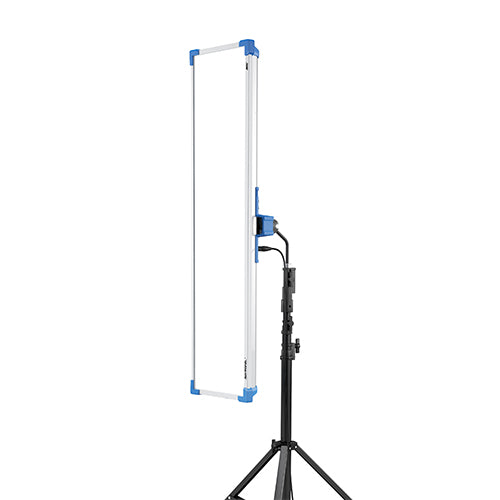
Specialty fixtures such as tube lights and flexible LED mats have also become essential for tight studio spaces. Tube lights are frequently used as "practicals" hidden in plain sight or as rim lights in car interiors. Flexible mats can be taped to ceilings or tucked into corners where traditional stands cannot reach. Their lightweight nature and slim profiles provide a level of rigging flexibility that was impossible with older lighting technologies, allowing for more creative and efficient studio designs.
Studio Integration: Control Systems and Rigging
Integrating professional LED studio lights into a broadcast facility requires a shift from viewing fixtures as individual units to managing them as a unified network. Centralized control is no longer a luxury; it's a requirement for the fast-paced nature of modern media. DMX512 remains the industry standard, but the addition of Remote Device Management (RDM) has changed the game. RDM allows for bi-directional communication, enabling technicians to monitor fixture health, change DMX addresses, and troubleshoot issues from the console without ever climbing a ladder. This saves hours of labor during a typical production week.
Wireless control has matured significantly by 2026. While Bluetooth Mesh is now a standard for app-based control in smaller setups, mission-critical environments rely on LumenRadio's CRMX technology. CRMX provides the low latency and interference resistance needed when hundreds of wireless devices are operating simultaneously. This wireless freedom allows for rapid reconfiguration of the studio floor between different program segments, which is essential for multi-purpose spaces that host both news and talk shows.
Power infrastructure must be equally robust. While the efficiency of LEDs has reduced the total electrical load, live broadcasts still require redundancy. Modern studio design often balances a primary AC grid with a centralized battery backup system. This ensures that if the main power fails, the LED studio lights remain operational long enough for the generator to kick in or for an orderly shutdown to occur. Balancing these loads requires a sophisticated understanding of both electrical engineering and the specific draw of high-output LED emitters.
Designing a Networked Lighting Grid
Creating a reliable network follows a methodical progression that mirrors a professional broadcast workflow:
- Step 1: Mapping the DMX Universe. Ensure that high-channel-count fixtures, especially RGBWW panels, don't exceed the 512-address limit per port. This prevents signal lag and command errors.
- Step 2: Selecting a Controller. Choose a lighting console or software-based controller that supports the specific protocols of your gear, ensuring it can handle the complexity of modern color engines.
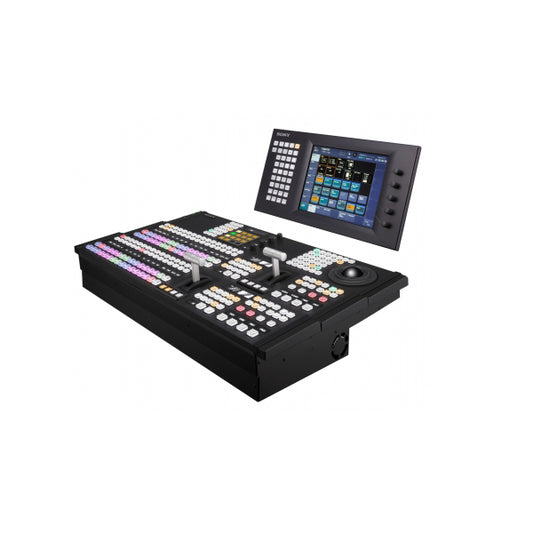
- Step 3: Integration with Vision Mixers. Link your lighting cues with vision mixers and automation software. This allows the lighting to change automatically based on which camera is live, creating a dynamic visual environment.
Professional Grip and Mounting
Efficient space management is achieved through the use of overhead rail systems and pantographs. These tools allow lights to be moved and adjusted without cluttering the studio floor with stands. When floor-based support is necessary, heavy-duty C-stands remain the industry standard for their stability and small footprint. Safety is paramount in high-traffic studio areas. Every overhead fixture must be secured with a secondary safety cable, and weight limits for the grid must be strictly audited. For a deeper look at regional standards and rigging best practices, see our Professional Lighting Equipment in Dubai: The 2026 Industry Guide.
The UBMS Advantage: High-End Brands and Expert Support
Leading broadcasters don't just buy equipment; they invest in long-term reliability. United Broadcast & Media Solutions serves as a dedicated technical partner for major networks and production houses across the region. We understand that in a live environment, there is no room for error. This is why we prioritize brands that define industry standards. Our role extends far beyond the initial sale. We provide the logistical and technical infrastructure required to keep a high-output facility running at peak performance year after year.
UBMS represents a comprehensive hub for the professional media community. Our system integration services bridge the gap between complex technical specifications and actual creative output. We manage the entire lifecycle of your studio infrastructure, ensuring that every component, from the rigging to the control software, works in harmony. This holistic approach is why top-tier production houses rely on our expertise for their mission-critical setups. Whether you are designing a high-speed sports broadcast center or a virtual production volume, our team provides the specialized knowledge to execute complex designs.
ARRI Lighting: The Gold Standard
The ARRI ecosystem, including the SkyPanel and Orbiter series, remains the benchmark for color science in the professional landscape. You can Browse ARRI Lighting solutions to see how these fixtures provide the spectral richness required for high-end digital sensors. While the initial investment in premium optics is higher, it pays off through massive post-production efficiency. When your LED studio lights produce accurate color from the start, you spend less time in the grading suite fixing skin tones or correcting mismatched fixtures. These units are built for the rigors of 24/7 operation, offering a level of durability that consumer-grade alternatives cannot match.
Technical Services and Maintenance
Uptime is the most critical metric for any broadcast operation. Our specialized service center in the UAE is equipped to handle everything from routine maintenance to complex electronic repairs. We provide precision calibration services, ensuring that every unit on your grid matches perfectly, regardless of its age or usage hours. This is vital when expanding an existing setup with new LED studio lights; we ensure the new additions integrate seamlessly with your current inventory.
We also assist in transitioning legacy studios to modern standards through our consultation services. We evaluate your current power draw and thermal load to design an upgrade path that maximizes ROI. From initial design to final technical calibration, we provide customized packages tailored to the specific needs of newsrooms, virtual studios, and cinema sets. Our commitment to local technical support means that expert help is always available to minimize downtime and protect your production value.
Building the Future of Broadcast Lighting
The transition to high-end LED studio lights is more than a hardware upgrade; it's a commitment to superior color science and operational efficiency. By mastering metrics like TLCI and SSI while implementing networked control systems, you ensure your production remains competitive in a mature, digital-first market. Precision in color matching and thermal management prevents costly post-production delays and hardware failures. As technology continues to evolve, the ability to integrate software-driven lighting ecosystems will define the most successful broadcast facilities.
United Broadcast & Media Solutions provides the technical foundation for these advanced workflows. As an authorized ARRI distributor with expert system integration services and a full technical service center in the UAE, we offer the end-to-end support necessary for mission-critical environments. We help you navigate the complexities of modern lighting grids to achieve consistent, world-class results. Our team understands the high stakes of professional production and is ready to support your long-term infrastructure goals.
Your studio's visual identity depends on the quality of its light. We look forward to helping you build a resilient, future-proof environment that empowers your creative vision and ensures every frame meets the highest global standards.
Frequently Asked Questions
What is the difference between CRI and TLCI for LED studio lights?
TLCI measures how a light source is interpreted by a television camera sensor, whereas CRI evaluates how it appears to the human eye. For professional LED studio lights, a TLCI score of 95 or higher ensures that colors look accurate on screen without heavy post-production grading. While CRI was the historical standard, TLCI is now the essential metric for broadcast engineers who need to guarantee color consistency across digital workflows.
Can I use LED studio lights with my existing DMX lighting console?
You can integrate most professional LED studio lights with an existing DMX lighting console if both the fixtures and the controller support the DMX512 or RDM protocols. Modern LED systems often require more DMX channels per fixture than legacy tungsten lights, especially when controlling RGBWW color engines. It's important to verify that your console has enough addresses available in its universe to handle the increased data requirements of multi-parameter LED arrays.
How do I prevent flickering when using LEDs for high-speed video?
To prevent flickering in high-speed video, you must use fixtures equipped with high-frequency pulse-width modulation (PWM) or flicker-free dimming circuits. Professional-grade LEDs are specifically designed to remain stable at high frame rates, such as 120 or 240 fps, which is common in sports and action broadcast. Using high-end drivers ensures that the light output doesn't fluctuate between camera shutter cycles, eliminating the banding or strobing effects that ruin slow-motion footage.
What are the best LED lights for a small professional interview studio?
A combination of edge-lit LED soft panels and small Fresnel fixtures is ideal for small interview studios. Soft panels provide a flattering, wrap-around light for the subject's face, while a compact Fresnel or COB light acts as a precise hair light to create separation from the background. This setup maximizes space while providing the professional "three-point" lighting look required for high-quality corporate and news interviews.
How much power can I save by switching my studio to LED lighting?
Switching a traditional studio to LED lighting typically results in an 80% reduction in direct power consumption for the fixtures themselves. You also save significantly on HVAC costs, as LEDs generate far less heat than tungsten or HMI bulbs. This dual-layered saving reduces the load on the building's electrical grid and extends the lifespan of the studio's air conditioning system, leading to a much lower total cost of ownership.
Do professional LED lights require special cooling or ventilation?
Professional LEDs don't require the heavy-duty ventilation systems needed for high-wattage tungsten lights, but they do need adequate thermal management to protect the diodes. Most high-output fixtures use active cooling with ultra-quiet internal fans or passive cooling through large aluminum heatsinks. Maintaining a stable operating temperature is vital because excessive heat can cause a color shift and shorten the life of the electronic components inside the light.
Is it possible to match LEDs from different brands in the same studio?
Matching LEDs from different brands is possible through technical calibration and the use of color-tuning features in RGBWW or full-spectrum fixtures. You should compare the TLCI and SSI values of each light to identify spectral differences. By using a light meter or a spectrometer, you can manually adjust the green-magenta tint or CCT values on each fixture until they appear identical on your camera monitors.
What is the lifespan of a professional broadcast LED fixture?
The lifespan of a professional broadcast LED fixture is typically rated between 30,000 and 50,000 hours of use before the diodes lose significant brightness. This is a massive improvement over traditional bulbs, which often fail after just 250 to 1,000 hours. While the diodes themselves are long-lasting, it's essential to have the internal power supplies and drivers serviced periodically by a professional service center to ensure the fixture's long-term reliability.


