

Portable Power for Cinema Cameras: 2026 Pro Guide
Over 62% of location-based productions in the first quarter of 2026 reported significant downtime due to environmental factors, but the most preventable failure remains an inadequate power plan. You've likely felt the tension of a low battery warning flashing on an ARRI or Sony rig just as the light hits its peak. It's a common frustration for cinematographers who balance the need for high-capacity cells against strict IATA travel regulations. Finding reliable portable power solutions for cinema cameras isn't just about buying the biggest battery; it's about engineering a system that survives the rigors of remote production.
We understand that your workflow depends on precision and dependability. This guide will help you master the technical requirements and hardware choices needed to maintain a high-performance cinema workflow in any environment. You'll learn how to navigate the latest 2026 flight safety limits, choose between V-mount and B-mount ecosystems, and build a fail-safe power plan. We'll also cover how to integrate portable power stations to keep your lighting and monitors running alongside your primary camera package.
Key Takeaways
- Learn how to accurately calculate your total wattage draw, including accessories like wireless transmitters and follow-focus systems, to ensure a fail-safe power budget.
- Understand the mechanical and electrical differences between V-Mount, Gold Mount, and B-Mount ecosystems to choose the most reliable interface for your specific production environment.
- Discover how to scale portable power solutions for cinema cameras to support high-draw professional lighting and monitoring rigs in off-grid locations.
- Stay compliant with 2026 IATA regulations and airline-specific policies by mastering the Watt-hour (Wh) limits required for safe air travel with lithium-ion batteries.
- Recognize the importance of professional battery health diagnostics and authorized technical support in maintaining the long-term reliability of your power infrastructure.
The Fundamentals of Portable Power for Cinema Cameras
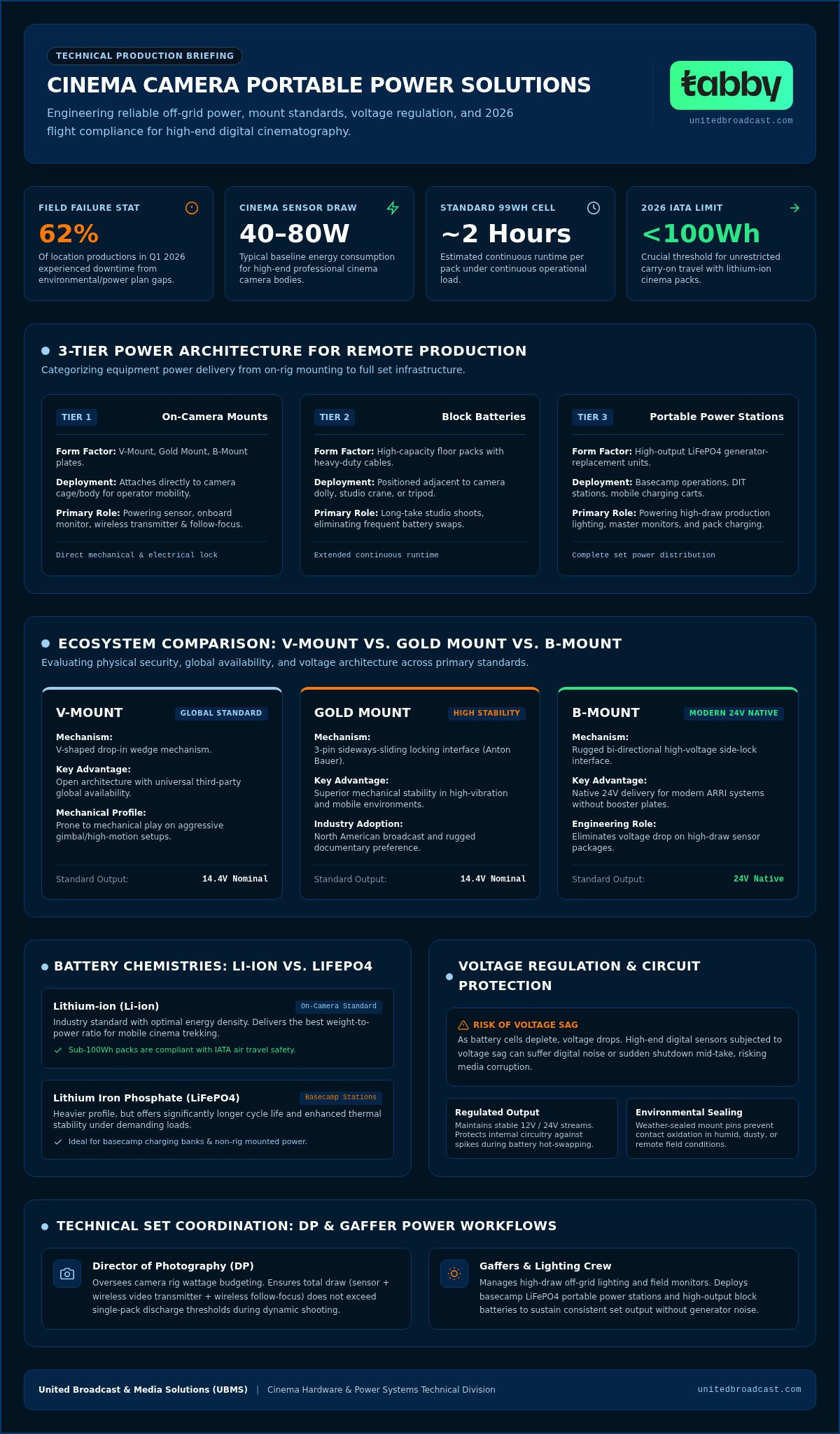
Modern cinematography has moved far beyond the studio walls. Today's productions demand high-mobility sets where mains power is often unavailable. This shift requires sophisticated portable power solutions for cinema cameras that can handle the rigorous draw of high-end sensors. Unlike consumer gear, professional professional video cameras consume significant energy, typically drawing between 40-80W. Understanding the difference between Watt-hours (Wh), which measures total capacity, and Voltage (V), which dictates the electrical pressure, is vital. A standard 99Wh battery might power a rig for two hours, but the voltage must remain stable to avoid equipment failure. The physical interface, or the battery holder mechanism, ensures these high-capacity cells stay securely attached during aggressive camera movements.
Professional power is generally divided into three categories. Mounts, such as V-Mount or Gold Mount, attach directly to the camera. Block batteries provide high-capacity floor power for long takes. Finally, portable power stations act as mobile generators for the entire crew. Each serves a specific role in maintaining a high-performance cinema workflow.
Li-ion vs. Newer Battery Chemistries
Lithium-ion (Li-ion) remains the industry standard due to its impressive energy density. It's the go-to for on-camera mounts because it offers the best weight-to-power ratio for remote trekking. However, Lithium Iron Phosphate (LiFePO4) is gaining traction in larger portable power stations. While LiFePO4 is heavier, it offers a longer cycle life and enhanced thermal stability. This makes it ideal for basecamp charging stations that don't need to be mounted directly to the rig. For remote travel, Li-ion batteries under 100Wh are essential to meet 2026 IATA flight safety regulations.
Voltage Regulation and Equipment Safety
High-end digital sensors are incredibly sensitive to voltage fluctuations. Voltage sag occurs when a battery's output drops as it nears depletion. This can cause digital noise or unexpected shutdowns during a critical take. Professional power plates often feature regulated outputs to maintain a steady 12V or 24V stream. This protects your electronics from power spikes, especially during hot-swapping. Using unregulated plates on high-draw systems risks permanent damage to internal circuitry. Reliable power delivery is a non-negotiable requirement for professional workflows, ensuring that your hardware investment remains protected against electrical inconsistencies.
Comparing V-Mount, Gold Mount, and B-Mount Ecosystems
Selecting the right battery interface is one of the most critical decisions when building a professional rig. It isn't just about the battery itself; it's about the mechanical and electrical connection that keeps your camera running under pressure. V-Mount remains the global standard for portable power solutions for cinema cameras due to its open architecture and massive third-party support. It's a versatile choice for crews who need to source gear in different regions, as the V-shaped wedge mounting system is nearly universal. However, versatility sometimes comes at the cost of mechanical play, which can be a concern on high-motion sets.
For productions that demand absolute security, the Gold Mount system, pioneered by Anton Bauer, offers a distinct advantage. Instead of a vertical slide, it uses a three-pin locking mechanism that slides in sideways. This design provides superior mechanical stability, which is why it's the preferred choice for North American broadcast and documentary filmmakers working in high-vibration environments. The newest evolution in this space is the B-Mount. Designed specifically to support the 24V requirements of modern ARRI systems, it provides a rugged, high-voltage interface that eliminates the need for complex power-boosting plates. If you're unsure which mount best fits your existing camera fleet, you can speak with our technical team for a custom fleet assessment.
Mechanical Reliability in Remote Conditions
Mount security is paramount when you're operating handheld or on a gimbal. A loose battery connection can lead to intermittent power loss, which might corrupt your media mid-take. Professional plates now often feature enhanced environmental sealing for battery pins to prevent oxidation in humid or dusty climates. Standardizing your mount across your digital cinema cameras and field monitors creates a more efficient workflow, allowing you to swap batteries between any piece of gear without hunting for specific adapters.
The Rise of High-Voltage 24V/28V Systems
The industry is rapidly shifting toward 24V systems to meet the energy demands of high-end sensors and professional lighting. Higher voltage reduces the current (amperage) required to deliver the same amount of power, which results in less heat buildup and greater overall efficiency. While adapters exist to use 14V batteries on 24V cameras, native B-Mount plates are becoming the new professional standard for peak performance. This transition ensures that your portable power solutions for cinema cameras can handle the 40-80W draw of modern rigs without stressing the internal components.
How to Calculate Your Remote Power Budget
Effective portable power solutions for cinema cameras rely on precise mathematical forecasting rather than guesswork. A high-performance workflow demands that you know exactly how long your rig will stay active before the first battery swap. Rigidity in planning is vital. You must account for every active component, from the primary sensor to the smallest wireless transmitter, to avoid the high-stakes failure of a dead rig mid-take.
The first step is to list the total wattage (W) of every device on the camera rig. A standard digital cinema camera might draw 45W, but you must also factor in accessory draw. A high-brightness field monitor typically pulls 15W, a wireless video transmitter adds 7W, and a follow focus system can peak at 10W during active moves. Once you have this total, determine the required runtime for your production day. Finally, always apply a 20% to 30% safety margin. This buffer accounts for capacity loss in cold environments and natural efficiency drops as batteries age.
The Formula for Runtime Calculation
Precision requires using the standard Wh / W = Hours formula. If you're powering a Sony professional camera rig with a total draw of 70W using a 98Wh battery, your raw runtime is approximately 1.4 hours. After applying a safety margin, you should plan for a swap every 65 to 70 minutes. Don't forget to account for phantom draw. Even in standby mode, cameras keep sensors warm and cooling fans active, which continues to deplete your portable power solutions for cinema cameras even when you aren't rolling.
Managing Battery Cycles and Charging on Location
Maintaining a continuous workflow requires the Rule of Three. This strategy dictates that you have one battery on the camera, one fully charged unit ready for the next swap, and one currently on the charger. You must calculate your charging times against your discharge rates. If your battery discharges in 90 minutes but takes 180 minutes to charge, you'll need at least four or five batteries to maintain a loop without downtime. Hot swapping is the technique of utilizing a dual-battery plate or internal buffer to replace a depleted battery without shutting down the system. This logistical discipline ensures your technical infrastructure remains stable throughout the most demanding shoot days.
Beyond the Camera: Powering Lighting and Monitoring Off-Grid
A modern film set consumes between 20-100 kWh of energy per day depending on the scale of the production. While the camera rig is the priority, powering the surrounding ecosystem is equally critical for a professional result. The evolution of high-efficiency LED technology has transformed remote production, allowing high-output fixtures to run on the same portable power solutions for cinema cameras that drive your main sensor. This synergy between camera and lighting power creates a more streamlined, mobile workflow that doesn't rely on heavy umbilical cables to a generator.
For monitoring and focus stations, the industry relies on D-Tap and the increasingly common USB-C Power Delivery (PD) standards. These bi-directional ports allow for high-wattage charging and discharge, often up to 100W, which is sufficient for modern production laptops and director's monitors. Choosing between centralized distribution, using one large station, and decentralized distribution, using individual batteries on every device, depends on your mobility needs. Decentralized setups offer maximum agility for handheld work, while centralized stations provide a stable hub for the DIT and video village.
Powering High-Output LED Fixtures
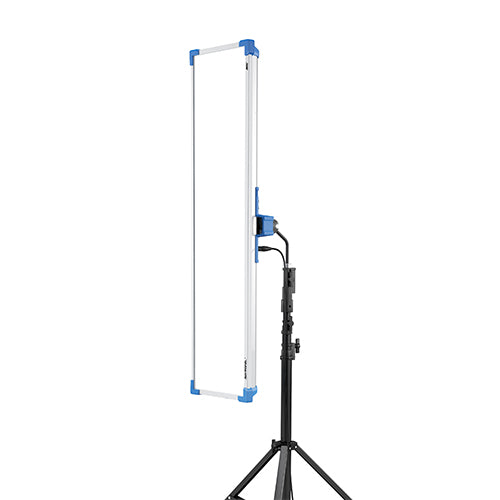
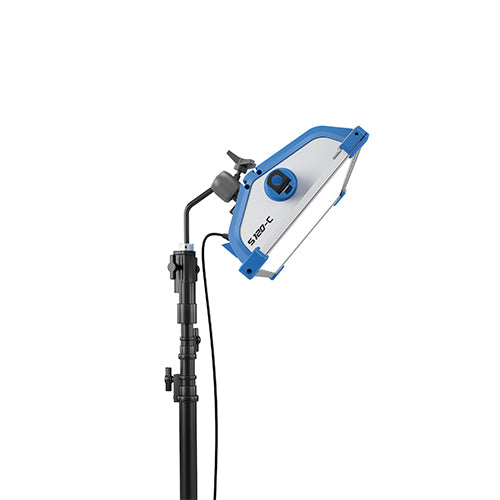
High-output LEDs require significant current to maintain full-spectrum color accuracy. Professional professional lighting setups often utilize dual battery plates to combine the voltage of two 14V or 26V batteries. For even more demanding ARRI lighting solutions, 48V power blocks are the standard. These blocks provide the sustained high-discharge rates necessary for large panels without the thermal issues associated with lower-voltage systems. Balancing portability with high-intensity output requires a tiered approach, using on-board batteries for fill lights and larger blocks for keys.
Portable Power Stations for the Production Hub
When traditional petrol generators are too loud or restricted by local regulations, silent portable power stations become essential. These units utilize LiFePO4 chemistry to provide thousands of charge cycles and high-capacity storage, often exceeding 1000Wh. They're perfect for managing the DIT station, where consistent power for RAID drives and laptops is non-negotiable. Integrating solar recharging allows for multi-day remote productions where access to a grid is impossible, ensuring your portable power solutions for cinema cameras and support gear remain topped up through renewable energy.
Implementing a Professional Power Management Strategy with UBMS
A successful production isn't defined solely by the hardware on set, but by the technical infrastructure that supports it. High-stakes filming environments require a strategic approach to power that extends beyond simple battery swaps. Implementing a professional power management strategy involves integrating portable power solutions for cinema cameras into a larger, maintained ecosystem. This ensures that every component, from the camera sensor to the wireless video village, operates within safe electrical parameters. Professional gear requires authorized technical support to maintain peak performance, especially when operating in the demanding climates often found in national production hubs.
Authorized Sales and Technical Expertise
Purchasing your equipment from a professional media solutions provider offers benefits that go far beyond a simple transaction. UBMS acts as a dedicated technical partner, offering authorized access to global brands like Sony and ARRI. This relationship ensures you receive the latest 2026 battery technology and firmware updates that optimize power draw. Our team provides tailored advice for regional production environments, helping you navigate the challenges of high-ambient temperatures that can accelerate battery degradation. We assist in system integration by designing custom power plates and distribution systems for complex, multi-accessory rigs that standard off-the-shelf solutions can't support.
Long-term Maintenance for Power Reliability
Maintaining reliable portable power solutions for cinema cameras throughout their lifecycle is essential for avoiding unexpected field failures. The UBMS Service Center, backed by over 25 years of industry experience, provides comprehensive health diagnostics for your battery fleet. Lithium-ion cells naturally lose capacity over time, and our scheduled testing identifies units that no longer meet the 20% safety margin required for professional uptime. We don't just test cells; we repair and maintain the entire power chain, including distribution boxes, D-Tap cables, and high-voltage chargers.
Our service protocols ensure that your power solutions meet national safety and transport standards, including the latest 2026 IATA flight regulations. For national broadcast and cinema projects, this level of technical oversight is a requirement for logistical excellence. By partnering with an authorized service center, you protect your hardware investment and ensure that your production remains rolling, regardless of the remote environment's rigors.
Building a Resilient Production Infrastructure
Mastering your remote production energy needs requires more than just high-capacity batteries. It demands a technical understanding of voltage regulation, a precise calculation of every watt drawn by your rig, and a commitment to maintaining cell health through professional diagnostics. By standardizing your mount ecosystem and adhering to 2026 flight safety regulations, you ensure that your production remains mobile and compliant across global borders, avoiding costly delays at transit hubs.
UBMS stands as your dedicated technical partner in this journey. As an authorized distributor for ARRI and Sony, we provide the hardware and national system integration expertise needed for complex cinema workflows. Our expert service center support ensures your portable power solutions for cinema cameras remain reliable throughout their operational lifespan, protecting your investment from the risks of environmental degradation and unexpected cell failure during critical takes.
We're here to help you engineer a power plan that keeps your vision bright and your cameras rolling in any environment.
Frequently Asked Questions
Can I take cinema batteries on a plane for national travel?
You can carry cinema batteries on a plane, but they must remain in your carry-on baggage. According to 2026 regulations, lithium-ion batteries under 100Wh are generally permitted without prior airline approval. For batteries between 101Wh and 160Wh, you're typically limited to two units and require airline authorization. Any battery exceeding 160Wh is strictly forbidden on passenger aircraft. Always protect terminals with caps or individual pouches to prevent short circuits during transit.
What is the difference between V-Mount and Gold Mount batteries?
The primary difference lies in the physical mounting mechanism and locking security. V-mount batteries utilize a wedge-shaped bracket that's a global standard for versatility across various brands. Gold mount batteries, developed by Anton Bauer, use a three-pin sideways locking system that offers superior mechanical stability in high-vibration environments. While V-mount is more common internationally, Gold mount is often preferred for heavy-duty handheld work where accidental detachment must be avoided at all costs.
How many Watt-hours do I need for a full day of shooting?
Determining your daily requirement depends on the total wattage of your rig and your desired runtime. For a standard 10-hour day with a rig drawing 70W, you'll need approximately 700Wh of total capacity. It's essential to add a 30% safety buffer for environmental factors, bringing the total to 910Wh. This typically equates to carrying ten 98Wh batteries to ensure continuous operation while staying within flight-safe limits for individual cells.
What is D-Tap and why is it essential for cinema accessories?
D-Tap, also known as Power Tap, is a two-pin connector that provides 12-14V DC power directly from the battery or mounting plate. It's essential for portable power solutions for cinema cameras because it allows a single battery to power multiple accessories simultaneously. This includes field monitors, wireless video transmitters, and follow-focus motors. Using D-Tap cables simplifies your rig's cable management and ensures all components share a synchronized power source.
Are portable power stations better than traditional generators for film sets?
Portable power stations are often superior for remote sets because they operate silently and produce no exhaust fumes. This is a critical advantage for sound recording and indoor environments where traditional petrol generators are prohibited. Modern stations also support solar recharging for multi-day shoots. While traditional generators still handle massive lighting loads better, battery stations provide a cleaner, more reliable hub for DIT stations, laptop charging, and high-efficiency LED fixtures.
How do I protect my cinema batteries in high-temperature environments?
High temperatures are the primary cause of accelerated battery degradation and capacity loss. You should keep all lithium-ion cells in shaded, well-ventilated areas and avoid charging them immediately after a high-draw discharge when they're still hot. If you're working in extreme heat, use insulated, ventilated cases for transport. If a battery feels excessively hot or shows signs of swelling, contact an authorized service center for immediate health diagnostics and safety testing.
Can I power an ARRI Alexa with a standard V-mount battery?
You can power older ARRI Alexa models with a standard V-mount battery if the battery's continuous discharge rate matches the camera's draw. However, the newer Alexa 35 requires a native 24V B-mount system for peak performance. Using 14V V-mount batteries on high-voltage cameras often requires specialized power-boosting plates, which can increase heat and reduce efficiency. We recommend using native mounting plates to ensure equipment safety and maintain a stable, high-performance cinema workflow.
What should I do if my cinema battery stops holding a charge?
If your battery fails to hold a charge or shows inconsistent voltage, you should immediately send it to an authorized service center like UBMS. Attempting to DIY repair lithium-ion cells is extremely dangerous and voids all warranties. Professional technicians use specialized diagnostic tools to check cell health and internal circuitry. Regular maintenance at a dedicated service center ensures your portable power solutions for cinema cameras remain reliable and safe for long-term professional use.


