

Camera Sensor Sizes for Video: 2026 Professional Guide
Choosing a sensor format based solely on the "bigger is better" mantra is a fundamental misunderstanding of modern cinematography. While the industry often pushes Full Frame as the ultimate standard, the reality is that your sensor choice is a creative variable that dictates your entire optical and logistical ecosystem. Understanding camera sensor sizes for video is about more than just resolution; it's about how your choice impacts depth of field, low-light performance, and lens compatibility. Selecting the wrong format can lead to unexpected crop factors and technical inconsistencies that compromise your visual intent.
You've likely experienced the frustration of trying to calculate focal length equivalence or wondering why a specific lens feels inconsistent across different camera bodies. It's a common challenge for professionals who require absolute precision in their visual storytelling. This 2026 guide will help you master the technical and creative impact of sensor formats so you can select the right tool for any production. We'll explore the critical differences between Super 35 and Full Frame systems, provide clear methods for calculating field of view, and help you match the right glass to your imaging sensor with total confidence.
Key Takeaways
- Learn how sensor surface area directly impacts photon collection, influencing both dynamic range and signal-to-noise ratios in professional workflows.
- Master the nuances of understanding camera sensor sizes for video to accurately predict how specific formats like Full Frame and Super 35 will render your image.
- Gain the ability to calculate crop factors and field of view changes, ensuring you select the correct cinema lenses for your intended composition.
- Identify which sensor format aligns with your project's logistical needs, whether you require the shallow depth of field of Large Format or the deep focus of broadcast-standard sensors.
- Access professional insights on matching high-end imaging tools to specific narrative styles, from cinematic feature films to fast-paced documentary environments.
What is a Camera Sensor and Why Does Size Matter for Video?
The camera sensor serves as the silicon heart of any digital imaging system; it's the critical component responsible for converting incoming light into digital data. In the context of understanding camera sensor sizes for video, the physical dimensions of this component dictate the total surface area available to capture photons during an exposure. A larger surface area generally translates to a higher full-well capacity, allowing the sensor to handle a broader range of light intensities before clipping. This direct relationship between size and light-gathering capability is why larger formats typically offer superior dynamic range and significantly better signal-to-noise ratios compared to their smaller counterparts.
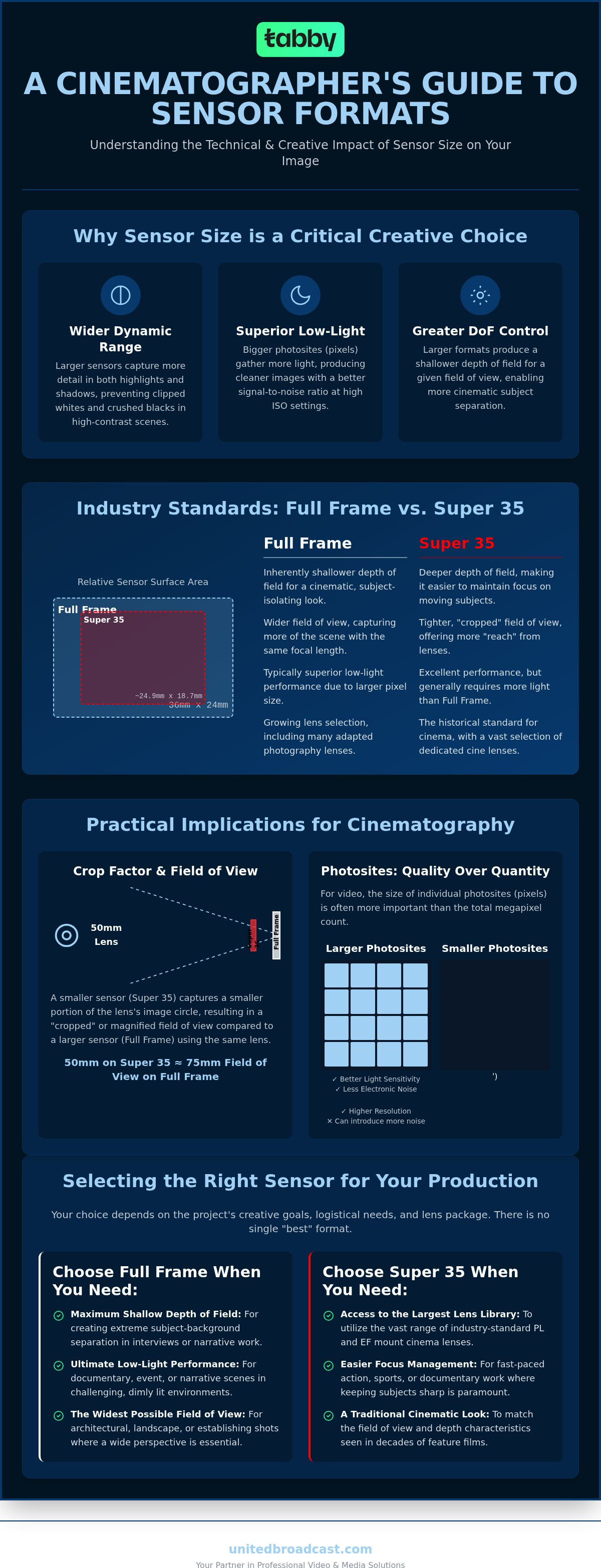
The industry uses the 35mm full-frame format, which measures approximately 36x24mm, as the primary reference point. This standard originates from the legacy of 135-format film photography and provides a baseline for comparing field of view and depth of field across various professional video cameras. When you select a sensor size, you aren't just choosing a resolution; you're choosing the physical foundation of your image's texture and light-handling characteristics.
The Role of Photosites in Image Acquisition
Photosites are the individual light-collecting wells on the sensor's surface. When you're understanding camera sensor sizes for video, it's vital to look beyond the total megapixel count and consider the pixel pitch. Larger photosites possess a greater surface area for photon collection, which inherently improves low-light sensitivity. This is why a 12MP full-frame sensor often outperforms a 50MP small sensor in video applications; the larger individual pixels on the 12MP sensor produce a much cleaner signal with less electronic noise at high ISO settings. Additionally, larger photosites help avoid the diffraction limits that can soften images on high-density, small sensors when stopping down the aperture.
Common Terminologies: Formats vs. Aspect Ratios
Professional cinematographers must distinguish between the physical sensor dimensions and the active imaging area used for specific recording modes. While a sensor might have a 3:2 or 4:3 physical aspect ratio, video is frequently captured in a 16:9 window, which effectively crops the top and bottom of the sensor. High-end digital cinema cameras often offer "Open Gate" modes that utilize the entire sensor area, providing maximum flexibility for anamorphic workflows or post-production reframing. Optical format is the traditional measurement of sensor size, historically based on the outer diameter of the vacuum tubes used in early television cameras.
The Technical Impact of Sensor Dimensions on Video Performance
The physical size of a sensor doesn't just change the view; it fundamentally alters the signal quality of your footage. Larger sensors possess a higher full-well capacity, meaning each photosite can hold more electrical charge before saturating. This translates to a wider dynamic range, which is essential for capturing detail in both the bright sky and deep shadows of a single frame. In high-contrast environments, such as outdoor shoots in the Middle East, this extra latitude prevents highlight clipping that would otherwise compromise a professional production.
Low-light performance is another area where sensor dimensions prove decisive. By spreading the resolution across a larger surface area, each pixel receives more photons. This reduces the need for aggressive electronic gain, resulting in a cleaner image with significantly less fixed-pattern noise. Thermal management is also a practical consideration. Larger sensors often dissipate heat more effectively than smaller, densely packed sensors. This is a vital advantage when operating digital cinema cameras in high-ambient UAE temperatures, where overheating can lead to increased sensor noise or system instability.
Sensor readout speed often correlates with size and architecture. While larger sensors capture more data, the time it takes to read every row can lead to rolling shutter artifacts. However, modern flagship sensors utilize stacked designs to mitigate these effects, ensuring that vertical lines remain straight even during fast pans. Understanding camera sensor sizes for video requires looking at these engineering trade-offs to ensure the hardware matches the movement of your production.
Dynamic Range and Signal Clarity
Maintaining signal integrity is the hallmark of a high-end broadcast or cinema workflow. Larger formats allow for a higher signal-to-noise ratio, ensuring that shadows remain clean rather than muddy during the color grading process. This is particularly useful when grading log footage for HDR delivery where every bit of data counts. For a deeper look at how these sensors integrate into modern workflows, consult The Ultimate Guide to Professional Video Cameras in 2026.
Depth of Field and Aesthetic Control
The physics of understanding camera sensor sizes for video dictates that larger sensors produce a shallower depth of field when using equivalent apertures and field-of-view lenses. To match the framing of a 50mm lens on a Full Frame sensor, a Super 35 camera requires a wider 35mm lens. This change in focal length alters the depth of field, making Full Frame the preferred choice for narrative styles that require extreme background separation. Conversely, Super 35 remains a staple because it offers a more manageable focus plane, which is often preferred for fast-paced documentary work or when using vintage cinema glass. If you need help configuring a camera system for a specific climate or production style, you can speak with our technical specialists for tailored advice.
Comparing Industry Standard Formats: Full Frame vs. Super 35
Selecting a sensor format is a strategic decision that influences your entire hardware package. While technical specifications provide the data, the choice between formats often comes down to the desired aesthetic and the existing lens inventory. Understanding camera sensor sizes for video requires a clear comparison between the modern "Large Format" trend and the established standards that have defined cinema for decades. Each format offers a unique set of optical characteristics and logistical requirements.
- Full Frame (36x24mm): Once reserved for high-end photography, this format has become the benchmark for premium digital cinematography. It offers a distinct "large format" look characterized by smooth highlight roll-off and a grander sense of scale.
- Super 35 (approx. 24x18mm): This has been the motion picture standard for over a century. Its dimensions closely match the imaging area of a 3-perforation 35mm film frame, making it the most familiar format for veteran cinematographers.
- Micro Four Thirds (MFT): Measuring roughly 17.3x13mm, MFT sensors allow for incredibly compact camera bodies and lenses. This format is a staple for documentary filmmakers who need to remain mobile without sacrificing professional image quality.
- Medium Format: Representing the ultra-high-end frontier, medium format sensors exceed the dimensions of full frame. These massive sensors are utilized in specialized productions where extreme resolution and tonal depth are the primary requirements.
Full Frame: The Large Format Revolution
The shift toward larger imaging areas has transformed the industry. Many modern productions now prioritize Sony Alpha camera and lenses to achieve the shallow depth of field and immersive perspective associated with full-frame sensors. However, this aesthetic comes with logistical trade-offs. Full-frame lenses are physically larger and heavier; the razor-thin focus planes require a highly skilled focus puller to maintain sharpness. This format is ideal for high-end commercials, feature films, and architectural projects where visual impact is paramount.
Super 35: The Versatile Workhorse
Despite the rise of large format, Super 35 remains the preferred choice for a vast majority of broadcast and television productions. Its smaller dimensions offer a more forgiving depth of field, which is essential for live environments and fast-paced episodic work. One of its greatest strengths is its compatibility with a legendary library of cinema glass. Many iconic PL-mount lenses were designed specifically for the Super 35 imaging circle and won't cover a full-frame sensor without vignetting. When understanding camera sensor sizes for video, it's clear that Super 35 provides a balance of optical variety and technical reliability. You can explore our range of professional video cameras to see how these formats are implemented in current flagship models.
Practical Implications for Cinematography: Crop Factors and Lenses
Mastering the relationship between glass and silicon is a prerequisite for any professional cinematographer. While we've compared the aesthetic differences of formats, the practical reality of understanding camera sensor sizes for video involves calculating how a lens's physical focal length translates to a specific field of view. This is where the concept of crop factor becomes essential. Crop factor is a mathematical ratio used to compare the diagonal measurement of a sensor against the 35mm full-frame standard.
Consider a 50mm prime lens. On a full-frame sensor, it provides a natural perspective similar to human vision. However, when mounted on a Super 35 sensor with a 1.5x crop factor, that same 50mm lens produces a narrower field of view equivalent to a 75mm lens on full frame. It's vital to remember that the physical focal length remains 50mm; only the framing changes because the smaller sensor is capturing a smaller portion of the lens's projected image. This effect is particularly noticeable in wide-angle cinematography. Achieving a broad perspective on a smaller sensor requires much shorter focal lengths that can introduce unwanted edge distortion.
Understanding Lens Image Circles
Every lens projects a circular image onto the sensor plane. Professional lenses are designed to cover specific imaging circles. Using a full-frame lens like the Sony FE 100-400mm G Master on a Super 35 camera is a common practice because the sensor sits comfortably within the lens's large projection. Conversely, mounting a lens designed for Super 35 on a full-frame body will result in visible dark corners. Vignetting occurs when the lens image circle is smaller than the sensor. Selecting lenses with adequate coverage ensures you utilize the full potential of your imaging system without technical flaws.
Equivalence in Focal Lengths
Maintaining visual consistency across a multi-camera shoot requires precise focal length equivalence. If your primary camera is full frame and your secondary camera is Super 35, you'll need to adjust your lens choices to match the framing. Speed boosters, or focal reducers, are valuable tools in these scenarios. They use optical elements to shrink the image circle of a full-frame lens onto a smaller sensor, effectively canceling the crop factor while gaining an extra stop of light. This allows for a more seamless match between different sensor formats during the edit. Understanding camera sensor sizes for video helps you anticipate these optical challenges before you reach the set.
Selecting the Right Sensor Format for Your Production Needs
Choosing a sensor format is an investment in a specific production ecosystem that dictates your workflow from capture to delivery. In narrative filmmaking, Large Format and Full Frame systems currently dominate the professional landscape. This preference stems from a demand for high-end aesthetics, characterized by a specific textural quality and perspective that smaller formats struggle to replicate. However, for documentary and news gathering, the benefits of smaller sensors often outweigh the aesthetic allure of Full Frame. Smaller sensors facilitate deeper focus, which is crucial when shooting unscripted content where there's no opportunity for a second take. They also allow for significantly lighter lens kits, reducing physical strain during long production days in the field.
High-speed cinematography introduces another layer of complexity to understanding camera sensor sizes for video. Many cameras utilize sensor windowing to achieve high frame rates, effectively cropping the sensor to reduce the data load on the processor. This means your 4K Full Frame camera might only output 2K or HD when shooting at 120fps or higher. You must account for this shift in field of view and resolution during the planning phase to avoid composition surprises on set. Professional planning requires matching these technical limitations with the creative requirements of the script.
Budgetary considerations must extend beyond the camera body itself. While a Full Frame sensor might fit the initial hardware budget, the cost of a complete lens ecosystem capable of covering that larger imaging circle can be substantial. Balancing the sensor's capabilities with the financial reality of the required optics is a hallmark of professional production management. It's often more effective to invest in a high-quality Super 35 system with premium glass than a Full Frame body paired with inferior optics.
Workflow and Data Management
There is a direct correlation between sensor size, resolution, and data storage requirements on set. Larger sensors capturing high-bitrate RAW data demand robust storage solutions and high-performance post-production workstations for color grading. These sensors also require meticulous care to maintain peak signal clarity. Ensure your sensors are regularly maintained at a professional camera service center to prevent dust spots or calibration issues from compromising your footage.
The Future of Sensor Technology in 2026
As we move through 2026, advancements in global shutter technology are becoming more prevalent in large-format sensors, eliminating rolling shutter artifacts entirely. We're also seeing the integration of AI-assisted autofocus systems that utilize sensor-level data to track subjects with unprecedented accuracy. Understanding camera sensor sizes for video is the first step toward successful system integration, ensuring every component of your cinema rig works in harmony to deliver results that meet global standards.
Optimizing Your Imaging Workflow for Future Success
Mastering technical nuances is what separates a standard project from a high-end production. The choice between Full Frame and Super 35 isn't just about size; it's a strategic decision affecting your lens ecosystem and visual narrative. Precision in calculating crop factors and ensuring proper coverage is essential to understanding camera sensor sizes for video in any professional environment.
United Broadcast & Media Solutions (UBMS) serves as a dedicated technical partner for filmmakers and broadcast specialists across the region. As an authorized distributor for global leaders like ARRI, Sony, and RED, we provide tools for complex system integration and high-end broadcast studio gear. Our technical service center offers expert support for UAE-based productions, ensuring your hardware remains calibrated for global standards.
We look forward to supporting your next creative endeavor with the precision and reliability your production deserves.
Frequently Asked Questions
Is a bigger sensor always better for video quality?
Quality is subjective and project-dependent. While larger sensors provide better signal-to-noise ratios, they aren't always the superior choice. Smaller sensors are often preferred for documentary work because they offer a deeper plane of focus. This makes it easier to keep moving subjects sharp without the extreme precision required by full-frame systems. You must choose the size that fits your specific logistical and creative needs.
What is the standard sensor size for professional cinema?
Super 35 remains the traditional industry standard for motion picture production. It provides a familiar aesthetic that matches decades of cinematic history. However, the industry is seeing a significant shift toward Full Frame for high-end commercials and feature films. Both formats are considered professional standards, and the choice depends entirely on the specific visual requirements and lens inventory of your production.
How does crop factor affect my lens choice for video?
Crop factor dictates the framing of your image rather than changing the lens's physical properties. Understanding camera sensor sizes for video allows you to calculate the equivalent field of view to ensure your shots match your storyboard. For instance, a 35mm lens on a Super 35 sensor provides a framing similar to a 50mm lens on a Full Frame body. This calculation is vital for maintaining consistency across different camera bodies.
Can I use full-frame lenses on a Super 35 camera?
You can safely use full-frame lenses on Super 35 bodies without any technical issues. Because the lens projects an image circle larger than the sensor, the camera only records the center portion of the glass. This often results in better image quality, as the sensor avoids the softer edges and vignetting that can occur at the periphery of the lens's projection. It's a common way to utilize premium glass across multiple systems.
Why do professional broadcast cameras often use smaller 2/3-inch sensors?
Broadcast cameras utilize 2/3-inch sensors to accommodate the extreme zoom ratios required for live sports and events. These smaller sensors allow for lenses with 100x zoom ranges that would be physically impossible to build for Full Frame systems. Additionally, the deep focus provided by smaller sensors is essential for tracking fast-moving action in unscripted environments where there's no time for precise focus pulling.
Does sensor size affect the resolution (4K vs 8K) of my video?
Sensor size and resolution are independent variables, though they influence each other's performance. You can find 4K resolution on both tiny smartphone sensors and massive medium-format sensors. However, a larger sensor with the same resolution will have larger photosites. This results in better light collection and less electronic noise compared to a small sensor with high pixel density. Larger sensors generally handle high resolutions with much cleaner results.
How do I clean a professional camera sensor safely in the UAE?
Sensor cleaning in the UAE requires a controlled, dust-free environment to prevent sand and humidity from causing damage. While you can use specialized swabs and high-purity fluids for minor spots, we recommend visiting a professional service center for deep cleaning. Our technicians use laboratory-grade tools to ensure your sensor remains free of debris without risking the delicate optical low-pass filter. Regular maintenance is essential in sandy climates.
What is the 'Large Format' look everyone is talking about?
The 'Large Format' look refers to the unique optical characteristics of sensors that are Full Frame or larger. This aesthetic is defined by a shallower depth of field and a more immersive perspective at wider focal lengths. Understanding camera sensor sizes for video is the key to achieving this specific cinematic texture, which is currently highly sought after for premium narrative content and high-end commercials.


