

PTZ Camera Workflow Integration: The 2026 Professional Buying Guide
What if your remote production could match the color science of a high-end cinema rig while cutting your on-site crew requirements by half? Most broadcast engineers in the UAE feel the pressure of managing hybrid environments where traditional SDI stability meets the growing flexibility of IP protocols like NDI 6.3.2. It's often frustrating when latency issues or mismatched sensors compromise a live 4K60 stream. Mastering a modern PTZ camera workflow integration requires more than just high-end hardware; it demands a synchronized ecosystem that bridges the gap between robotic convenience and cinematic quality.
You'll discover how to seamlessly integrate high-performance pan-tilt-zoom cameras into your production environment for superior efficiency and broadcast-quality results. This guide explores the latest advancements in Dante AV and SRT protocols, strategies for matching PTZ output with manual cinema cameras, and how to scale your infrastructure for the 2026 media landscape. We will examine flagship solutions like the Sony BRC-AM7 and the latest Canon firmware updates to help you build a reliable, remote-ready studio that meets international standards.
Key Takeaways
- Understand the transition of PTZ technology from basic surveillance to high-end robotic production tools featuring 1-inch Exmor RS sensors for cinematic depth of field.
- Evaluate the technical trade-offs between NDI, SDI, and VISCA over IP to ensure a low-latency PTZ camera workflow integration that scales with your existing infrastructure.
- Compare flagship 4K60 robotic solutions, such as the Sony BRC-AM7, to find the right balance between AI-driven auto-framing and manual broadcast precision.
- Determine the most efficient control method for your environment, whether utilizing dedicated hardware like the Sony RM-IP500 or flexible software-based management platforms.
- Identify why professional system integration and local technical support are critical for maintaining broadcast standards and long-term reliability in the UAE media landscape.
The Evolution of PTZ Cameras in Professional Media Production
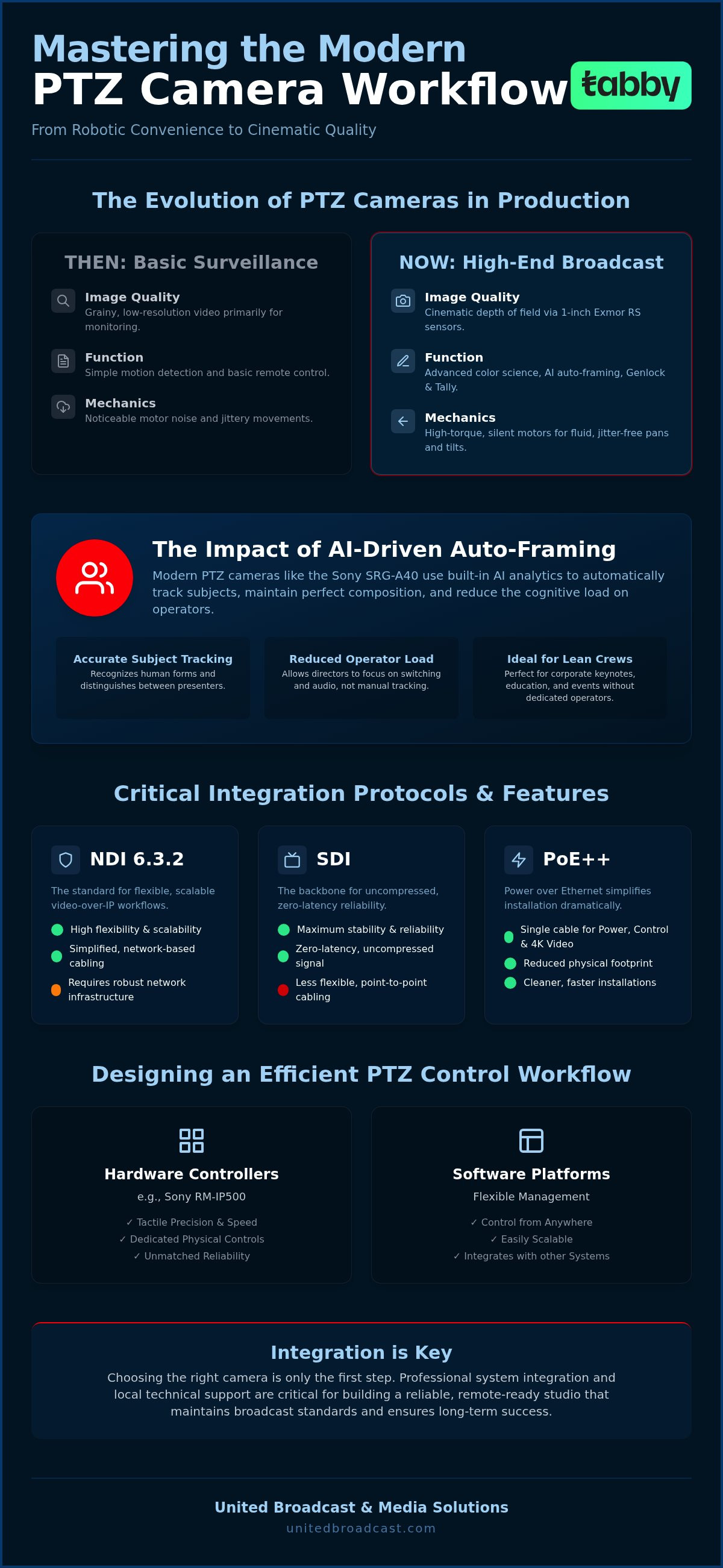
The perception of pan-tilt-zoom systems has undergone a radical transformation within the broadcast industry. What were once considered grainy, low-resolution tools for facility surveillance have evolved into sophisticated robotic production units capable of anchoring national news programs and high-end corporate events. Modern professional video cameras in the PTZ category now rival traditional camcorders in image quality and mechanical precision. This shift is driven by the demand for higher efficiency in UAE production environments, where studios seek to maximize output while optimizing manpower. By replacing manual camera positions with robotic units, a single operator can manage a multi-angle shoot from a centralized gallery, significantly reducing the overhead costs of live events.
A significant technical milestone in this evolution is the integration of 1-inch Exmor RS CMOS sensors. Unlike the small sensors found in older models, these large-format chips provide a shallower depth of field and superior low-light performance, allowing for the cinematic aesthetic previously reserved for digital cinema rigs. PTZ camera workflow integration is the unified synchronization of remote control signals and video transport protocols to facilitate low-latency, multi-camera production from a single interface. This level of cohesion ensures that robotic cameras are no longer isolated peripherals but core components of the broadcast chain.
Broadcast Grade vs. Security PTZ: Knowing the Difference
Selecting the right hardware requires an understanding of the fundamental gap between security-grade and broadcast-grade equipment. Professional media production demands advanced color science that allows for seamless matching with manual cinema cameras. While a security unit focuses on simple motion detection, a broadcast PTZ provides extensive control over gamma curves, black levels, and knee settings. Pan-tilt-zoom (PTZ) camera technology designed for professional use also incorporates Genlock and Tally support. These features are essential for multi-camera environments to prevent frame-sync issues during switching and to provide visual cues to presenters. Mechanical precision is equally vital; professional units utilize high-torque, silent motors that ensure fluid, jitter-free movement even during slow-speed pans.
The Impact of AI-Driven Auto-Framing
Artificial Intelligence has become a primary differentiator in 2026 production workflows. Models like the Sony SRG-A40 utilize built-in AI analytics to track subjects with incredible accuracy, automatically adjusting pan, tilt, and zoom to maintain a perfect composition. This technology reduces the cognitive load on the technical director, allowing them to focus on switching and audio levels rather than manual tracking. In the UAE market, this is particularly beneficial for national educational broadcasts and corporate keynotes where a dedicated camera operator might not be feasible. These AI systems recognize human forms and can distinguish between multiple presenters, ensuring the framing remains consistent without human intervention.
Critical Features for PTZ Workflow Integration
Successful PTZ camera workflow integration isn't just about picking a camera with the best zoom; it's about the invisible infrastructure that carries the data. Choosing the right video transport protocol is perhaps the most critical decision in any modern setup. While NDI 6.3.2, released on April 13, 2026, has significantly improved discovery and monitoring for large-scale professional workflows, traditional SDI remains the backbone for many high-end studios. High-performance integration requires a balance between the flexibility of IP-based networks and the uncompressed reliability of hardware-direct connections. For those building out high-density environments, you can explore our range of professional PTZ solutions to see these protocols in action.
Beyond video, professional audio and power delivery are essential for a clean installation. High-end PTZ units now include dedicated XLR or 3.5mm inputs, ensuring that audio remains embedded and synchronized with the video stream. Power over Ethernet (PoE++) has become a standard requirement for UAE studio installs, allowing a single Cat6a cable to handle power, control, and 4K video. This simplified cabling reduces the physical footprint of the equipment and minimizes potential failure points during live broadcasts.
Connectivity Options: SDI, HDMI, and IP
The choice of physical output determines the maximum resolution and cable distance for your production. 12G-SDI is the gold standard for uncompressed 4K60 video, providing the stability needed for long runs without the latency inherent in some network configurations. HDMI 2.0 is typically reserved for short-range studio setups, such as connecting to local monitors or hardware switchers within a 10-meter radius. For network-centric environments, Full NDI offers high-quality, low-latency video that utilizes standard 10GbE infrastructure, making it ideal for facilities that require flexible routing across different rooms.
Synchronization and Control Infrastructure
Ensuring that robotic units behave like traditional broadcast cameras requires advanced synchronization. Genlock is a necessity for frame-accurate switching in live television, preventing the "glitches" that occur when a video switcher moves between unsynced sources. Tally light integration is equally vital, providing a visual cue so on-camera talent knows which unit is live. As noted by industry experts on the future of PTZ technology, the shift toward cloud connectivity and AI-driven control is redefining remote management. Modern systems allow engineers to configure IP settings and push firmware updates across a national network from a single dashboard, ensuring every camera in the fleet is optimized for the latest broadcast standards.
Top PTZ Cameras for Professional Production in 2026
Hardware selection represents the most tangible aspect of PTZ camera workflow integration. In the current 2026 landscape, the choice of a robotic unit is dictated by the specific demands of the venue and the required level of automation. Flagship models now incorporate onboard AI processing to handle complex tracking tasks that previously required a dedicated operator. This shift allows technical directors to maintain high production values even with limited staff on-site.
The Sony BRC-AM7 stands as the premier 4K60 robotic solution for national media houses and high-tier broadcast environments. Priced at approximately AED 43,650, this unit features advanced AI Auto-Framing that recognizes and tracks subjects with human-like fluidity. Its integration into a broadcast environment allows for high-frame-rate capture that matches the output of primary studio cameras, ensuring visual consistency across all angles. The BRC-AM7 is specifically designed to fit into 12G-SDI and NDI-based infrastructures, making it a cornerstone for modern studio builds.
In corporate and educational settings, the Sony SRG-A12 offers exceptional versatility at a more accessible price point of approximately AED 8,600. It utilizes built-in PTZ Auto Framing technology to ensure presenters remain perfectly composed without manual intervention. This model is particularly effective for large lecture halls or boardroom environments where ease of use is as critical as image quality. Its ability to stream directly over IP simplifies the overall network architecture for non-broadcast specialists.
Bridging the gap between high-end surveillance and broadcast production, i-PRO offers specialized units for unique environments. The WV-X67711-Z3L3 4K AI Outdoor units provide a ruggedized solution for remote monitoring and external studio feeds, capable of withstanding the harsh environmental conditions often found in the UAE. For indoor facilities where 4K resolution is not a primary requirement, the i-PRO WV-U61301-Z1 serves as a cost-effective 2MP option. These units are ideal for secondary angles or wide-room monitoring within a larger production ecosystem.
High-Performance 4K Robotic Cameras
The Sony BRC-X1000 remains a staple for those requiring uncompromising broadcast picture quality. It features a large 1.0-type Exmor R CMOS sensor, which provides superior low-light performance and a more natural bokeh compared to smaller sensor units. To achieve the best possible image from these sensors, it's essential to pair them with professional lighting solutions that can be adjusted to match the camera's color temperature and dynamic range.
Action and Specialized PTZ Solutions
When space is at a premium, compact Full HD units like the Sony EVI-H100S provide a reliable solution for tight studio spaces or small interview sets. For national sporting events and large-scale outdoor remote monitoring, ruggedized PTZ cameras offer the durability needed for long-term deployment. You can explore the full PTZ collection to compare specific model specifications and find the right fit for your unique production requirements.
Designing an Efficient PTZ Control Workflow
Designing an efficient PTZ camera workflow integration requires a strategic balance between manual precision and automated ease. While the cameras provide the visual data, the control layer determines how that data is manipulated in a live environment. Professionals in the UAE often debate the merits of hardware panels versus software management. Tactile reliability is key. Coordinating multi-camera orchestration from a single control point allows one technician to manage complex sequences that previously required a full team of operators.
The Sony RM-IP500 PTZ Camera Remote Controller, available for approximately AED 11,950, is a cornerstone for professional galleries. It supports up to 100 units, making it ideal for large-scale national installations. Beyond the hardware, success depends on a well-planned preset architecture. By pre-programming precise camera movements, you guarantee that every shot is repeatable and frame-perfect, regardless of the operator's experience level. This is particularly useful in UAE studios where multiple programs might share the same physical space, requiring quick resets between different show formats.
Hardware Controllers and Joysticks
Ergonomics play a vital role in long-form productions. High-quality joysticks allow for fluid, one-handed control, which is essential for tracking unpredictable subjects during live keynotes. It's about feel. A professional controller should offer customizable shortcut buttons for rapid preset recall, ensuring you're never late to a shot. Always verify that your chosen controller supports both VISCA and IP protocols to ensure it can communicate with every unit in your facility. This cross-protocol support is vital when mixing newer 4K60 units with legacy Full HD equipment.
Software and Automation Integration
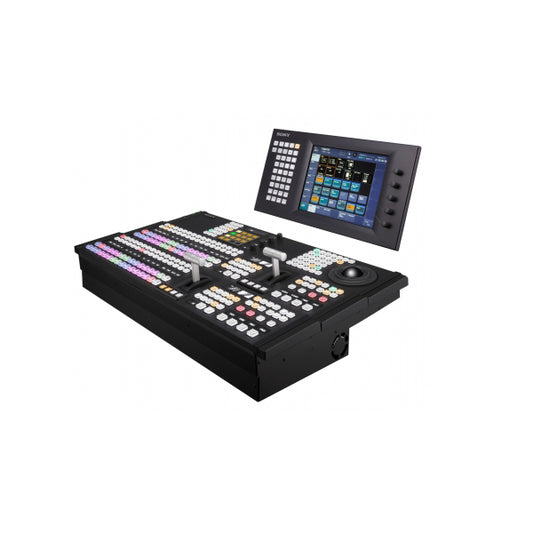
Software control is gaining traction for its ability to integrate with existing broadcast studio gear. Modern video switchers often include built-in PTZ modules, allowing the technical director to trigger camera moves directly from the switching interface. This level of integration is perfect for streamlined setups. Some facilities now use software plugins to enable remote control through NLEs or specialized streaming platforms. You can also implement automated 'Z-track' movements, which synchronize zoom and pan speeds to mimic the cinematic look of a traditional camera dolly. This technique is particularly effective for high-end corporate presentations where a consistent, polished look is required across multiple sessions.
National System Integration and Technical Support
Deploying a robotic studio requires more than just high-spec hardware; it demands a unified approach to ensure every component communicates effectively. United Broadcast & Media Solutions (UBMS) provides the professional oversight needed for complex PTZ camera workflow integration, particularly in the UAE where broadcast standards are among the highest in the region. A fragmented setup often leads to intermittent signal drops or control lag, which can be catastrophic during live events. For a broader perspective on how these units fit into a larger equipment strategy, you can refer to the Ultimate Guide to Professional Video Cameras.
Designing a future-proof environment means planning for scalability from the first day of installation. As your production requirements expand, your infrastructure should accommodate additional robotic units without needing a complete network redesign. This strategic planning protects your initial investment and allows your facility to adopt new protocols as they emerge. By focusing on a scalable architecture, you ensure that your studio remains a high-performance asset for years to come.
Expert System Integration Services
Professional integration begins with a comprehensive analysis of your network topology and physical space. Engineers at United Broadcast & Media Solutions (UBMS) specialize in optimizing signal paths for multi-camera professional video camera setups, ensuring that high-bandwidth 4K data moves without bottlenecking. This process includes everything from custom mounting solutions to on-site commissioning. Training for your national media or corporate team is also a standard part of the integration, ensuring that your staff can operate the new robotic infrastructure with total confidence.
Authorized Repair and Maintenance
The precision motors and optical blocks found in Sony, Panasonic, and i-PRO units require expert handling to maintain their longevity. Authorized service centers are the only facilities with the diagnostic tools and genuine parts necessary for high-tier maintenance. Regular servicing is vital in the UAE, where environmental factors like heat and dust can impact mechanical performance over time. By utilizing professional service contracts, you reduce the risk of unexpected downtime during critical broadcasts. National technical support ensures that your equipment stays in peak condition, preserving the fluid, silent movements that are the hallmark of professional PTZ production.
Building a Future-Ready Robotic Studio in the UAE
Modern PTZ technology has officially bridged the gap between robotic convenience and cinematic quality. By leveraging the large-format sensors and AI-driven automation discussed in this guide, your production can maintain elite broadcast standards while significantly reducing operational complexity. A successful PTZ camera workflow integration depends on more than just hardware; it requires selecting the correct protocols and ensuring your equipment is supported by a robust local infrastructure.
United Broadcast & Media Solutions (UBMS) serves as your dedicated technical partner in the UAE. As an authorized dealer for Sony, Panasonic, and i-PRO, we provide access to the latest robotic innovations alongside the peace of mind that comes from a dedicated service center and national system integration experts. Whether you're upgrading a corporate boardroom or a national broadcast facility, our team ensures your transition to a robotic workflow is seamless and reliable.
Investing in professional robotic solutions is a strategic move toward higher efficiency and consistent output. We look forward to helping you design a workflow that meets the demands of tomorrow's media landscape.
Frequently Asked Questions
What is the best PTZ camera for 4K live streaming in 2026?
The Sony BRC-AM7 is the premier choice for 4K60 live streaming in 2026 because it combines a 1-inch sensor with advanced AI tracking. It provides the broadcast-grade image quality required for national media houses and high-end corporate events. For setups requiring a balance of performance and value, the Canon CR-N300 remains a highly recommended alternative for professional streaming environments.
Can I mix different PTZ brands in the same production workflow?
You can mix various brands within a single production by utilizing universal protocols like NDI, SRT, or VISCA over IP. While this increases your hardware options, it's often more difficult to achieve perfect color consistency across different manufacturers. Successful PTZ camera workflow integration in hybrid environments usually requires a centralized management platform or a controller that supports multiple communication standards.
How many PTZ cameras can one RM-IP500 controller manage?
The Sony RM-IP500 controller can manage up to 100 individual PTZ cameras over a standard IP network. This high capacity makes it suitable for large-scale facility installations where multiple studios are controlled from a single gallery. It allows for rapid switching between units and provides tactile, ergonomic control over pan, tilt, and zoom functions during live shows.
Do I need a specialized network switch for NDI PTZ cameras?
High-performance NDI workflows require a Gigabit Layer 3 managed switch with sufficient PoE+ or PoE++ power budget. Standard consumer switches often lack the backplane bandwidth to handle multiple 4K video streams without dropping frames. It's vital to configure Virtual LANs (VLANs) to isolate video traffic from your local office data to ensure maximum stability.
What is the difference between NDI and NDI|HX for PTZ cameras?
Full NDI provides the highest image quality with the lowest possible latency but requires significant network bandwidth, often up to 150Mbps per 4K stream. In contrast, NDI|HX is a high-efficiency version that uses much less bandwidth, making it ideal for standard 1GbE networks. However, NDI|HX introduces slightly more latency, which might be noticeable in fast-paced live sports productions.
Are PTZ cameras suitable for high-end cinematic productions?
Modern PTZ cameras are increasingly used in cinematic productions thanks to the adoption of 1.0-type Exmor R sensors. These larger sensors allow for a shallower depth of field and better dynamic range than traditional robotic units. When paired with digital cinema cameras, they provide a consistent aesthetic for B-roll or hard-to-reach angles without requiring a physical operator on-site.
How do I ensure my PTZ cameras are perfectly color-matched?
Achieving a perfect match requires manually adjusting the "paint" settings, such as black levels, gamma curves, and white balance, rather than relying on auto modes. Using a professional vectorscope and a standard color chart ensures that your robotic units match your primary studio cameras. This process is essential for maintaining visual continuity when switching between different angles during a live broadcast.
What are the advantages of using AI auto-tracking in a PTZ camera?
AI auto-tracking allows a camera to follow a presenter's movements with human-like fluidity without a dedicated operator. This technology uses facial recognition and body shape analytics to maintain consistent framing, even if the subject moves rapidly. It's an excellent solution for reducing manpower in corporate keynotes and national educational broadcasts while maintaining high production values in the UAE.


