

Professional Video Cameras: The 2026 Buyer’s Guide for High-End Production
The jump from 4K to 8K is less about pixels and more about the infrastructure required to manage them. With the global market for professional video cameras projected to reach USD 49.2 billion by 2035, selecting the right hardware requires a deep understanding of how these systems integrate into modern workflows. You understand that choosing professional video cameras involves more than comparing spec sheets. It's about ensuring your equipment can withstand harsh regional climates while delivering 99% accurate, accessible content for an audience that consumes 85% of its video on mobile devices.
We agree that the technical gap between 4K and 8K requirements can feel overwhelming, especially when matching specialized lenses to new high-resolution sensors. This guide provides the expertise you need to master these technical nuances and select a system that offers a genuine return on investment. You'll gain a clear perspective on the latest 2026 firmware updates for the Canon Cinema EOS and Sony Cinema Line, alongside a roadmap for seamless system integration and the necessity of reliable local technical support.
Key Takeaways
- Learn why modern connectivity standards like 12G-SDI and NDI are now essential for professional video cameras to ensure seamless studio integration.
- Understand the technical trade-offs between Full Frame and Super 35 sensors to optimize image quality and native ISO performance for your specific environment.
- Identify the ideal form factor for your workflow by comparing the modularity of digital cinema systems with the operational efficiency of broadcast cameras.
- Evaluate the 2026 performance benchmarks for the Sony FX and Canon Cinema EOS series to select a body that integrates with your current lens collection.
- Discover how expert system integration and authorized service center support protect your investment and ensure long-term reliability in demanding production climates.
Defining the Professional Video Camera Landscape in 2026
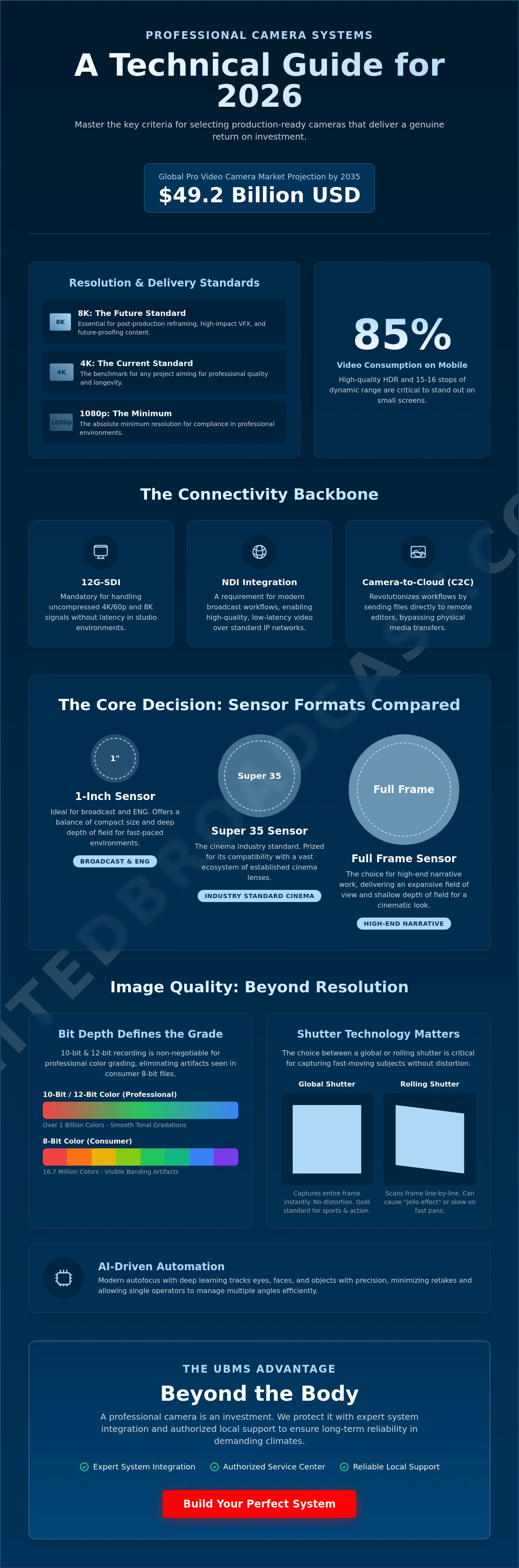
The selection of professional video cameras in 2026 is no longer defined just by sensor size, but by their place within a connected technical ecosystem. As the global market for these systems approaches a projected USD 49.2 billion by 2035, the requirements for high-end production have become more stringent. A Professional video camera must now meet specific delivery standards for resolution and accessibility. While 1080p remains the absolute minimum for compliance, 4K is the current standard for any project aiming for longevity. The shift toward 8K is gaining momentum, not just for the final resolution, but for the creative freedom it offers in post-production through reframing and high-impact visual effects.
Connectivity acts as the gatekeeper for professional status. A camera system must offer 12G-SDI to handle the massive data rates of 4K/60p or 8K signals without latency. Additionally, NDI integration has become a requirement for broadcast environments looking to leverage IP-based workflows. We also see a significant transition toward cloud-native camera-to-cloud (C2C) workflows. This technology allows production teams to bypass traditional physical media transfers, sending proxies or full-resolution files directly to remote editors seconds after the director calls "cut."
Color science and dynamic range have reached a plateau where 15 or 16 stops of latitude are standard. This latitude is essential for capturing the nuances of light in harsh national climates, ensuring that details in the brightest sky and the deepest shadows are preserved. With 85% of video consumption occurring on mobile devices in 2026, professional video cameras must deliver high-quality HDR content that pops on small screens. Delivering this level of quality is a competitive necessity for any media house or corporate studio.
The Impact of AI and Automation on Camera Selection
AI-driven autofocus is no longer a luxury for solo operators. Modern deep learning algorithms can track eyes, faces, and even specific animals with surgical precision. Automated tracking and framing features in broadcast units allow a single operator to manage multiple angles simultaneously. AI-powered autofocus reduces production costs by significantly minimizing the number of retakes caused by missed focus, allowing crews to work faster and more reliably.
Resolution vs. Bit Depth: What Truly Matters?
Resolution often grabs the headlines, but bit depth defines the professional grade. 10-bit and 12-bit recording are non-negotiable for any production requiring professional color grading; they prevent the banding and artifacts common in 8-bit consumer files. While 8K future-proofs your content for 2026 distribution standards, it's vital to balance this resolution against the increased data management and storage costs. High-resolution sensors are excellent for "single-shoot, multiple output" strategies, but they require a robust technical infrastructure to be viable over the long term.
Key Technical Criteria for Professional Camera Systems
Sensor size remains the most critical decision in any acquisition strategy. Full Frame sensors provide the expansive field of view and shallow depth of field required for high-end narrative work. Super 35 sensors, however, maintain their status as the industry standard for cinema due to their compatibility with a massive library of established cinema lenses. For broadcast and ENG applications, 1-inch sensors offer a balance of compact size and deep focus, which is often preferred for fast-paced live environments.
Native ISO and low-light performance define how a camera handles challenging environments. Most modern systems utilize dual native ISO technology, which allows for clean images at higher sensitivity levels without introducing excessive noise. This hardware-level capability is essential for productions that don't have the luxury of a fully controlled lighting setup. It ensures that the signal-to-noise ratio remains optimal even when you're pushing the sensor to its limits.
The choice between global and rolling shutters is equally important. Global shutters capture the entire frame simultaneously, eliminating the skew or "jello effect" seen in rolling shutter sensors during fast pans or high-speed action. This technical distinction is a major factor when evaluating key technical criteria for choosing a professional camera. While rolling shutters have improved significantly, global shutters remain the gold standard for sports and action-heavy cinematography.
Recording formats dictate the efficiency of your post-production pipeline. Internal 10-bit or 12-bit recording in ProRes or RAW is standard for high-end work. These codecs preserve the color information needed for precision grading. If you're unsure which recording path fits your current studio gear, our experts in system integration services can help map out your technical workflow to ensure maximum compatibility.
The Science of the Image: Dynamic Range and Latitude
Professional systems must offer at least 15 stops of dynamic range to handle high-contrast scenes effectively. This latitude allows colorists to recover details from bright highlights and deep shadows without introducing artifacts. Achieving this level of cinematic depth is a primary reason why studios invest in high-tier professional video cameras. Sensor latitude provides the safety net required for unpredictable shooting conditions.
Lens Mounts and Optical Compatibility
Mount versatility ensures your investment lasts across multiple production cycles. PL mounts provide a secure, mechanical connection for heavy cinema glass, whereas mirrorless mounts like RF or E-mount offer shorter flange distances for more optical variety through adapters. Electronic communication between the body and lens is also vital for metadata and lens correction. Choosing a body with a versatile mount allows you to utilize existing glass while remaining open to future optical innovations.
Choosing Between Cinema, Broadcast, and ENG Form Factors
While the internal sensor defines the final image, the form factor defines the daily workflow. Selecting the right physical architecture for professional video cameras determines how effectively your team can operate in the field or the studio. Digital cinema cameras are engineered for modularity, allowing directors of photography to strip the camera down for gimbal work or build it up with matte boxes and cinema lenses for narrative shoots. This flexibility is essential for high-end productions where the visual style varies significantly between scenes.
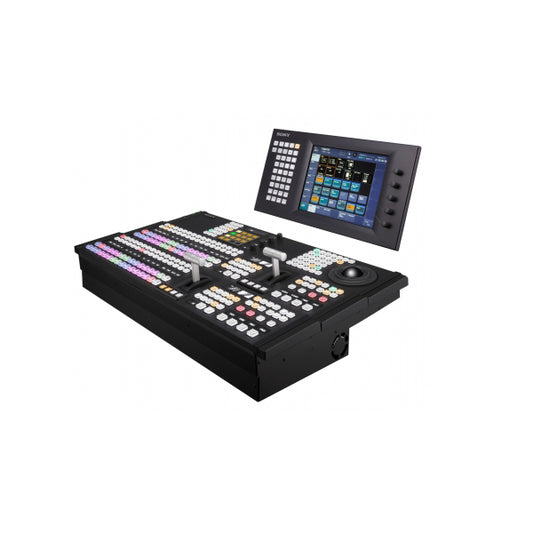
Broadcast cameras serve a different master: the live switcher. These units prioritize connectivity and remote control, enabling seamless integration into multi-camera environments. For journalists, Electronic News Gathering (ENG) cameras offer a balanced, shoulder-mounted design that's ready to shoot instantly. These units often feature integrated high-magnification zoom lenses and robust audio inputs, making them the standard for run-and-gun media. They're built for durability in harsh environments where there's no time for complex rigging.
Don't ignore the utility of hybrid mirrorless systems in a professional fleet. Their compact size is a technical asset for drone operations and tight interior shots. When weight is a critical factor, these small bodies provide high-tier 10-bit recording without the bulk of a full cinema rig. They've become the go-to choice for specialized gimbal work where a larger camera would require much heavier stabilization gear.
Broadcast Essentials: Genlock, Timecode, and Tally
Live production demands total synchronization. Genlock and Timecode inputs are mandatory to prevent frame-drift across multiple units. In a professional studio, Camera Control Units (CCUs) allow technical directors to paint the image and manage exposure from the gallery. This ensures that every one of your professional video cameras in a 12G-SDI or IP-based infrastructure matches perfectly, maintaining the visual integrity of the broadcast for the viewer.
Cinema Ergonomics: Rigging and Power Management
Cinema ergonomics are built around the concept of the "rig." High-draw sensors and external monitors require the reliability of V-Mount or Gold Mount power systems to maintain uptime. A professional setup needs ample mounting points for wireless video transmitters and electronic follow-focus motors. While these rigs increase the setup time and crew requirements, they offer the mechanical precision needed for complex camera movements and high-stakes narrative work where every millimeter of focus matters.
Standout Professional Cameras in the UBMS Collection
The selection of a camera body is the most significant hardware investment for any production house. While technical specs like bit depth and sensor size are universal, the operational identity of a brand dictates how a crew interacts with the light. The UBMS collection represents a curated selection of the industry's most reliable systems. From the cinematic latitude of ARRI and RED for feature-level work to the high-value 6K and 12K systems from Blackmagic Design, each system serves a specific production tier. Panasonic continues to differentiate itself through specialized color science in the Lumix and Varicam lines, which remains a favorite for creators seeking a unique aesthetic right out of the box.
Sony's FX series has established a dominant position in the mid-to-high tier market. The compact FX3 is often utilized as a "B-camera" or gimbal unit, while the FX9 serves as a full-frame powerhouse for high-end broadcast and corporate media. Canon offers a parallel level of reliability with its Cinema EOS line. The C300 Mark III, featuring its Dual Gain Output (DGO) sensor, provides a robust solution for narrative and documentary work where dynamic range is paramount. These professional video cameras represent the pinnacle of current imaging technology, ensuring that your production meets the high standards required for 2026 distribution.
The Versatile Workhorse: Sony FX6
The Sony FX6 has become the definitive choice for documentary and corporate crews. It balances a full-frame sensor with a compact body that doesn't sacrifice professional inputs. Its electronic variable ND filter is a standout feature, allowing operators to maintain a specific depth of field in changing light without swapping filters. Following the v6.0 firmware update in March 2026, the FX6 now features an improved menu layout and support for Blackmagic RAW recording, further extending its utility in diverse post-production pipelines. You can explore the full range of professional video cameras to see how these updates enhance the FX6's position as a production standard.
Broadcast Excellence: Canon XF605
For live events and traditional broadcast, the Canon XF605 is a 4K powerhouse. Unlike modular cinema bodies, the XF605 features a fixed 15x optical zoom lens that covers almost any live scenario. It includes professional XLR audio inputs and advanced connectivity for 4K HDR workflows. Its ability to stream directly via IP makes it a vital tool for the modern fast-paced media environment. This model is particularly effective for organizations that need a reliable, all-in-one solution that integrates seamlessly into existing studio gear. If you're building a new studio or upgrading a fleet, you can view our full inventory of professional video cameras to find the right match for your infrastructure.
Beyond the Body: The UBMS Advantage in National Media
Purchasing professional video cameras represents a significant capital expenditure. In a market as specialized as the UAE, where you buy your equipment is just as critical as the model you select. Authorized national distribution ensures that your gear is backed by legitimate manufacturer support; this is often missing from gray-market imports. This protection is vital for maintaining the operational uptime required in high-stakes environments like live broadcast or feature film production. We understand that investment protection is about more than just a receipt. It's about having a local infrastructure that can respond when gear fails in the middle of a production cycle.
Beyond the initial sale, we focus on the entire lifecycle of your hardware. The UBMS Service Centre provides professional repairs and maintenance using genuine parts. In regional climates where heat and humidity are constant factors, proactive maintenance is the only way to prevent sensor degradation and internal component failure. We position ourselves as a technical partner, not just a vendor. This means we ensure your mission-critical gear remains in peak condition through every shoot, regardless of the environmental challenges you face on location.
Technical Support and Warranty
Protecting your investment requires local expertise. When you source through authorized channels, you gain access to factory-trained technicians who understand the specific nuances of your system. Our service center handles everything from critical firmware updates to complex mechanical repairs. We also foster a community of professionals through technical training sessions and industry events. These gatherings allow operators to get hands-on experience with new technology before it hits the set. This educational support ensures a smooth transition when you're ready to upgrade your fleet or adopt new workflows.
System Integration for Modern Studios
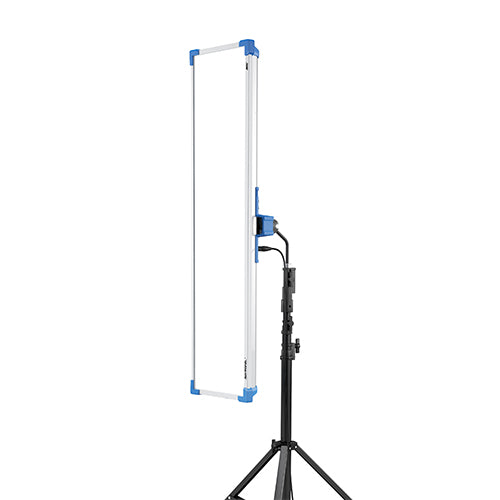
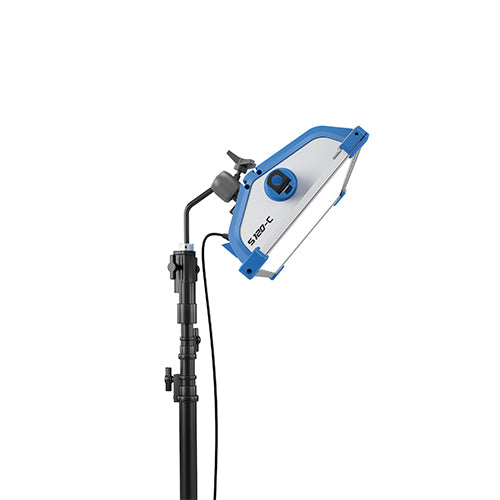
A camera body is only one component of a functional production environment. Scaling from a single-unit setup to a full-scale broadcast facility requires expert system integration services. We help you build a turnkey studio by matching your choice of professional video cameras with professional lighting equipment and high-fidelity audio systems. This holistic approach ensures that every piece of gear communicates correctly within your infrastructure. Whether you're utilizing traditional 12G-SDI cabling or moving toward IP-based NDI protocols, our integration team ensures your system is future-proof. If you're ready to upgrade your production capabilities, Browse the complete professional video collection at UBMS today.
Securing Your Production Future in 2026
The 2026 production landscape demands a balance between cutting-edge sensor technology and the technical infrastructure to support it. Selecting the right system requires more than just identifying the highest resolution. It involves understanding how your gear integrates into a 12G-SDI or IP-based environment while ensuring long-term reliability through authorized support. Making an informed choice today prevents technical bottlenecks tomorrow as delivery standards continue to evolve.
As a leading broadcast system integrator since 1997, UBMS provides the technical foundation needed for high-end media. We're an authorized distributor for Sony, Canon, and ARRI, featuring an in-house professional service center for equipment repairs to keep your mission-critical gear operational. Whether you're building a new studio or upgrading a cinema fleet, we provide the expertise to ensure your hardware delivers a genuine return on investment. You can Shop the Full Collection of Professional Video Cameras and access our comprehensive integration services today. Your next production deserves a system that's as resilient as it is capable.
Frequently Asked Questions
What is the best professional video camera for beginners in 2026?
The Sony FX30 or Canon EOS C70 are the most effective entry points for those transitioning to professional workflows. These systems provide 10-bit internal recording and professional XLR audio inputs in a compact form factor. They allow new operators to master professional color grading and exposure techniques without the steep learning curve or high cost of a full-scale digital cinema rig.
How do I choose between a cinema camera and a broadcast camera?
Base your decision on the final delivery format and the level of control required during the shoot. Cinema cameras prioritize modularity and high dynamic range for narrative storytelling where each shot is meticulously lit. Broadcast cameras are designed for efficiency in live environments, featuring integrated zoom lenses and dedicated connectivity for Genlock and tally signals to sync with a studio switcher.
Which camera brands offer the best color science for skin tones?
ARRI and Canon remain the industry leaders for natural and pleasing skin tone reproduction. ARRI’s Log C4 and REVEAL Color Science are the gold standard for high-budget feature films; they offer unparalleled highlight roll-off. Canon is preferred by many for its warm, accurate rendering of human subjects, while Sony’s S-Cinetone has become a popular choice for delivering a cinematic look with minimal post-production grading.
Is 8K resolution necessary for professional video production in the UAE?
8K is not yet a mandatory delivery standard, but it's increasingly utilized for high-end commercial projects and archival purposes. While 4K is the standard for most national broadcast and corporate media, 8K provides the resolution overhead needed for reframing and stabilizing shots in post-production. It ensures your content remains visually competitive as high-resolution display technology becomes more prevalent.
What lens mount is the most versatile for professional use?
The Sony E-mount and Canon RF-mount offer the most versatility due to their short flange focal distance, which allows for the adaptation of almost any lens type. For dedicated narrative work, the PL mount is the mechanical standard for professional video cameras. It provides the secure, lockable connection required for heavy cinema lenses and ensures consistent optical alignment during complex camera movements.
Can I use mirrorless cameras for professional broadcast work?
Mirrorless cameras are excellent for specialized broadcast applications, such as gimbal shots or secondary angles where a small footprint is required. However, they often lack the 12G-SDI ports and internal cooling systems needed for continuous, multi-hour live operation. For primary broadcast positions, dedicated studio cameras are preferred for their physical controls and seamless integration with existing camera control units.
How do I protect my professional camera from heat and dust during national shoots?
Utilize specialized dust covers and avoid lens changes in open, windy environments to prevent sensor contamination. In extreme heat, use active cooling solutions and keep the camera shaded when not in use to prevent thermal shutdown. Regular maintenance at an authorized service center is critical to remove fine sand particles from internal cooling fans and ensure the sensor remains free of microscopic debris.
What are the essential accessories for a professional cinema camera setup?
A functional cinema rig requires a high-capacity V-mount power system, a daylight-viewable monitor, and a precise follow-focus unit. These accessories ensure that professional video cameras can operate for extended periods while providing the operator with the visual feedback needed for critical focus. Additionally, a robust matte box and a set of cinema lenses are vital for controlling light and achieving the specific aesthetic required for high-end production.


