

Professional Lighting Equipment in Dubai: The 2026 Industry Guide
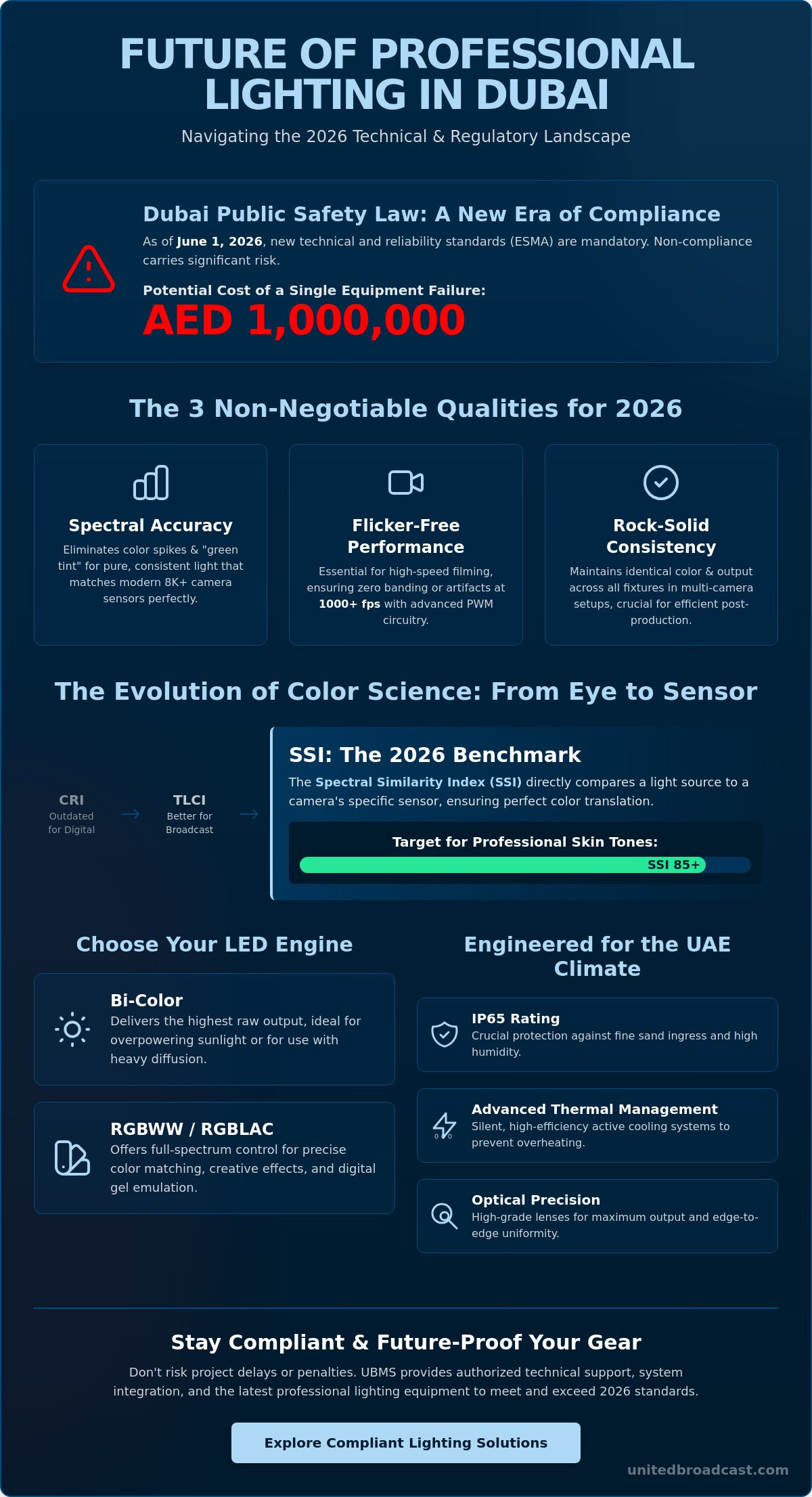
Could a single equipment failure really cost your production AED 1,000,000 under the new Dubai Public Safety Law? As of June 2026, the technical requirements for professional lighting equipment Dubai have shifted from simple illumination to a complex ecosystem of precision color science and wireless data. You likely already feel the pressure of maintaining color consistency across diverse LED brands while battling the region's extreme ambient temperatures. It's a challenging environment where traditional HMI setups are rapidly giving way to high-output LED engines that must meet strict new ESMA reliability standards to avoid costly project delays.
We understand that reliability isn't just a preference; it's a regulatory necessity for any serious broadcast or cinema professional in the UAE. This guide promises to clarify the essential technologies, brands, and technical standards defining the industry for 2026. You'll discover how to build a future-proof lighting kit that survives the heat and complies with the latest 12-digit HS code import regulations. We'll preview the shift toward RGBLAC color engines and explore the logistical support systems required to keep your production flicker-free and safe under the new legal framework effective as of June 1, 2026.
Key Takeaways
- Learn why SSI and TLCI have become the definitive benchmarks for color rendering, ensuring your footage remains consistent across complex multi-camera setups.
- Compare the technical advantages of RGBWW versus Bi-Color LED technology to determine the best professional lighting equipment Dubai for your specific production requirements.
- Explore essential lighting categories and placement strategies designed to create professional depth and visual separation in high-resolution 4K and 8K environments.
- Understand the importance of IP65 ratings and advanced thermal management to protect your gear from the UAE's extreme heat and humidity conditions.
- Gain insights into the value of authorized technical support and system integration services for maintaining long-term equipment reliability and firmware compliance.
The Foundations of Professional Lighting Equipment in 2026
Professional lighting in 2026 is defined by technical precision rather than raw brightness. While consumer grade fixtures focus on simple illumination, professional lighting equipment Dubai must deliver three non-negotiable qualities: consistency, flicker-free performance, and spectral accuracy. In high-end digital cinema, the relationship between the light source and the camera sensor has become the primary focus for technical directors. Achieving a "cinematic look" now relies heavily on how well a fixture's spectral output aligns with the specific color science of modern sensors.
Spectral consistency is the absolute priority for 2026. As production workflows move toward 8K and beyond, any minor spikes or "green tint" in the light spectrum become glaringly obvious. Modern LED stage lighting technology has evolved to support these demands, offering sophisticated control over the light's wavelength. Additionally, with the rise of high-speed filming in UAE commercial productions, fixtures must provide flicker-free performance at 1000+ fps. This requires advanced pulse-width modulation (PWM) or high-frequency driving circuitry that prevents the banding often seen in lower-tier equipment.
Understanding Colour Metrics: TLCI vs. SSI
For years, the industry relied on CRI, but that metric is now considered insufficient for professional broadcast. The Television Lighting Consistency Index (TLCI) became the standard because it measures how a camera, rather than the human eye, perceives light. However, 2026 has seen the rise of the Spectral Similarity Index (SSI). Unlike previous metrics, SSI compares a light source directly to a reference spectrum or a specific camera sensor. Matching your source to the specific spectral sensitivity of high-end Professional Video Cameras ensures that skin tones remain natural and post-production grading stays efficient. In 2026, an SSI score of 85+ is the benchmark for professional-grade skin tone reproduction.
The Importance of Build Quality for National Productions
The UAE climate presents unique challenges that demand superior build quality. Professional lighting equipment Dubai must be engineered to handle high ambient temperatures and pervasive fine dust. This makes IP65 ratings and sealed internal components essential for any outdoor or location-based set. Beyond durability, the quality of the precision optics determines the beam's throw distance and edge-to-edge uniformity. High-quality lenses within the fixture ensure that light is distributed evenly without chromatic aberration; this allows cinematographers to maintain total control over the scene's contrast and depth.
- IP65 Ratings: Critical for protection against sand ingress and humidity.
- Thermal Management: Active cooling systems that remain silent on set.
- Optical Precision: High-grade glass elements that maximize output efficiency.
LED Technology vs. Traditional Lighting: The 2026 Landscape
The transition from traditional gas-discharge and filament-based sources to advanced semiconductor technology is nearly total in 2026. While Tungsten and HMI fixtures once defined the industry, professional lighting equipment Dubai now centers on high-output LED engines. This shift isn't just about saving power; it's about precision control. Modern 1200W LED point sources now effectively challenge the output of 2.5K or even 4K HMIs. They offer the distinct advantage of immediate restrike, full dimming without color shift, and significantly lower heat generation. This thermal efficiency is vital for UAE productions, where high ambient temperatures can quickly push traditional fixtures to their physical limits.
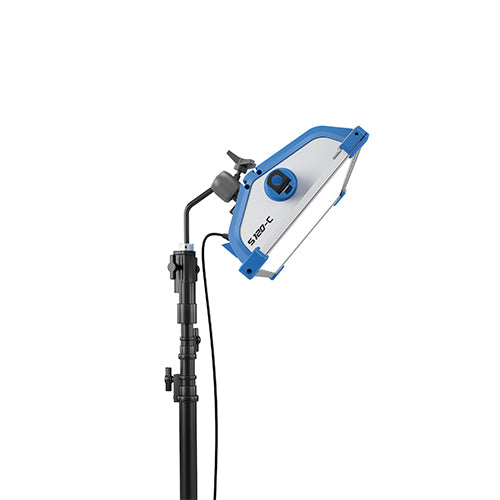
Professionals currently face a strategic choice between Bi-Colour and RGBWW (or RGBLAC) systems. Bi-Colour fixtures generally provide higher raw output, making them ideal for punching through heavy diffusion or competing with harsh midday sun. Conversely, RGBWW systems offer full-spectrum control, allowing for precise color matching to existing practicals or creative gel emulation without the light loss associated with physical filters. The rise of "Hyper-Reflectors" and Chip-on-Board (COB) technology has redefined what professionals look for in professional lighting equipment Dubai, concentrating LED power into a single, punchy source that mimics the behavior of a traditional hard light.
High-Output LED Point Sources
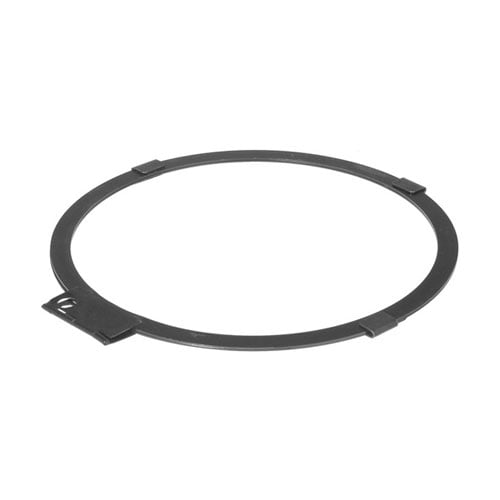
The versatility of the modern point source lies in its mounting ecosystem. While the Bowens mount remains a popular standard for mid-range modifiers, proprietary systems like the ARRI QLM (Quick Light Mount) provide the robust physical support needed for heavy professional optics. These fixtures excel in hard light applications, such as mimicking direct sunlight or creating sharp shadows. When paired with Fresnel attachments, these LEDs provide the same focusable beam control that cinematographers once expected from HMI Fresnels. You can explore these high-performance options within our curated collection of ARRI Lighting solutions.
Soft Light Panels and Flexible Solutions
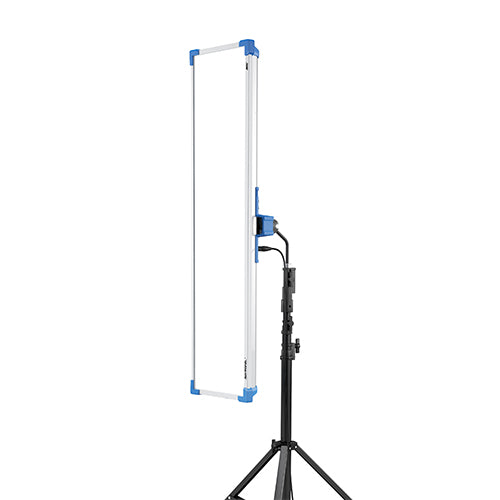
Soft light technology has moved toward internal diffusion and integrated softbox systems that reduce setup time. Beyond standard panels, LED tubes and flexible 'mat' lights are now essential for lighting tight spaces or complex car rigs. Control is now almost entirely wireless. Standard protocols like Sidus Link, Stellar, and CRMX (LumenRadio) allow gaffers to manage entire universes of lights from a single tablet. This integration ensures every fixture on set remains flicker-free and color-consistent. If you need help determining which wireless ecosystem fits your current workflow, our team can provide a technical consultation to assist with your selection.
Essential Lighting Categories for Professional Sets
Selecting the right professional lighting equipment Dubai involves organizing fixtures into functional roles that define the visual narrative. While technical metrics like SSI ensure color accuracy, the physical placement of categories like key, fill, and backlighting creates the necessary depth for high-resolution 8K sensors. A strong key light establishes the primary exposure, but it's the backlight that provides the critical separation from the background. Without this distinction, subjects often look flat on modern digital sensors, losing the three-dimensional quality that high-end broadcast standards demand.
Specialty categories have also expanded to include pixel-mappable fixtures and effects lighting. These units don't just illuminate; they provide environmental texture. Using programmable LED tubes or practical RGB sources allows gaffers to create dynamic lighting that reacts to the scene's movement, providing a level of integration that traditional hard sources can't achieve on their own.
Studio vs. Field Lighting Gear
The choice between studio and field configurations depends on cooling requirements and logistical constraints. In a dedicated broadcast studio, silent cooling is a non-negotiable feature. High-output fixtures must operate without fan noise to ensure clean audio during live takes. For national field productions, portability and power-to-weight ratios are the primary drivers. Professionals look for fixtures that provide high output while remaining compact enough for rapid relocation on set. While heavy units require robust support, the focus remains on maintaining a high-tier visual standard regardless of the environment's limitations.
The Role of Intelligent Lighting Controllers
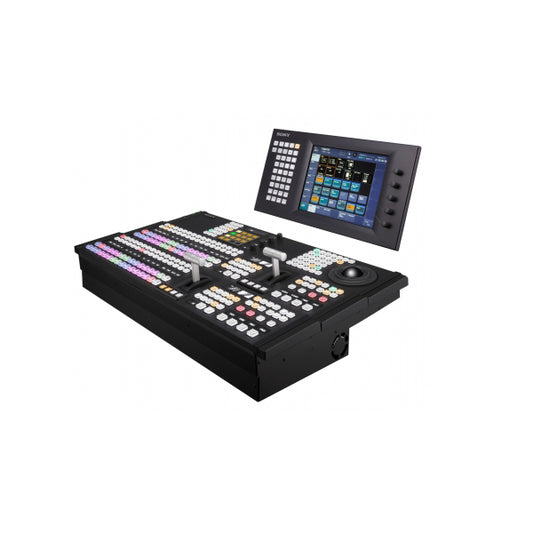
As lighting setups become more complex, the industry has transitioned from basic dimming to sophisticated network-based control. While DMX512 is still used, 2026 has seen a major shift toward IP-based protocols like Art-Net and sACN. These systems allow for thousands of channels to be managed over a single network cable, which is essential for large studio grids or pixel-mapped arrays. "A lighting fixture in 2026 is only as powerful as the network controlling it." Utilizing RDM-compatible controllers provides real-time feedback on fixture health, ensuring that every piece of professional lighting equipment Dubai remains within its safe operating temperature during long broadcast shifts.
Technical Considerations for Production in the UAE Climate
Operating professional lighting equipment Dubai requires more than just technical knowledge; it necessitates an understanding of environmental resilience. The UAE's high ambient temperatures and pervasive fine dust are operational risks that can lead to thermal shutdown or permanent hardware damage. Selecting fixtures with sealed housings and IP65 ratings is a mandatory step for any location-based production. These ratings ensure that sensitive internal electronics remain protected from sand ingress, which is the leading cause of premature equipment failure in the region.
Effective heat dissipation is the cornerstone of reliability for high-output LED engines. Professional brands have developed sophisticated active cooling systems that balance thermal safety with the need for silent operation. While many fixtures offer a "silent mode," using this setting in the peak of the UAE summer can be dangerous. High-end equipment utilizes advanced heat sinks and variable-speed fans that prioritize safety without compromising audio quality. This environmental awareness ensures that color consistency is maintained, as extreme heat can cause minor spectral shifts in LED emitters if left unmanaged.
Thermal Performance and Active Cooling
Reliable cooling systems are essential when fixtures run at 100% intensity for extended periods. Most professional-grade LEDs now include thermal sensors that automatically throttle output if internal temperatures exceed safe limits. To prevent this, gaffers often use external shading or active ventilation for ballasts and power supplies. It's a technical reality that even top-tier professional lighting equipment Dubai needs adequate airflow to avoid performance degradation during long outdoor shifts.
Powering the Set: Battery and Generator Safety
Sets in remote desert locations often rely on portable generators, which can introduce dangerous voltage fluctuations. Modern LED driver electronics are highly sensitive to "dirty" power; therefore, ensuring a stable, regulated supply is critical. For high-output fixtures that require significant wattage, high-voltage battery solutions like 26V or 48V systems have become the standard. These provide the necessary current without the cable loss associated with lower-voltage setups.
The choice between Gold Mount and V-Mount depends on your existing ecosystem, but the focus in 2026 is on high-draw capacity. Streamlining this power distribution is made easier with specialized tools like the ARRI Omnibar Production Kit, which centralizes power management and reduces the footprint of your cable runs. Protecting your investment starts with choosing the right power architecture. If you're planning a complex location shoot and need advice on environmental protection, you can consult with our technical specialists to ensure your kit is fully optimized.
Sourcing Professional Lighting Solutions with UBMS
In 2026, acquiring professional lighting equipment Dubai is no longer a simple transaction. It's a strategic investment that requires long-term technical support and authorized distribution. Purchasing from an authorized partner like United Broadcast & Media Solutions (UBMS) ensures you receive legitimate firmware updates and full manufacturer warranty support. This is critical for modern LED fixtures that rely heavily on software for color calibration and network stability. Without this backing, a technical glitch in a complex DMX universe could halt an entire production, leading to significant financial losses.
Reliability is maintained through our dedicated service center, where technicians provide expert repairs for professional media equipment using factory-authorized parts and specialized testing tools. This infrastructure is essential for maintaining the high standards required by national media projects. Before making a significant capital investment, we encourage professionals to visit our showroom for hands-on demos. Evaluating the color science and SSI performance of a fixture in person is the only way to ensure it meets your specific creative requirements and matches your existing camera sensors.
Expert System Integration and Studio Design
We specialize in moving beyond individual light sales to providing complete System Integration Services. Our team designs custom studio lighting grids tailored to the specific needs of broadcast environments. We look at the holistic picture, integrating lighting with Professional Video Cameras to create seamless, automated workflows. This approach ensures that your lighting, cameras, and control surfaces communicate effectively, reducing the likelihood of on-set technical errors. Our technical consultation supports the national media ecosystem by ensuring every project is built on a foundation of global standards.
After-Sales Support and Technical Training
Our commitment extends into after-sales support and specialized technical training. We provide the resources necessary to stay updated with brand-specific ecosystems, ensuring your crew can maximize the potential of new technology. Staying current with the latest control protocols and thermal management techniques is vital for high-stakes broadcast and cinema work. This partnership model positions United Broadcast & Media Solutions (UBMS) as a dependable industry pillar within the regional media landscape. We value long-term technical excellence over one-off transactions, providing the infrastructure to keep your gear operational in the most demanding environments. Explore our full range of professional lighting solutions at UBMS to find the right technical fit for your next project.
Future-Proof Your Production Lighting Strategy
Mastering professional lighting equipment Dubai in 2026 requires balancing technical precision with environmental resilience. We've explored how the shift from traditional HMI to high-output LED engines has redefined set efficiency, provided you prioritize spectral accuracy through SSI metrics and robust IP65-rated hardware. As the industry adapts to new safety regulations and extreme climate demands, having a technical partner is more valuable than simply finding a vendor. Success on set depends on equipment that stays flicker-free and color-consistent regardless of the ambient heat.
With 25+ years of industry expertise in the Middle East, United Broadcast & Media Solutions serves as a dependable pillar for technical excellence. As an authorized distributor for ARRI, Aputure, and Astera, we provide the hardware and firmware support necessary to keep your kit operational. Our dedicated UAE Service Centre is always available for technical repairs and maintenance, ensuring your investment is protected for years to come. We're here to help you navigate these technological shifts and build a lighting ecosystem that meets the highest global standards. Shop the Latest Professional Lighting Equipment at UBMS and let's elevate your next production together.
Frequently Asked Questions
What is the best lighting brand for professional cinema in the UAE?
ARRI remains the definitive standard for high-end cinema in the region, particularly for its spectral accuracy and build quality. However, brands like Aputure and Astera have become essential for their versatile LED ecosystems. In Dubai, the best brand is often defined by the availability of authorized local technical support and how well the fixture's color science integrates with your specific camera sensor.
How do I choose between LED and HMI for outdoor shoots?
LED is the superior choice for most outdoor shoots because it offers immediate restrike, battery portability, and full dimming without color shifts. While HMI is still used for massive raw output when competing with harsh midday sun, modern 1200W LEDs effectively replace 2.5K HMIs. In the UAE's heat, LEDs are generally more reliable as they generate significantly less internal heat during operation.
What are the essential lighting metrics I should look for in 2026?
You should prioritize the Spectral Similarity Index (SSI) and TLCI over the traditional CRI. For 2026 productions, an SSI score of 85 or higher is the benchmark for professional skin tone reproduction on digital sensors. Additionally, ensure the fixture is rated for flicker-free performance at high frame rates if your production involves slow-motion cinematography at 1000 fps or higher.
Can I use wireless DMX for large-scale broadcast productions?
Yes, wireless DMX protocols like CRMX by LumenRadio are now the industry standard for large-scale broadcast and cinema. These systems provide the stability and range needed to manage complex lighting universes without the logistical burden of extensive cabling. It's vital to use a dedicated transmitter ecosystem that can handle high-density wireless traffic in a modern studio environment.
How does the UAE climate affect professional lighting equipment?
The UAE's extreme heat and fine dust are the primary risks for professional lighting equipment Dubai. High ambient temperatures can trigger thermal shutdowns in fixtures with inadequate heat sinks, while sand ingress can cause internal fan failure. Always select equipment with IP65-rated housings and advanced active cooling systems designed to maintain operational stability in temperatures that frequently exceed 45 degrees Celsius.
Is it better to buy or rent professional lighting for a single project?
Buying your core lighting kit is a strategic investment for producers who require consistent color rendering and immediate equipment availability. While renting serves one-off specialty needs, owning your professional lighting equipment Dubai ensures you have access to authorized firmware updates and long-term technical support. This ownership model allows for a more predictable workflow and better integration with your existing camera and grip assets.
What is the difference between CRI and TLCI in video production?
CRI measures how a light source affects the human eye, while TLCI measures how a camera sensor perceives that same light. For video and broadcast, TLCI is the more critical metric because it accurately predicts the amount of post-production color correction required. A TLCI score above 90 is considered the professional standard for ensuring your footage looks natural and consistent across different camera brands.
How do I power high-wattage LED lights on location?
High-wattage LEDs should be powered using high-voltage battery systems, typically 26V or 48V, or regulated portable generators. Standard 14.4V batteries often lack the current required to run high-output fixtures at 100% intensity. It's essential to use power sources that provide a clean, stable voltage to protect the sensitive LED driver electronics from the fluctuations common with lower-tier portable power solutions.


