

Cinema Camera vs Broadcast Camera: A Professional Comparison for 2026
In 2026, the defining line between a cinema camera vs broadcast camera is no longer the quality of the image, but the logistical infrastructure required to deliver it. While a cinema body excels at capturing high dynamic range for post-production, the broadcast equivalent is built for the rigors of real-time signal processing and external control. You likely share the common frustration of trying to force hybrid systems into workflows where they don't belong, often leading to technical bottlenecks during live events. It's understandable to feel budget anxiety when choosing between specialized and versatile equipment in a market where 46% of users are now moving toward modular systems. This comparison provides the technical validation you need to make a confident investment in high-end gear. We'll examine why 82% of the industry still utilizes SDI backbones while others transition to SMPTE 2110 IP workflows. By the end, you'll have a clear decision-making framework to ensure your equipment acquisition aligns perfectly with your production requirements.
Key Takeaways
- Distinguish between the data-heavy RAW and Log workflows of cinema systems and the immediate, REC.709 output required for professional live environments.
- Evaluate the ergonomic trade-offs in the cinema camera vs broadcast camera debate, specifically comparing modular "brain" configurations with integrated shoulder-mount designs.
- Identify why lens choice, ranging from PL-mount primes for narrative depth to B4-mount servo zooms for versatile field work, is a critical factor in system selection.
- Match your equipment to the specific demands of your production, whether prioritizing cinematic texture for commercials or speed and reliability for live sports.
- Discover how professional system integration and local technical support in the UAE bridge the gap between high-end cinema looks and traditional broadcast galleries.
Defining the Divide: Cinema Aesthetic vs. Broadcast Reality
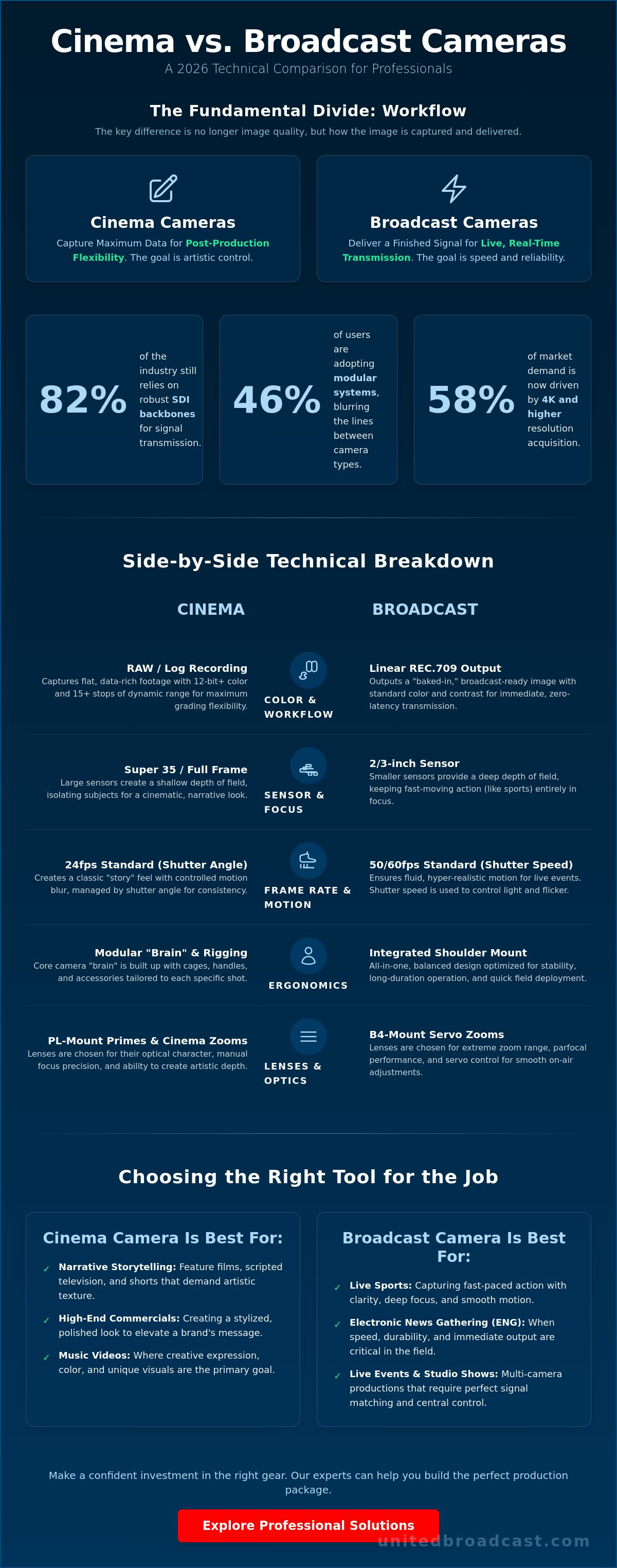
The technical landscape of 2026 has transformed the traditional cinema camera vs broadcast camera debate into a discussion about logistical priorities rather than just image quality. Historically, these two systems served entirely different masters. Cinema cameras focus on narrative storytelling, leveraging texture, high dynamic range, and deep color bit-depth to create an immersive, stylized world. In contrast, broadcast cameras prioritize "instant reality." These systems are optimized for live transmission, ensuring consistent clarity and reliable signal processing across long-duration events. While 58% of current market demand is now driven by 4K and higher resolutions, the way those pixels are captured and processed differs wildly between these two categories.
Understanding this divide requires a clear grasp of industry terminology. A Professional video camera used in Electronic News Gathering (ENG) is designed for speed, durability, and immediate output. Digital Cinema systems, however, are built for a post-production pipeline where every frame is manipulated for artistic intent. In 2026, we're seeing a fundamental shift where productions increasingly blur these boundaries, using cinema sensors in live environments to capture "cinematic broadcast" looks for high-profile streaming events.
Sensor Size and Depth of Field
The most visible difference lies in the sensor. Cinema systems typically utilize Super 35mm or Full Frame sensors. These larger physical areas allow for a shallow depth of field, which helps isolate subjects from their backgrounds. This specific aesthetic is a hallmark of high-end professional video cameras used in scripted drama. Conversely, traditional broadcast units often use 2/3-inch sensors. While smaller, these sensors are ideal for live sports and news where deep focus is mandatory. It's much easier for a camera operator to keep a fast-moving athlete in focus when the depth of field is naturally wider, ensuring the viewer never misses a moment of the action.
Frame Rates and Motion Blur
Motion handling remains a significant technical separator between the two worlds. The 24fps standard is the bedrock of cinema, providing a specific cadence that audiences associate with high-end storytelling. 24fps creates a psychological "story" feel for viewers by subtly distancing the image from the hyper-realism of everyday life. Broadcast standards usually target 50fps or 60fps to ensure fluid, life-like motion for live events and news.
Control over this motion also differs significantly. Cinema operators use shutter angle to maintain a consistent motion blur regardless of frame rate changes. Broadcast operators typically use shutter speed to manage light or eliminate flicker from artificial stadium lighting. As 46% of users transition toward modular camera systems, choosing the right tool requires knowing whether your priority is the artistic "look" or the technical "reality" of the moment.
Technical Specifications: Log/RAW vs. Linear REC.709
The technical specifications of a cinema camera vs broadcast camera define the entire production timeline. Cinema cameras act as data-gathering powerhouses. They capture RAW or Log metadata to ensure 15+ stops of dynamic range are available for the colorist. This flexibility is vital for high-end HDR delivery where shadow detail and highlight retention are paramount. Broadcast cameras operate on a different philosophy. They output a finished REC.709 signal that is "baked-in" and ready for immediate transmission. This allows for the zero-latency delivery required for live television, where there is no time for a post-production grade.
Internal recording capabilities also diverge based on these needs. Cinema systems often record to high-speed media like CFexpress Type B or proprietary drives to handle massive bitrates. Broadcast environments frequently bypass internal recording entirely, instead sending a high-quality signal through 12G-SDI or SMPTE 2110 IP links to a central gallery. While 82% of the industry still relies on SDI, the shift toward IP-based signal processing is accelerating to accommodate more complex remote productions.
Color Science and Post-Production Flexibility
In a cinema workflow, the "look" is often non-destructive. Directors and Cinematographers use Look Up Tables (LUTs) to monitor a graded image on set while the camera records a flat, desaturated Log signal. This preserves the maximum amount of color information for 12-bit grading later. Broadcast cameras require a different approach. A Vision Engineer must "paint" the camera in real-time using a Remote Control Unit (RCU). They adjust black levels, gamma, and white balance live to ensure every camera in a multi-cam array matches perfectly. This immediate precision is driving new cinematic broadcasting trends, where large-sensor cameras are adapted to work within these strict live engineering parameters.
Audio Integration and Timecode
Ergonomics and connectivity further separate these systems. Broadcast cameras are designed as self-contained units for field work. They feature multiple XLR inputs and physical dials for real-time onboard audio mixing. Cinema cameras often prioritize the sensor "brain," leaving audio to external dedicated recorders that are managed by a separate sound department. Despite these different paths, timecode remains the universal language. Jam-syncing is essential to ensure that every feed in a multi-camera broadcast or a complex film set stays perfectly aligned for the editor. If you are designing a new studio or field kit, our team can provide technical guidance on system integration to help you bridge these two worlds.
Operational Workflow: Ergonomics and Connectivity
Evaluating professional video cameras requires a deep understanding of how physical design impacts the speed of a shoot. The ergonomics of a cinema camera vs broadcast camera represent two opposite operational philosophies. Broadcast cameras utilize a fixed, shoulder-mount chassis designed for immediate operation in fast-paced environments. Cinema cameras utilize a modular "brain" that requires significant rigging before it is functional. This modularity allows for extreme customization, but it lacks the "grab-and-go" efficiency required for live news or sports.
Connectivity protocols define the logistical ceiling of a production. High-end broadcast systems rely on SMPTE Fiber or 12G-SDI for long-distance, zero-latency transmission. While 12G-SDI is a mature standard in 2026, it remains the backbone for 82% of broadcast operations. Cinema IO typically focuses on short-range monitoring and high-speed internal recording. Control systems also differ. Broadcast operators rely on Remote Control Panels (RCPs) in a gallery to adjust settings, whereas cinema operators usually manage settings via on-camera menus or wireless sidecar controllers.
Lensing choices further clarify the divide. Broadcast operators rely on B4 mount servo zooms, which offer massive focal ranges and integrated zoom rockers. Cinema sets favor PL mount prime lenses for their superior glass and artistic texture. While some 2026 hybrid productions use adapters to mix these worlds, the mechanical requirements of a live zoom vs. a choreographed focus pull usually dictate the mount choice.
Broadcast Infrastructure: CCU and Tally
The Camera Control Unit (CCU) is the heart of a broadcast workflow. It allows a single Vision Engineer to manage multiple cameras from a central gallery, ensuring color consistency across the entire array. Tally lights and return video feeds are also essential. These provide the operator with visual cues from the director and a view of the program feed. Fiber optics facilitate these complex signals over kilometers, making them indispensable for stadium and large studio environments.
Cinema Rigging and Accessories
Cinema cameras are rarely used as standalone units. They require a sophisticated ecosystem of matte boxes, follow focus units, and high-brightness external monitors. Powering these systems requires heavy-duty V-mount or Gold-mount battery solutions to sustain the high-power draw of the sensor and attached accessories. For a detailed breakdown of how to build a professional kit, refer to our guide on Essential Cinema Camera Accessories UAE. This modular approach ensures the camera can be stripped down for gimbal use or built up for a full studio configuration.
Application Scenarios: Choosing the Right Tool for the Job
For scripted narratives and commercials, cinema cameras remain the non-negotiable choice. These projects rely on the artistic texture and extreme dynamic range that only large-format cinema sensors provide. To see how these high-end aesthetics translate into professional corporate storytelling, you can discover Rubén Campos Estudio. The primary goal is a controlled environment where every frame is meticulously crafted in post-production. In these scenarios, the logistical "bottlenecks" of cinema workflows are actually features that allow for greater creative control.
For live news and sports, broadcast cameras maintain their dominance. Speed and reliability are the primary metrics for success in these fields. A broadcast operator must react to unpredictable action in real-time, relying on deep-focus sensors and integrated servo zooms to ensure the subject is always sharp. However, a common objection often arises: can a cinema camera actually function in a live broadcast environment? The answer is yes, provided the logistical infrastructure is in place. We're seeing a surge in hybrid setups where cinema "hero" cameras are integrated into a traditional broadcast chain to provide specific, high-impact shots during live events.
The Rise of Cinematic Broadcast
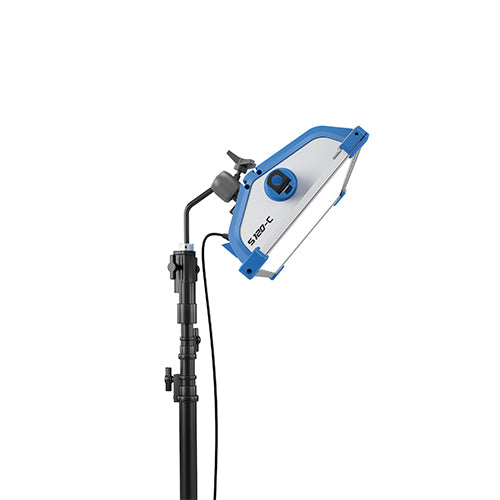
This trend is most visible in major sporting events where a single cinema camera is used for shallow depth-of-field "hero shots" during celebrations or player introductions. While the results are visually stunning, they present significant operational challenges. Tracking focus with cinema lenses in an unpredictable live setting is difficult even with modern AI-assisted autofocus. Additionally, these large-sensor looks require specific lighting considerations to maintain consistency with the rest of the broadcast. You can explore our lighting collections to understand how high-output fixtures are used to balance these cinematic shots with standard broadcast feeds.
Budget and Longevity Considerations
Investing in high-end media gear requires an understanding of the Total Cost of Ownership. Total Cost of Ownership encompasses the initial purchase price plus the ongoing expenses of maintenance, accessories, and the eventual resale value of the equipment. Cinema cameras often have shorter life cycles due to rapid sensor advancements, yet they maintain high industry demand in the UAE market for commercial work. Broadcast systems, while requiring a larger upfront investment for CCUs and fiber infrastructure, often enjoy longer operational lifespans in studio environments. If you are unsure which path offers the best return for your specific project, contact our technical consultants for a professional equipment audit.
Investing in Professional Gear: The UBMS Advantage
Choosing between a cinema camera vs broadcast camera is a significant capital expenditure that requires more than just a spec-sheet comparison. In the high-stakes environment of UAE media production, the value of your gear is inextricably linked to the support infrastructure behind it. United Broadcast & Media Solutions (UBMS) serves as a bridge between global manufacturing standards and local operational realities. Whether you're building a scripted narrative kit or a multi-camera live gallery, our role is to ensure your investment delivers a consistent return through technical reliability and logistical excellence.
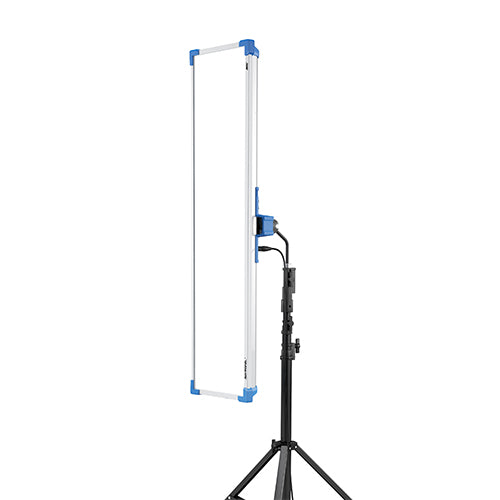
Authorized distribution is the only way to guarantee access to genuine parts, localized firmware updates, and manufacturer-backed warranties. We provide direct access to industry leaders like Sony and ARRI, ensuring that your production stays at the forefront of 2026 technological standards. For those integrating high-end cinema aesthetics into studio environments, products like the ARRI Omnibar Production Kit offer the precision required to match cinematic lighting with broadcast workflows. This level of technical synergy is what separates a standard vendor from a dedicated system integration partner.
Technical Support and Service
Maintaining production uptime is our primary objective. Our dedicated service center in the UAE is equipped to handle everything from routine sensor cleaning to complex board-level repairs for both cinema and broadcast systems. We understand that a technical bottleneck during a live event or a scripted shoot can be catastrophic. That's why our after-sales support is designed to be proactive rather than just reactive. It's about protecting the longevity of your equipment while ensuring it performs at its peak under pressure.
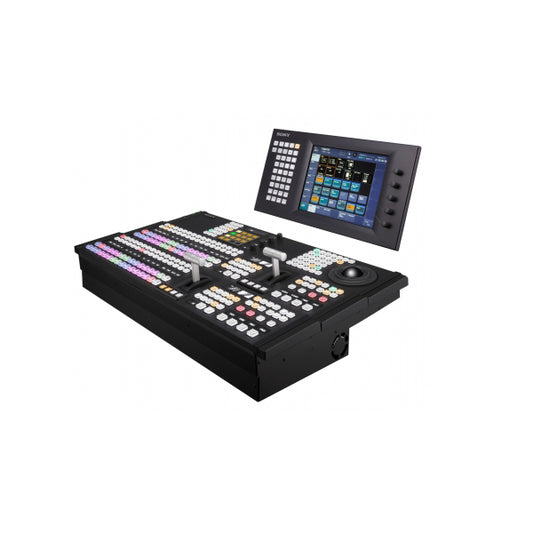
Our expertise extends into comprehensive system integration services. We help productions navigate the shift from SDI to IP-based workflows, ensuring that cinema cameras can communicate seamlessly with broadcast switchers and CCUs. This technical validation is critical for high-end gear investments, providing you with a clear roadmap for equipment acquisition that scales with your business. If you're ready to upgrade your inventory, you can explore our full range of professional cameras and technical solutions to find the perfect fit for your next project. Our consultants are available to match your specific production goals with the most advanced gear available in 2026.
Future-Proofing Your Production Infrastructure
The technical landscape of 2026 has proven that the cinema camera vs broadcast camera decision isn't about which system is superior, but which one fits your specific logistical environment. Success relies on understanding whether your project demands the high dynamic range and post-production depth of a cinema sensor or the zero-latency, real-time control of a broadcast chain. The rise of cinematic broadcast trends means these worlds often overlap, requiring sophisticated system integration to maintain technical standards across a multi-camera array.
Since our founding in 1997, United Broadcast & Media Solutions (UBMS) has served as a leading UAE system integrator and authorized service center for the world's most prestigious global brands. We don't just provide equipment; we offer the technical infrastructure and professional support necessary to keep your production running at peak efficiency. Whether you're building a new studio or upgrading a field kit, our team possesses the expertise to validate your high-end gear investments. Consult with UBMS Experts for Your Next Camera Investment to ensure your gear aligns with the demands of the modern media landscape. Your next production deserves the reliability of a veteran technical partner.
Frequently Asked Questions
Can I use cinema lenses on a broadcast camera?
You can use cinema lenses on broadcast bodies, but it usually requires a lens mount adapter or an optical converter. Most broadcast systems use B4 mounts designed for 2/3-inch sensors, while cinema glass typically uses PL or EF mounts. If you adapt a PL lens to a smaller sensor, you'll experience a significant crop factor that changes your field of view and effective focal length.
What is the main difference in sensor size between cinema and broadcast?
The primary difference is the physical surface area of the sensor. Cinema cameras typically utilize Super 35mm or Full Frame sensors, whereas traditional broadcast units use 2/3-inch sensors. This size difference is the fundamental reason why the cinema camera vs broadcast camera comparison focuses so heavily on depth of field and light-gathering capabilities.
Why do broadcast cameras use 2/3-inch sensors instead of Full Frame?
Broadcast cameras favor 2/3-inch sensors because they provide a deep depth of field, making it easier to keep subjects in focus during unpredictable live action. Smaller sensors also allow for the design of compact, high-magnification zoom lenses. These lenses can cover a massive focal range without the physical weight and size associated with large-format cinema zooms.
Do I need a CCU to use a cinema camera in a live studio?
You don't necessarily need a CCU for basic operation, but it's essential for professional live environments. A Camera Control Unit allows a vision engineer to remotely "paint" the camera, adjusting color, iris, and black levels in real-time. Without a CCU, matching a cinema camera to a traditional broadcast array becomes a difficult and time-consuming manual process.
Is 4K more common in cinema cameras than in broadcast?
4K is now the baseline for both systems in 2026, though the processing methods differ. Cinema cameras prioritize high-bitrate internal recording of 4K RAW or Log data for post-production flexibility. Broadcast cameras focus on delivering a 4K 60fps signal over 12G-SDI or IP networks with zero latency, ensuring the image is ready for immediate transmission.
How do I choose between a Sony FX series and a traditional broadcast camcorder?
Your choice depends on whether you value artistic texture or operational speed. The Sony FX series is ideal for narrative work where you have time for color grading and specific rigging. A traditional broadcast camcorder is better for newsgathering because it features integrated ND filters, physical audio controls, and a motorized zoom lens designed for efficient one-man operation.
Can broadcast cameras achieve a shallow depth of field?
Achieving a shallow depth of field is challenging on standard broadcast sensors due to their small physical size. While you can use wide apertures or long focal lengths to create blur, you won't get the same subject isolation found in cinema systems. This technical limitation is why many 2026 live productions now include at least one large-sensor camera for specialized "hero" shots.
What are the power requirements for cinema cameras vs broadcast cameras?
Powering strategies differ based on the production environment. In the cinema camera vs broadcast camera comparison, cinema rigs usually rely on external V-mount batteries to power the camera and its modular accessories. Studio broadcast cameras are often powered through SMPTE fiber cables, which carry power, tally, and video signals over a single connection from the control gallery.


