

The Professional Broadcast Equipment Checklist: 2026 Industry Standards
Would your current production setup survive a sudden signal failure during a high-stakes live broadcast? You already know that even the most advanced digital cinema cameras cannot save a project if the signal chain breaks or hardware fails under the intense heat of the UAE climate. Relying on a fragmented system is a risk no professional filmmaker or broadcaster can afford to take in a competitive market. Maintaining a rigorous broadcast equipment checklist is the only way to ensure technical synergy and long-term reliability across your entire workflow.
We've developed this guide to provide a comprehensive, 2026-standard technical framework for your next production. You'll learn how to align high-end acquisition tools with the latest IP-based routing and signal integrity standards to create a truly fail-safe environment. This overview covers everything from professional lighting and cinema lenses to the expert system integration required for industry-leading image and audio quality. We will explore the essential hardware and maintenance protocols that define modern global standards, ensuring your equipment remains a dependable asset rather than a technical liability. By the end of this article, you'll have a clear roadmap for building a studio that meets the highest professional benchmarks.
Key Takeaways
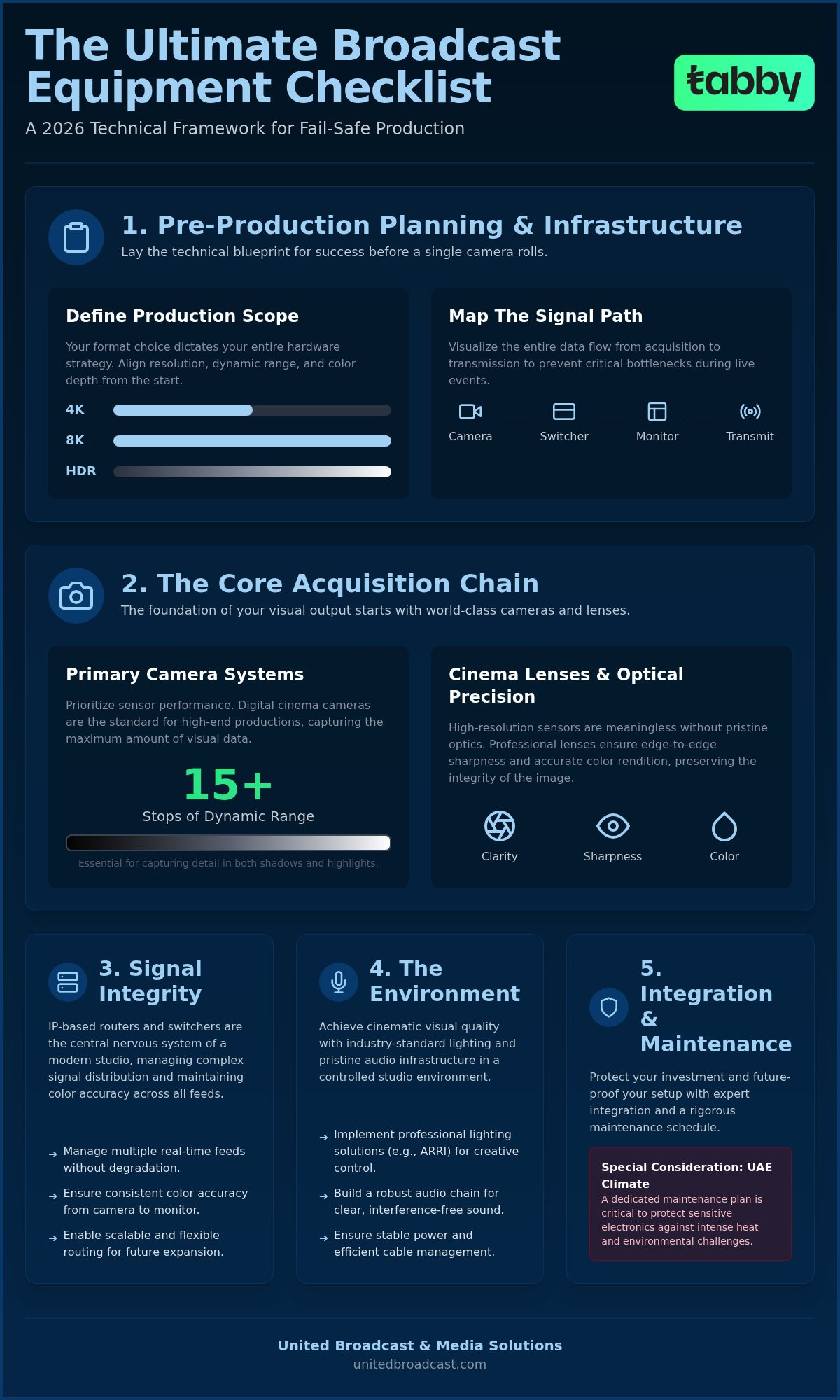
- Learn how to define your production scope by mapping signal paths for 4K and 8K workflows to ensure technical compatibility across all departments.
- Utilize our comprehensive broadcast equipment checklist to select professional cameras and cinema lenses that provide the dynamic range needed for high-end digital cinema.
- Discover the critical role of IP-based routers and video switchers in maintaining color accuracy and managing complex signal distribution within your facility.
- Understand how to implement industry-standard lighting solutions, including ARRI technology, to achieve cinematic visual quality in any controlled studio environment.
- Explore why professional system integration and a dedicated maintenance schedule are essential for protecting your investment against the unique environmental challenges in the UAE.
Pre-Production Planning: Defining the Broadcast Scope and Infrastructure
Success in professional media starts with a technical blueprint. A comprehensive broadcast equipment checklist begins with defining the scope of your production. Whether you're targeting 4K, 8K, or HDR, the format choices you make during pre-production will dictate your entire hardware acquisition strategy. These standards aren't just about resolution; they define the dynamic range and color depth your infrastructure must support. Failing to account for these requirements early leads to costly upgrades mid-project or, worse, technical incompatibility during a live event.
Mapping the signal path from acquisition to transmission is equally essential. A single-camera field shoot has vastly different requirements than a multi-camera studio environment. In a studio setting, you're managing multiple feeds that must be synchronized and switched in real-time. Without a clear map, technical bottlenecks often emerge during the most critical moments of a broadcast. Early-stage system integration is the best way to prevent these issues. It ensures that every piece of gear, from the camera sensor to the final transmitter, works in technical synergy to maintain signal integrity.
Defining Production Requirements
Your target platform, whether it's traditional TV, cinema, or high-end streaming, determines the necessary bitrates and color space. High-bitrate acquisition in 8K requires massive storage solutions and robust bandwidth that can handle the data load. If your project involves mobile production units or OB van integration, your logistics must account for external power and remote signal stability. Establishing these parameters early allows you to calculate the total cost of ownership for your media assets, including the long-term storage and archival needs that accompany high-resolution formats. You must also assess the scale of your production to ensure your equipment can handle the anticipated workload without failing in the demanding national climate.
Technical Site Survey and Infrastructure Mapping
A thorough technical site survey evaluates the physical limitations of your facility. Stable power supply is critical for sensitive digital cinema sensors, as even minor fluctuations can cause equipment failure or image artifacts. Planning cable runs and signal distribution ensures that your setup remains organized and efficient, reducing the risk of accidental disconnections. For a foundational Television Production Studio Overview, understanding the relationship between the control room and the floor is vital. Many professionals consult with system integration experts to design bespoke studio layouts that maximize workflow efficiency. This proactive approach ensures that your broadcast equipment checklist translates into a high-performance production environment that is both scalable and reliable for future technological shifts.
The Core Acquisition Chain: Cameras, Lenses, and Optical Precision
High-end production requires a departure from consumer-grade hardware. A professional broadcast equipment checklist must prioritize sensor performance and optical clarity to meet 2026 industry standards. The acquisition chain is the foundation of your visual output; any compromise here will degrade the final signal, regardless of how advanced your post-production workflow is. While local regulations in the UAE govern transmission, many global broadcasters align their engineering benchmarks with FCC Technical Standards for TV Stations to ensure signal compatibility and interference protection on an international scale.
Primary Camera Systems
Selecting the right professional video cameras requires a balance between sensor size and dynamic range. Digital cinema cameras are the preferred choice for narrative and high-end commercial productions due to their ability to capture 15 or more stops of dynamic range. For live studio environments, multi-purpose broadcast cameras offer the connectivity needed for real-time switching and tally systems. You'll need to check sensor compatibility with existing lens mounts, whether you're utilizing PL, EF, or E-mount systems. High-speed digital cinema cameras are also essential for capturing slow-motion action without losing the detail required for 4K or 8K delivery. If you're unsure which sensor fits your specific workflow, you can consult our technical team for a tailored recommendation.
Professional Lens Kits
Optical precision is what separates a standard broadcast from a cinematic experience. Investing in high-quality cinema lenses ensures superior color rendering and consistent T-stops across your kit. While zoom lenses provide versatility in fast-paced environments, prime lenses are often necessary for their wide apertures and sharpness. Using specialized lenses for specific focal lengths allows you to achieve a distinct visual language. In the UAE's unique climate, optical maintenance is a non-negotiable part of your workflow. You must ensure lens elements are kept in climate-controlled environments to prevent humidity-related issues like fungus or internal fogging, which can permanently damage expensive glass.
Beyond the glass and sensors, your broadcast equipment checklist should include critical accessories that facilitate precision. Matte boxes are essential for controlling flare and housing ND filters, while follow-focus systems are required for accurate focus pulling during complex camera movements. Finally, don't overlook the importance of robust support systems. Heavy cinema rigs require professional-grade tripods and pedestals that can handle the payload without introducing vibration or instability to the shot.
Signal Integrity and Monitoring: Switchers, Routers, and Color Accuracy
Signal integrity is the invisible thread that holds a professional production together. While cameras and lenses capture the vision, the routing and monitoring infrastructure ensure that vision reaches the audience without degradation. A high-tier broadcast equipment checklist must account for the complex path a signal takes from the sensor to the final output. Maintaining this integrity requires more than just high-quality cables; it demands sophisticated processing and constant validation to meet FCC Broadcasting Obligations and global quality standards. Without a robust backbone, even the most expensive camera systems can suffer from sync issues or signal loss.
The Studio Backbone: Switchers and Routers
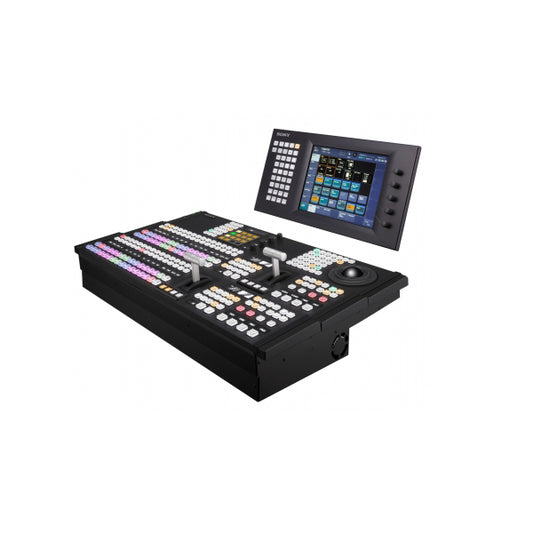
Video switchers serve as the heart of live mixing, facilitating seamless transitions between multi-camera setups. In a 2026-standard environment, you'll need 4K-ready switchers that feature low-latency processing to prevent lag during live interactions. Broadcast routers manage the distribution, acting as the central nervous system of your facility. These routers must be configured for efficient signal patching, allowing operators to redirect feeds to various destinations instantly. Implementing redundant signal paths is a critical step to ensure 100% uptime. This redundancy protects your broadcast from hardware failures that could lead to catastrophic dead air during a live transmission.
Professional Monitoring Solutions
Precise monitoring is the only way to guarantee that what you see in the studio matches what the viewer sees at home. High-performance broadcast monitors are essential for color grading and rigorous quality control. While LCD monitors are common for general use, OLED technology offers the superior black levels and contrast ratios required for critical color evaluation in HDR workflows. Multi-viewer setups provide comprehensive oversight, allowing directors to see every active feed on a single large-format display. You must calibrate these displays regularly to global standards like Rec.709 or Rec.2020 to maintain visual consistency across different streaming and broadcast platforms.
Signal validation goes beyond visual inspection. Technical monitoring tools, such as waveform monitors and vectorscopes, provide objective data on luminance and chrominance levels. These instruments help engineers identify illegal colors or signal clipping that could cause transmission errors or rejection by broadcasters. Ensuring these tools are on your broadcast equipment checklist guarantees that your signal remains within technical tolerances throughout the production. If you're designing a new facility or upgrading your current routing architecture, consulting with an integration partner can help you avoid common technical pitfalls that lead to signal degradation.
The Production Environment: Professional Lighting and Audio Infrastructure
The physical production environment is where technical theory meets creative execution. While the signal path ensures data arrives safely, your lighting and audio infrastructure define the actual quality of that data. Any broadcast equipment checklist must treat these elements with the same technical rigor as cameras or routers. In a controlled studio, poor lighting or muddy audio can't be fully fixed in post-production without sacrificing the professional polish required for modern broadcast standards. Creating a fail-safe environment means investing in gear that performs consistently under the rigorous demands of a daily production schedule.
Professional Studio Lighting
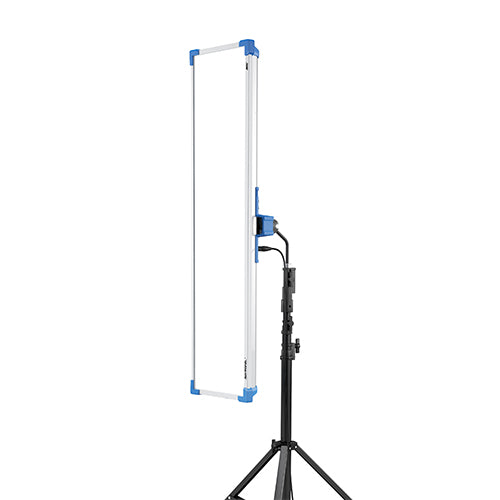
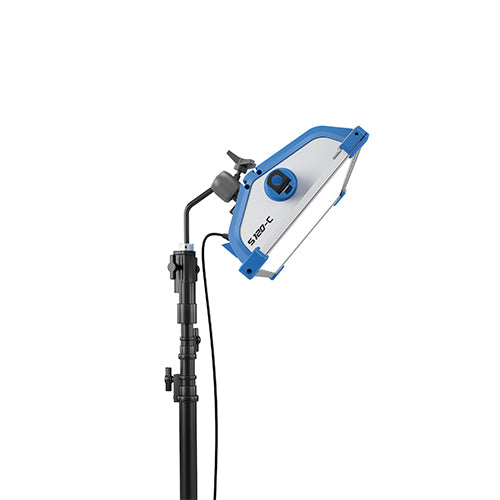
Lighting for broadcast has evolved beyond simple illumination to focus on color accuracy and thermal efficiency. Modern professional lighting equipment primarily utilizes LED technology, offering significant advantages in power consumption and heat management. This is particularly relevant for studios in the UAE, where managing ambient heat is a constant operational challenge. LED panels provide soft, even light for talent, while Fresnel fixtures allow for precise beam control and punch. For high-end cinematic quality, many facilities rely on ARRI lighting solutions due to their industry-leading color rendering and build quality. Tools like the Arri Omnibar Production Kit offer flexible set configurations, allowing your crew to adjust to different production scales quickly. Integrating these into a DMX control system enables automated, synchronized cues that are essential for complex live shows.
Audio Acquisition and Intercoms
Crystal-clear dialogue is non-negotiable. Your broadcast equipment checklist should specify a mix of shotgun microphones for directional pickup and lavalier microphones for unobtrusive talent miking. These feeds must be managed by multi-channel audio mixers that provide low-noise preamps and reliable signal processing. Crew coordination is another critical factor; seamless communication via multi-channel intercom systems prevents mistakes and ensures that directors, camera operators, and engineers stay in sync throughout the broadcast. Monitoring this audio requires professional headphones and studio reference speakers that provide an uncolored, accurate representation of the soundstage. Without these tools, identifying interference or audio artifacts becomes nearly impossible until it's too late.
Safety and precision in equipment placement are the final components of a professional environment. Grip and rigging hardware must be rated for the specific payloads of your lighting and camera rigs. This ensures that overhead fixtures remain secure and that camera movements remain fluid and repeatable. Reliable rigging isn't just about safety; it's about the precision required to maintain consistent framing and lighting angles over long hours of production.
While broadcast rigging handles the overhead gear, large-scale studio logistics often require robust material handling on the ground. For production managers who also oversee warehouse-style set storage and facility logistics, you can visit United Lift LLC to learn about maintaining industrial safety and efficiency with professional-grade lifting equipment.
System Integration and Maintenance: Future-Proofing Your Broadcast Setup
Building a high-end studio is a significant investment; however, its long-term success depends on technical synergy and ongoing care. To stay informed about the financial trends that impact high-value asset management, you can check out BS Ekonomi for the latest economic news. A professional broadcast equipment checklist is incomplete without a strategy for system integration and preventative maintenance. Without these pillars, even the most advanced digital cinema cameras and routers can become obsolete or prone to failure. Future-proofing your setup means designing an architecture that's scalable, allowing for seamless upgrades as 2026 standards evolve into new benchmarks. It's about ensuring your infrastructure grows with your production needs.
System Integration Excellence
Professional system integration is the difference between a collection of gear and a high-performance production hub. You should focus on designing architectures that accommodate future technology shifts without requiring a total overhaul of your facility. Modern efficiency is now defined by IP-based workflows, such as NDI and SMPTE 2110, which allow for more flexible signal distribution over standard network infrastructure. Transitioning to these workflows reduces the reliance on traditional SDI cabling and simplifies complex routing. Hardware's only as effective as the people operating it. Training your technical staff on these new integrated systems is a vital step in ensuring your workflow remains efficient and error-free during live broadcasts.
Professional Technical Support
The environmental conditions in the UAE, including intense heat and fine dust, make regular maintenance a necessity rather than an option. Establishing a preventative maintenance schedule for your cinema and broadcast gear helps identify potential failures before they occur. Utilizing a dedicated service center for precision repairs and sensor cleaning ensures that your equipment continues to meet manufacturer specifications. Local service center availability acts as a vital safety net for national productions, providing fast turnaround times that keep your project on schedule. Accessing expert repairs for professional video cameras and lenses is essential for maintaining the optical and mechanical integrity of your assets.
Firmware management is another critical aspect of maintenance that often gets overlooked. Manufacturers frequently release updates that unlock new features, improve stability, and fix technical bugs. Keeping your high-end hardware updated ensures you're always working with the latest capabilities. For those seeking comprehensive technical solutions and integration, partnering with a seasoned veteran provides the logistical excellence needed to maintain a world-class production environment. By prioritizing integration and technical health, you ensure that your studio remains a reliable pillar for the community. Use your broadcast equipment checklist to audit your maintenance protocols just as strictly as your hardware acquisition.
Building a Resilient Production Future
Building a broadcast or cinema facility that meets 2026 industry standards requires a meticulous balance of technical precision and scalable design. You've seen how the synergy between high-end acquisition tools and robust signal routing forms the backbone of a successful production. By prioritizing professional-grade lighting and audio infrastructure, you ensure that every frame and sound bite meets the highest quality benchmarks. Maintaining a comprehensive broadcast equipment checklist is the first step toward operational excellence; however, long-term reliability depends on expert system integration and consistent preventative maintenance.
Since 1997, United Broadcast & Media Solutions (UBMS) has served as a leading national distributor and a trusted technical partner for the region's media professionals. Our expert system integration services and authorized service center for global brands provide the infrastructure you need to stay ahead of technological shifts. We're here to help you navigate these complexities and build a studio that's prepared for any challenge. Our team possesses the technical depth to support your equipment throughout its entire lifecycle.
We look forward to supporting your next major project and helping you achieve your creative vision with the world's most reliable technology. Your success is our priority.
Frequently Asked Questions
What is the most essential piece of equipment for a professional broadcast studio?
While the camera is the primary acquisition tool, a high-performance broadcast router is the most essential piece for studio operations. It acts as the central hub for managing complex signal distribution across your entire facility. Without a robust routing system, you cannot maintain the technical synergy required for a professional environment. Ensuring your router is on your broadcast equipment checklist guarantees that every feed reaches its destination with zero latency or signal loss.
How do I choose between a digital cinema camera and a traditional broadcast camera?
Choose a digital cinema camera for narrative projects requiring high dynamic range and superior color rendering. Traditional broadcast cameras are better suited for live studio environments because they feature the essential connectivity for real-time switching and tally systems. Digital cinema sensors prioritize aesthetic texture, whereas broadcast systems focus on operational speed and multi-camera synchronization. Your choice depends on whether your final output is a cinematic commercial or a live television program.
Why is system integration important for a new media facility?
System integration is critical because it prevents technical bottlenecks by ensuring technical synergy between different gear brands. It allows your facility to operate as a single, cohesive unit rather than a collection of isolated hardware. Professional integration also future-proofs your studio by establishing a scalable architecture that accommodates new IP-based workflows. This process is essential for maintaining 100% uptime during high-stakes live broadcasts in the competitive UAE media market.
What kind of lighting is best for a professional interview setup?
A three-point LED lighting setup is the industry standard for professional interviews. Utilize high-CRI LED panels for soft talent illumination and a Fresnel light for a precise rim or hair light to create depth. LED technology is preferred in studios across the UAE because it generates significantly less heat than traditional fixtures. This ensures talent comfort and reduces the load on your facility's cooling systems during long production days.
How often should professional broadcast equipment undergo maintenance?
You should schedule professional maintenance for your broadcast gear at least every six months. This frequency is necessary in the UAE to address the effects of fine dust and high humidity on sensitive electronics and optical elements. Regular checks include sensor cleaning, lens calibration, and firmware updates. Following a strict broadcast equipment checklist for maintenance prevents sudden hardware failure and extends the operational lifespan of your high-end acquisition tools.
Can I use cinema lenses on a standard broadcast camera body?
You can use cinema lenses on standard broadcast camera bodies provided you utilize the correct lens mount adapters, such as PL to B4 or E-mount. This combination allows broadcasters to achieve a more cinematic look with superior bokeh and color rendering. However, you must check for sensor coverage to avoid vignetting, especially when using lenses designed for Super 35 or Full Frame sensors on smaller broadcast camera sensors.
What are the benefits of using LED lighting over traditional tungsten in a studio?
LED lighting provides significant benefits over traditional tungsten, including lower power consumption and the ability to adjust color temperatures without using gels. In a studio environment, the minimal heat output of LEDs is a major advantage for maintaining stable ambient temperatures. This efficiency reduces operational costs and protects sensitive digital cinema sensors from thermal stress. LEDs also offer a longer lifespan, typically reaching 50,000 hours of operation before requiring replacement.
How do I protect high-end camera sensors from dust and environmental factors?
Protecting high-end sensors requires keeping equipment in climate-controlled, dust-free environments when not in use. Always use sealed body caps immediately after removing a lens to prevent airborne particulates from settling on the sensor glass. In the UAE's arid climate, regular professional sensor cleaning at an authorized service center is essential. This prevents permanent damage from abrasive dust and ensures your image quality remains free from artifacts during high-resolution 8K acquisition.


